










Why Empty Parking Lots Feel Stranger Than Empty Buildings
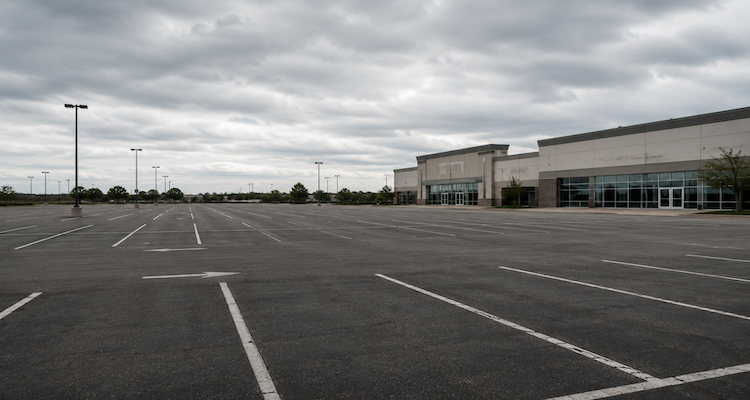
A vacant office tower is easy to explain. Businesses close, workers leave, lights go out. Yet many people experience a different reaction when they encounter a vast, empty parking lot. The feeling is often harder to describe, somewhere between unease, curiosity, and disorientation.
A deserted building can seem dormant. An empty parking lot, by contrast, can feel like evidence that something is missing. It appears incomplete, as though an expected event never happened or an invisible crowd has suddenly vanished. The space was designed for activity, movement, and constant turnover, making its emptiness surprisingly unsettling.
That reaction reveals something deeper about how people interpret space, activity, and social presence. Empty parking lots are not merely vacant pieces of asphalt. They are cultural symbols, and when they sit empty, they challenge our expectations in ways that empty buildings often do not.
Spaces Designed for People Who Are Not There
Most buildings are designed to contain activity. Parking lots are designed to anticipate it.
A shopping mall, sports stadium, office complex, or entertainment venue can function as a recognizable structure even when nobody is inside. The building remains a complete object. It still appears to have a purpose.
Parking lots operate differently. Their purpose depends almost entirely on what is absent from them: vehicles and the people attached to those vehicles. A parking lot without cars resembles a stage without performers. The infrastructure remains, but the reason for its existence appears to have disappeared.
This creates a subtle psychological tension. The mind automatically compares what it sees with what it expects to see. When a large parking area sits empty, the gap between expectation and reality becomes difficult to ignore.
The Scale of Emptiness Matters
Part of the strangeness comes from scale.
A vacant room feels empty because it lacks occupants. A massive parking lot amplifies that feeling because it was designed to handle hundreds or even thousands of people at once. Every painted line represents an anticipated arrival. Every empty space signals an absence.
The larger the lot, the more noticeable the disconnect becomes.
This is especially true in places associated with high activity, such as shopping centers, airports, stadiums, convention venues, and entertainment districts. Seeing these spaces empty can create a sense that normal routines have been interrupted.
The reaction is not necessarily fear. More often, it is a feeling that something is out of place.
Why Human Absence Feels More Visible Outdoors
Buildings conceal absence.
Closed doors, walls, and windows create boundaries that hide what is happening inside. An office building may be empty, but observers cannot immediately see every vacant desk or hallway.
Parking lots offer no such concealment. Their emptiness is fully exposed.
The human brain is highly sensitive to open environments because visibility allows for rapid assessment of surroundings. When a large open space contains no movement, no vehicles, and no signs of activity, the lack of social cues becomes impossible to overlook.
Psychologists often note that people rely heavily on environmental signals to judge safety, normality, and social belonging. Busy spaces provide reassurance that others are present. Empty spaces remove that reassurance.
Parking lots therefore make absence visible in a way many buildings cannot.
The Legacy of Car-Centered Culture
There is also a cultural dimension to the phenomenon.
In many countries, particularly those shaped by automobile-dependent development, parking lots became symbols of economic activity. Full parking lots often signal thriving businesses, successful events, and healthy consumer traffic.
Retail managers, venue operators, and property owners have long viewed parking occupancy as a practical indicator of performance. More cars generally suggest more visitors.
As a result, people have unconsciously learned to associate occupied parking lots with social and economic vitality.
When those spaces remain empty, the visual message changes. The emptiness can suggest decline, disruption, closure, or transition—even when none of those conditions actually exist.
The reaction is not necessarily rational. It is cultural conditioning reinforced over decades.
The Pandemic Changed How We See Empty Spaces
The global pandemic offered a striking example of this effect.
Images of empty highways, deserted parking lots, and vacant public spaces circulated widely around the world. Many of those photographs became powerful symbols of an extraordinary moment in history.
What made the images memorable was not simply the absence of people. It was the absence of expected activity.
Airports without travelers, stadiums without fans, and shopping centers without customers appeared almost surreal because they contradicted deeply established assumptions about how those places normally function.
Even years later, those images continue to influence how people interpret emptiness. Large vacant parking lots can still evoke memories of disruption, uncertainty, and sudden social change.
The Hidden Insight: Parking Lots Are Predictive Spaces
One reason empty parking lots feel uniquely strange is that they are future-oriented environments.
Buildings serve present functions. Parking lots exist to accommodate future arrivals.
Their design is based on expectation. They are built around anticipated demand rather than current activity.
This creates an interesting psychological effect. An empty building suggests inactivity in the present. An empty parking lot can feel like a failed prediction about the future.
The rows of empty spaces silently communicate that people were expected but did not arrive.
That distinction may explain why these environments often feel more unsettling than empty structures. The space appears to be waiting for something that never happened.
What Empty Parking Lots Reveal About Modern Life
The growing attention paid to empty parking lots also reflects broader societal shifts.
Remote work has changed commuting patterns. Online shopping has altered retail traffic. Hybrid schedules have reduced daily office occupancy. Entertainment and social activities are increasingly distributed across digital and physical spaces.
As a result, some parking lots that were once consistently full now experience periods of unexpected quiet.
Urban planners, developers, and businesses are paying closer attention to how these spaces are used because they offer clues about changing behaviors. A half-empty parking area may reflect evolving consumer habits rather than business failure.
In this sense, parking lots have become visible indicators of social transformation.
They reveal how people move, gather, shop, work, and spend their time.
The Emotional Power of Ordinary Infrastructure
Perhaps the most surprising aspect of empty parking lots is that they demonstrate how emotionally charged ordinary infrastructure can become.
Most people rarely think about parking spaces during daily life. Yet when those spaces are unexpectedly vacant, they can trigger strong impressions.
The reaction reminds us that environments are not neutral. People attach meaning to roads, storefronts, office towers, parks, and parking lots because these places help define normal routines.
When familiar patterns disappear, even temporarily, the change becomes noticeable.
An empty building may suggest inactivity behind closed doors. An empty parking lot places absence directly in view. It transforms something usually overlooked into a visible reminder of expectation, movement, and human presence.
That may be why vast, vacant parking lots often feel stranger than empty buildings. They are not just empty spaces. They are spaces designed for arrival, and when nobody arrives, the silence becomes surprisingly difficult to ignore.
This content is published for informational or entertainment purposes. Facts, opinions, or references may evolve over time, and readers are encouraged to verify details from reliable sources.