










The Quiet Transformation of Places That Never Seem to Age
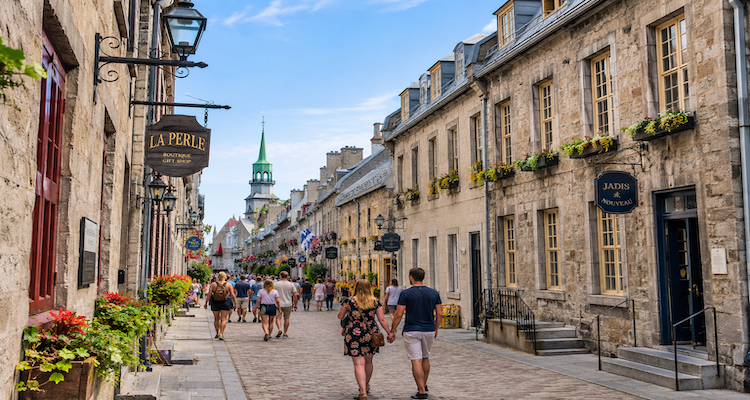
There is something strangely comforting about walking through a town square that looks untouched by time. The buildings appear pristine, the streets remain picture-perfect, and every detail seems carefully preserved. Yet increasingly, some of the places that feel most historic are also among the most actively managed, restored, and curated environments in the modern world.
A growing number of cities, districts, tourist destinations, and cultural landmarks are being maintained in a state that might be described as artificial permanence. They are preserved not simply to protect history but to sustain a particular experience of history. The result is a subtle shift in how people encounter places, memory, and authenticity.
What emerges is a fascinating question: when preservation becomes so effective that change almost disappears, are we protecting the past or creating a carefully managed version of it?
Places That Appear Frozen in Time
Many communities have long invested in preservation. Historic neighborhoods, heritage districts, archaeological sites, and cultural landmarks often require significant maintenance to survive environmental damage, urban development, and changing economic pressures.
What is changing today is the scale and sophistication of preservation itself.
Advanced restoration techniques, digital modeling, climate-control systems, predictive maintenance technologies, and detailed historical reconstruction allow places to retain a remarkably consistent appearance. In some cases, damaged structures can be restored with such precision that visitors struggle to distinguish original materials from replacements.
Popular tourist destinations frequently depend on this approach. Visitors often arrive expecting a place to match photographs, films, travel guides, or social media imagery. The economic incentive to maintain a familiar visual identity can be powerful.
Over time, preservation shifts from protecting a location to protecting an expectation.
The Rise of Experience-Based Authenticity
Traditionally, authenticity was associated with originality. A building was authentic because it had survived.
Today, authenticity is increasingly judged by experience.
If a historic street feels historic, many visitors consider it authentic regardless of how much restoration has occurred. If a reconstructed village evokes a convincing sense of the past, people often value the emotional experience as much as the physical continuity.
This represents a subtle but significant cultural change.
The experience economy has trained consumers to evaluate environments based on how they make them feel. Restaurants, hotels, museums, entertainment venues, and tourist attractions increasingly focus on immersive experiences. Historical places are not immune to this trend.
As a result, preservation often becomes a form of storytelling. The objective is not merely to maintain structures but to sustain a narrative that visitors can enter and understand.
When History Stops Showing Its Age
One of the most intriguing consequences of artificial preservation is the disappearance of visible aging.
Historically, people expected places to evolve. Buildings accumulated wear. Neighborhoods changed character. Signs of time were part of the landscape.
Today, many preserved environments are maintained to minimize these indicators. Repairs happen quickly. Damage is corrected. Surfaces are restored. Infrastructure is updated behind the scenes.
The outcome can be visually impressive, but it also changes our relationship with time itself.
Places that once revealed history through layers of change may begin to resemble carefully maintained exhibits. Visitors encounter a version of continuity that feels timeless, even though significant intervention may be occurring constantly.
This does not necessarily diminish their value. However, it does alter the way history is experienced.
The Influence of Social Media Expectations
Social media has accelerated this phenomenon.
Platforms built around visual sharing reward recognizable imagery. Travelers often seek the exact views they have already seen online. Destinations become associated with specific visual identities, and maintaining those identities becomes economically important.
A historic district that changes too dramatically risks disappointing visitors who arrive expecting a familiar scene.
This creates an unusual feedback loop. Digital images influence expectations, expectations influence preservation strategies, and preservation strategies reinforce the imagery that circulates online.
In some locations, the photograph becomes almost as important as the place itself.
The result is a growing tendency toward visual consistency rather than visible evolution.
The Hidden Trade-Off Between Preservation and Living Culture
Preservation is generally viewed as a positive force, and often for good reason. It protects architectural heritage, cultural memory, and historical knowledge that might otherwise disappear.
Yet every preservation decision involves choices.
When a neighborhood becomes heavily preserved, questions emerge about who the place is ultimately serving. Is it primarily for residents? Visitors? Cultural institutions? Future generations?
In some cases, maintaining a historical image can limit adaptation. Businesses may face restrictions. Residents may encounter regulations designed to protect aesthetics. Urban growth can become more complicated.
A place that successfully preserves its past may also struggle to accommodate certain aspects of its future.
This tension is becoming increasingly relevant as cities attempt to balance heritage protection with housing needs, economic development, and changing demographics.
The Emergence of Curated Reality
Perhaps the most important insight is that preservation is evolving from conservation into curation.
Historically, preservation focused on preventing loss.
Today, many preserved places are actively managed to create specific impressions. Lighting, landscaping, restoration techniques, visitor pathways, signage, and digital experiences all contribute to how people interpret a location.
This does not mean the experience is fake. Rather, it means the experience is increasingly designed.
The distinction matters because people often assume places exist independently of presentation. In reality, many modern heritage environments involve extensive decisions about what should be highlighted, repaired, concealed, or emphasized.
The place remains real, but the version people encounter may be carefully shaped.
Why Interest in This Trend Is Growing
Public fascination with preserved environments reflects broader cultural anxieties about change.
Technological disruption, rapid urbanization, digital lifestyles, and shifting social norms create a sense of instability for many people. Places that appear permanent offer reassurance.
They provide a feeling of continuity in a world that often seems unpredictable.
At the same time, growing awareness of environmental risks, cultural loss, and disappearing traditions has increased appreciation for preservation efforts.
People want connections to history. They want tangible reminders of identity and belonging. Artificially preserved places help satisfy those desires, even when the preservation itself involves extensive modern intervention.
What Happens Next?
The future of preservation will likely become even more sophisticated.
Digital twins, artificial intelligence, predictive maintenance systems, and advanced restoration technologies could enable historical environments to remain stable for longer periods than ever before. Entire districts may be monitored continuously to detect structural changes before they become visible.
As these capabilities expand, society may face new questions about authenticity.
How much restoration is too much? When does preservation become recreation? Can a place remain historically meaningful if nearly every visible element has been repaired, reconstructed, or replaced over time?
There may never be simple answers.
What is clear is that preserved places are no longer merely surviving history. Increasingly, they are being actively engineered to sustain particular relationships with history.
That transformation is both remarkable and unsettling.
The places that seem most timeless may, in fact, be among the most carefully managed environments we have ever created. And the more successful that management becomes, the harder it may be to distinguish between preserving the past and producing it.
This content is published for informational or entertainment purposes. Facts, opinions, or references may evolve over time, and readers are encouraged to verify details from reliable sources.