










Why Long Empty Corridors Haunt Our Dreams
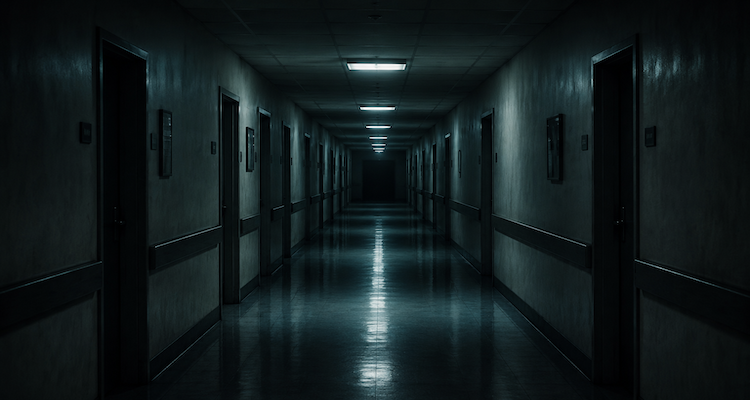
A dim hallway stretches into darkness. The walls seem familiar, yet impossible to place. Every step echoes, but no destination appears closer. For many people, this scene feels strangely recognizable, not because they have experienced it in real life, but because they have encountered it repeatedly in dreams.
Long empty corridors are among the most common architectural spaces that appear in nightmares. Whether they resemble hotel hallways, school corridors, hospital wings, office passages, or anonymous tunnels, they often evoke unease long before anything frightening actually happens. The corridor itself becomes the source of tension.
What makes these seemingly ordinary spaces so unsettling? The answer may reveal something deeper about how the human mind processes uncertainty, anticipation, and control.
The Psychological Power of In-Between Spaces
Corridors occupy a unique place in human experience. Unlike rooms, they are not destinations. They exist primarily to connect one place to another.
Psychologists and cultural researchers often describe such spaces as transitional environments. They represent movement, change, and the unknown. In everyday life, people rarely spend much time in hallways. They pass through them.
Dreams, however, tend to magnify symbols associated with emotional states. A corridor can become a visual metaphor for situations where someone feels caught between stages of life, decisions, identities, or outcomes.
A person awaiting exam results, considering a career change, navigating a difficult relationship, or facing an uncertain future may find their subconscious expressing those feelings through endless passageways.
The fear often comes not from what is inside the corridor but from not knowing what lies at the end.
Why Empty Spaces Feel More Threatening Than Crowded Ones
One of the most interesting aspects of nightmare corridors is their emptiness.
Logic might suggest that a crowded hallway would feel more dangerous. Yet many dreams feature deserted spaces that seem far more disturbing.
Human perception evolved to detect patterns, movement, and social cues. Empty environments remove much of the information people unconsciously rely on to assess safety.
In a deserted corridor, there are no conversations, no signs of activity, and no visible explanation for the silence. The mind begins filling those gaps with possibilities.
This phenomenon is not limited to dreams. Many people report feeling uncomfortable in empty parking garages, vacant office buildings, abandoned schools, or silent hotel corridors late at night. The absence of information often creates more anxiety than the presence of known threats.
Nightmares amplify this tendency by removing the reassuring details that normally help people orient themselves.
The Fear of Endless Distance
Another recurring feature of nightmare corridors is their apparent length.
Many dreamers describe hallways that seem impossibly long or that never appear to end. Others report walking toward a door that never becomes closer.
This experience reflects a common dream characteristic: distorted perceptions of space and progress.
In waking life, people often measure success through visible movement toward goals. Dreams can reverse that expectation. The endless corridor becomes a symbol of effort without resolution.
Someone experiencing prolonged stress, uncertainty, burnout, or frustration may unconsciously recreate that feeling through dream imagery. The hallway represents forward motion without arrival.
The nightmare is not simply about being trapped. It is about being unable to reach certainty.
How Modern Life May Be Reinforcing Corridor Dreams
Although corridor nightmares have existed for generations, certain aspects of modern life may make them particularly relatable today.
Many people spend increasing amounts of time navigating systems that feel abstract and endless. Job applications move through digital portals. Customer service interactions pass through automated menus. Social media feeds offer infinite scrolling. Professional advancement often involves long periods of waiting for outcomes that remain outside individual control.
These experiences share a common feature: movement without immediate resolution.
The modern world contains more psychological corridors than physical ones.
People move through processes, algorithms, queues, and transitions whose endpoints are often unclear. While dreams cannot be reduced to simple explanations, it is easy to see why imagery associated with endless passageways continues to resonate.
The corridor has become an unexpectedly powerful symbol for navigating uncertainty in a complex world.
The Influence of Architecture and Popular Culture
Nightmare corridors are also reinforced by visual storytelling.
Filmmakers, game designers, and horror creators frequently use long hallways to generate tension. Audiences have seen them in haunted hotels, abandoned hospitals, underground facilities, and mysterious institutions.
The reason is simple: corridors naturally create anticipation.
A room reveals itself immediately. A hallway with a distant endpoint creates suspense. Something may appear around the next corner. Something may emerge from a doorway. Or nothing may happen at all.
The uncertainty itself becomes emotionally charged.
Over time, these cultural associations can influence dream imagery. The brain often borrows visual language from experiences, memories, films, and environments when constructing dreams.
The result is a symbol that feels both deeply personal and universally recognizable.
What Corridor Nightmares Might Be Telling Us
Dream interpretation should always be approached carefully. There is rarely a single meaning behind a recurring dream image.
However, many psychologists agree that dreams often reflect emotional themes rather than literal messages.
A corridor nightmare may indicate feelings of transition, anticipation, uncertainty, isolation, or lack of control. It may emerge during periods when important outcomes remain unresolved.
What makes the image so powerful is its flexibility. The same hallway can represent different concerns for different people.
For one person, it may symbolize career uncertainty. For another, grief, personal growth, health concerns, or major life changes.
The corridor becomes a psychological canvas onto which the mind projects unresolved questions.
The Hidden Insight Behind the Hallway
Perhaps the most revealing aspect of corridor nightmares is that they rarely focus on danger itself. Instead, they focus on waiting for danger.
That distinction matters.
Many fears in modern life are not immediate threats. They are uncertainties. People worry about outcomes, possibilities, decisions, and futures that have not yet arrived.
The empty corridor captures this experience perfectly.
It represents the uncomfortable space between knowing and not knowing.
This may explain why the image remains so persistent across cultures, generations, and personal circumstances. The corridor is not merely a frightening setting. It is a visual representation of one of the most universal human experiences: moving forward without complete certainty about what comes next.
And in dreams, that uncertainty often takes the form of a long hallway stretching endlessly into the dark.
This content is published for informational or entertainment purposes. Facts, opinions, or references may evolve over time, and readers are encouraged to verify details from reliable sources.