










When Cities Go Silent: What Urban Quietness Reveals About Human Psychology
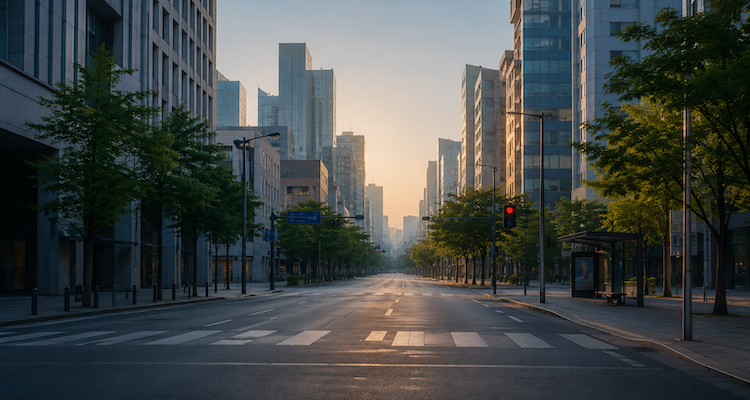
Cities are often defined by movement. The rhythm of traffic, the hum of conversations, distant construction noise, and the constant pulse of activity create a sensory backdrop so familiar that most people barely notice it. Yet when that soundtrack suddenly fades, something unexpected happens. The silence does more than change how a city sounds, it changes how people think, feel, and behave.
Moments of unusual urban quietness have repeatedly captured public attention, whether during early mornings in major metropolitan areas, temporary traffic restrictions, cultural observances, or extraordinary disruptions to daily life. These rare periods reveal something profound: noise is not simply an environmental condition. It is a psychological signal that shapes how humans experience safety, community, productivity, and even identity.
As urban populations continue to grow and cities experiment with pedestrian zones, green infrastructure, and new approaches to public space, the question becomes increasingly relevant. What does urban silence tell us about ourselves?
The Hidden Role of Noise in Everyday Life
Most people associate noise with inconvenience. Traffic congestion, construction activity, crowded transit systems, and busy commercial districts are often viewed as unavoidable consequences of city living.
Yet noise serves a deeper psychological purpose. It acts as a form of environmental reassurance.
The distant sounds of life signal that society is functioning as expected. A busy café suggests economic activity. Footsteps on a sidewalk imply social presence. Even the low-frequency rumble of traffic can subconsciously indicate normality and predictability.
Psychologists have long observed that humans rely on environmental cues to assess their surroundings. Sound is one of the most immediate and constant of these cues. When familiar urban sounds disappear, people often become more aware of their environment and of their own thoughts.
That heightened awareness can feel calming for some and unsettling for others.
Why Silence Can Feel Both Peaceful and Uncomfortable
The appeal of silence appears obvious. Many people seek quieter neighborhoods, noise-canceling technology, meditation practices, or escapes into nature.
However, complete silence is not always experienced as relaxing.
Urban environments train residents to expect continuous sensory input. When that input diminishes significantly, the brain often begins searching for explanations. In some situations, silence can trigger feelings of uncertainty because it breaks expected patterns.
This psychological reaction helps explain why an unusually quiet city street can feel strangely eerie despite being objectively safe.
The absence of noise becomes information in itself.
Humans are highly sensitive to deviations from routine. A bustling district that suddenly falls silent may create a stronger emotional response than a naturally quiet rural setting because expectations have been disrupted.
The emotional impact comes not from silence alone but from contrast.
What Urban Quietness Reveals About Modern Stress
One of the most revealing aspects of urban silence is how quickly people notice their internal mental state once external distractions fade.
In highly connected cities, attention is constantly fragmented. Notifications, advertisements, conversations, transportation schedules, and social interactions compete for cognitive resources throughout the day.
Noise contributes to this mental load.
When urban environments become quieter, many people initially report a sense of relief. Without realizing it, they had been carrying a background level of sensory stress.
This observation has influenced urban planning discussions around the world. Cities are increasingly exploring car-free zones, expanded green spaces, quieter public transportation systems, and pedestrian-focused districts not only for environmental reasons but also for quality-of-life benefits.
The growing popularity of urban parks, waterfront promenades, and quiet public spaces suggests that residents are seeking occasional relief from constant stimulation.
The Surprising Link Between Silence and Social Connection
Conventional thinking often associates lively, noisy environments with stronger communities. Busy streets and crowded public spaces appear to signal social engagement.
But urban quietness can sometimes produce the opposite effect.
When noise levels decrease, people often become more aware of subtle social interactions. Conversations feel more personal. Public spaces encourage slower movement. Residents may notice neighbors they previously overlooked.
Some urban designers argue that quieter environments can strengthen local identity because they allow individuals to engage more consciously with their surroundings.
The goal is not eliminating activity but reducing unnecessary noise that competes with meaningful human interaction.
This distinction is becoming increasingly important as cities rethink public space design.
The Rise of the “Quiet City” Movement
A growing number of urban initiatives reflect changing attitudes toward sound.
Cities around the world have experimented with expanded pedestrian areas, reduced vehicle access in specific districts, improved cycling infrastructure, and increased investment in green corridors. While these efforts are often discussed through environmental or transportation lenses, they also affect psychological well-being.
The concept of the “quiet city” does not imply silent streets or empty neighborhoods. Instead, it focuses on balancing activity with sensory comfort.
Advances in electric transportation may further accelerate this trend. Electric buses, trains, and vehicles generally reduce certain types of urban noise, potentially transforming how future cities feel and function.
Urban soundscapes may become a design consideration as important as architecture, transportation, or public safety.
What Silence Teaches Us About Attention
Perhaps the most significant insight emerging from urban quietness is its relationship with attention.
Modern life rewards constant engagement. People consume information continuously through smartphones, streaming platforms, social media feeds, and workplace communication tools.
Noise reinforces this environment of perpetual stimulation.
Silence interrupts it.
When cities become quieter, many individuals discover how much of their daily experience is shaped by automatic reactions to external inputs. The absence of those inputs creates room for reflection, observation, and deeper awareness.
This may explain why moments of urban quietness often leave lasting impressions. They expose a psychological contrast that is rarely experienced in ordinary routines.
The realization is not simply that cities are loud.
It is that many people have forgotten what uninterrupted attention feels like.
The Future of Urban Sound
As cities evolve, discussions about sustainability, public health, and livability are increasingly intersecting with questions about sound.
Future urban development may focus less on eliminating noise entirely and more on designing healthier acoustic environments. A successful city is unlikely to be silent, but it may become more intentional about where noise exists and where quietness is preserved.
The challenge lies in recognizing that sound is not merely a byproduct of urban life. It is part of the emotional and psychological infrastructure of a city.
Urban quietness reveals that humans are deeply connected to their sensory environments. We rely on sound for reassurance, social connection, and orientation. Yet we also need moments when that soundtrack fades enough for reflection to emerge.
The paradox is striking: silence often feels unusual precisely because modern life has become so noisy.
And in those rare moments when cities grow quiet, they reveal something many residents seldom encounter, a clearer understanding of how their environment shapes their minds.
This content is published for informational or entertainment purposes. Facts, opinions, or references may evolve over time, and readers are encouraged to verify details from reliable sources.