









The Hospital Stories That Never Reached Official Reports
Hospitals are built around documentation. Every medication administered, procedure performed, and patient movement is typically recorded with remarkable precision. Yet among the thousands of pages generated each day, there are stories that never make it into official records, incidents so unusual, unsettling, or difficult to explain that they remain confined to break rooms, night shifts, and whispered conversations between staff members.
These accounts occupy a strange space between professional medicine and human experience. They are not necessarily evidence of the paranormal, nor are they always easily dismissed. Instead, they reveal something deeper about life inside hospitals: places where birth, death, grief, hope, and uncertainty often coexist under the same roof.
Interest in these stories has grown as healthcare workers increasingly share experiences online, offering rare glimpses into the emotional realities of hospital life. While official reports focus on measurable events, many staff members recall moments that left lasting impressions despite never appearing in any formal documentation.
When Medicine Meets the Unexplainable
Healthcare professionals are trained to rely on evidence, observation, and scientific reasoning. Yet many acknowledge encountering situations that defied immediate explanation.
A common category involves reports from multiple staff members who independently describe similar experiences. These may include hearing voices in empty rooms, unexplained alarms, or unusual events occurring shortly before a patient’s condition unexpectedly changes.
Importantly, many hospital workers do not interpret such incidents as supernatural. Instead, they often view them as unusual occurrences that happened during emotionally intense circumstances.
The distinction matters. Hospitals operate around the clock, and staff frequently work long shifts under significant pressure. Fatigue, heightened awareness, emotional stress, and complex environments can contribute to experiences that feel extraordinary even when a conventional explanation may eventually emerge.
Still, not every story finds a satisfying answer.
The Night Shift Phenomenon
Many unexplained hospital stories originate during overnight hours.
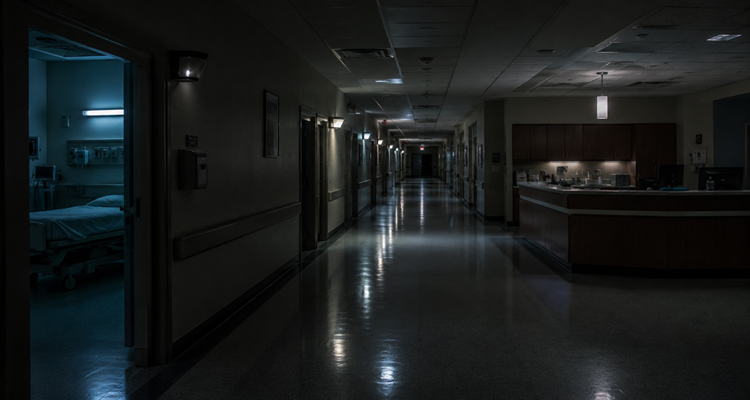
The night shift presents a unique environment. Hallways become quieter. Visitor traffic disappears. Lighting changes. Fewer staff members cover larger areas. The atmosphere itself can feel dramatically different from daytime operations.
Veteran nurses often describe how hospitals seem to develop their own personality after midnight.
Some recount equipment activating unexpectedly despite passing technical inspections. Others describe receiving calls from rooms later discovered to be empty or hearing conversations where no one appeared present.
Whether these incidents result from environmental factors, technology quirks, or human perception under stress, they contribute to a body of shared experiences that persist across generations of healthcare workers.
What makes these stories compelling is not necessarily the events themselves but the consistency with which similar themes appear in different hospitals and among staff who have never met each other.
The Rooms Staff Remember
Nearly every long-serving hospital employee can identify specific rooms associated with unusual stories.
These spaces often develop reputations over years or even decades. New employees may hear warnings or anecdotes from experienced colleagues before ever entering them.
Sometimes the explanations are practical. Older infrastructure may produce unusual sounds. Certain layouts can create acoustic effects. Medical equipment can behave unpredictably in particular environments.
Yet reputations often survive even after renovations or equipment replacements.
The phenomenon reflects a broader human tendency to attach meaning to places where emotionally significant events occur. Hospitals witness countless moments of triumph and tragedy. Over time, those experiences can become woven into the identity of specific locations.
The result is a form of institutional memory that exists outside official records but remains deeply influential within hospital culture.
Why These Stories Rarely Appear in Reports
Hospital reporting systems are designed to capture events that affect patient care, safety, compliance, or operational performance.
An unexplained noise, a strange coincidence, or an unsettling experience typically falls outside those categories.
As a result, many incidents remain informal stories rather than documented cases.
There is also a professional consideration. Healthcare workers understand the importance of maintaining credibility. Events that cannot be verified through evidence are unlikely to be included in official documentation.
This creates an interesting divide between formal knowledge and lived experience.
The official record may present a hospital as a highly structured environment governed entirely by measurable processes. Staff experiences, however, often reveal a more complex reality shaped by emotion, uncertainty, and human interpretation.
The Psychological Side of the Mystery
One of the most overlooked aspects of unexplained hospital stories is what they reveal about the people who work there.
Healthcare professionals routinely encounter situations most people experience only a few times in life: serious illness, trauma, recovery, and death.
These experiences can heighten awareness and emotional sensitivity.
Psychologists have long noted that humans naturally search for meaning during periods of uncertainty or emotional intensity. Hospitals represent environments where such conditions are common.
This does not invalidate unusual experiences. Rather, it suggests that some mysteries may reflect the interaction between human perception and extraordinary circumstances.
In many cases, the story itself becomes significant regardless of whether a definitive explanation exists.
The Rise of Shared Hospital Lore
Digital platforms have transformed how these stories spread.
In previous decades, unusual incidents were often shared only among coworkers. Today, healthcare workers can anonymously discuss experiences with colleagues around the world.
This has created a growing archive of hospital folklore.
Some stories are clearly rooted in misunderstanding or coincidence. Others remain stubbornly difficult to explain. Together, they form a fascinating cultural record of life inside medical institutions.
The trend also highlights a broader shift in public interest. Audiences increasingly seek stories that explore the human side of professional environments rather than simply their technical functions.
Hospitals are often portrayed through statistics, policies, and medical outcomes. Unexplained stories offer a different perspective, one focused on the emotional and psychological realities of those working behind the scenes.
What These Incidents Really Reveal
The most meaningful insight may not be whether unexplained hospital incidents are mysterious at all.
Instead, they reveal how people respond when faced with situations that exceed easy explanation.
Modern society often assumes every question has an immediate answer. Hospitals challenge that assumption daily. Despite extraordinary advances in medicine, uncertainty remains part of healthcare.
Doctors do not always know why one patient recovers while another declines. Families cannot always predict outcomes. Staff members sometimes witness events that resist simple interpretation.
The stories that never enter official reports remind us that hospitals are not merely centers of science. They are also places where human beings confront some of life’s most profound experiences.
That reality creates a space where mystery, emotion, and meaning continue to exist alongside technology and evidence.
The Enduring Fascination With the Unrecorded
The appeal of unexplained hospital stories lies less in proving the extraordinary and more in exploring the unknown.
Whether viewed through a psychological, cultural, or spiritual lens, these accounts offer a glimpse into the experiences that rarely appear in formal documentation.
They remind us that behind every chart, report, and medical record are people navigating situations that can be deeply moving, unsettling, and occasionally difficult to explain.
Perhaps that is why these stories endure. Not because they provide answers, but because they reveal how much of human experience still exists beyond what can be neatly recorded, categorized, or understood.
This content is published for informational or entertainment purposes. Facts, opinions, or references may evolve over time, and readers are encouraged to verify details from reliable sources.