








The Hidden Cost of Artificial Light on Wildlife and Ecosystems
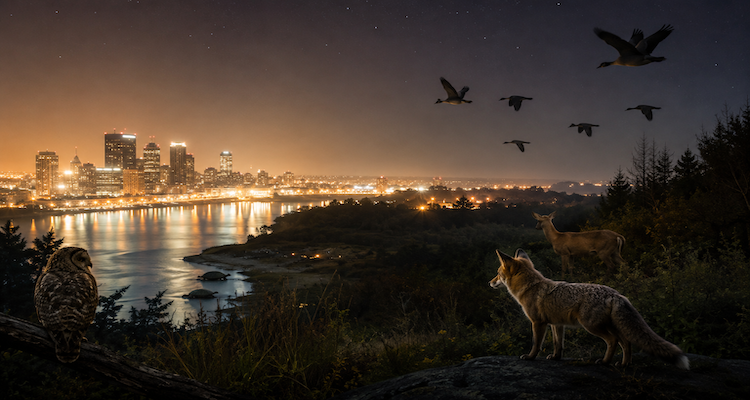
Artificial light has become one of humanity’s most successful inventions. It extends productivity beyond sunset, improves safety in urban areas, and illuminates everything from highways to sports arenas. Yet beyond the glow of city skylines and suburban neighborhoods, a quieter story is unfolding—one that affects countless species that evolved under predictable cycles of daylight and darkness.
What appears to humans as convenience can represent a profound environmental disruption. Across forests, wetlands, coastlines, and even agricultural landscapes, artificial light is altering behaviors that wildlife have depended on for survival for thousands of years. Unlike more visible environmental challenges such as habitat loss or pollution, light pollution often goes unnoticed because it does not leave behind obvious scars. Its effects, however, can ripple through entire ecosystems.
As cities expand and outdoor lighting becomes more widespread, scientists, conservationists, and urban planners are paying closer attention to a growing question: what happens when darkness disappears?
When Night Stops Being Night
Many species are adapted to specific light conditions. Darkness is not simply the absence of light; it serves as an ecological signal that influences feeding, migration, reproduction, navigation, and predator avoidance.
Artificial light at night can interfere with these natural processes. Nocturnal animals such as bats, owls, moths, and many amphibians rely on darkness to hunt, communicate, and move safely through their environments. Excessive illumination can alter their behavior, forcing them to change routes, feeding patterns, or breeding activities.
Migratory birds provide one of the most visible examples. Many species navigate using natural celestial cues during nighttime journeys. Bright urban lighting can confuse these navigational systems, causing birds to become disoriented, circle illuminated structures, or collide with buildings. In some locations, conservation groups and city authorities have introduced seasonal “lights out” programs during migration periods to reduce these risks.
The challenge is not limited to birds. Sea turtle hatchlings, for example, naturally move toward the brighter horizon over the ocean after emerging from nests. Coastal development and artificial beachfront lighting can redirect them inland, dramatically reducing their chances of survival.
The Invisible Impact on Food Chains
One of the least discussed consequences of artificial light involves its influence on food webs.
Insects are particularly vulnerable to light pollution. Many species are attracted to artificial light sources, often spending valuable energy circling lamps rather than feeding, reproducing, or avoiding predators. This behavior can contribute to local population declines and alter ecological relationships.
The consequences extend beyond insects themselves. Birds, bats, reptiles, amphibians, and small mammals depend on insects as a food source. When insect activity patterns change, predators may struggle to find food at expected times or locations.
This creates a chain reaction that can affect ecosystem stability in subtle but significant ways. Unlike sudden environmental disturbances, these shifts often occur gradually, making them difficult to recognize until long-term patterns emerge.
Wildlife Is Adapting But Not Always Successfully
Nature is remarkably resilient, and some species have demonstrated an ability to adapt to illuminated environments. Certain urban-dwelling animals modify feeding schedules, alter nesting locations, or exploit new opportunities created by artificial lighting.
However, adaptation is not always beneficial.
Some predators gain advantages under artificial light, while prey species become more exposed. This can create imbalances that favor certain animals while disadvantaging others. Species already facing pressures from habitat fragmentation, climate change, or human activity may find additional adaptation demands increasingly difficult to manage.
The result is often a gradual reshaping of local biodiversity rather than an immediate collapse. Some species become more common, while others quietly disappear from areas they once occupied.
A Growing Urban Planning Challenge
The conversation around light pollution is increasingly moving beyond wildlife conservation into broader discussions about urban design.
Many cities are exploring smarter lighting strategies that balance public safety with environmental responsibility. Advances in lighting technology allow communities to reduce unnecessary illumination while maintaining visibility where it is genuinely needed.
Shielded fixtures, motion-activated systems, lower-intensity lighting, and warmer-colored LEDs are among the approaches being considered. These solutions can reduce skyglow and minimize disruption to nearby habitats without compromising human needs.
What makes this trend particularly important is that it highlights a shift in environmental thinking. Instead of viewing conservation and development as opposing forces, planners are increasingly searching for ways to integrate ecological awareness into infrastructure decisions.
The Cultural Shift Behind the Issue
Perhaps the most interesting aspect of artificial light pollution is what it reveals about modern society.
For much of human history, darkness was a natural part of daily life. Today, many people rarely experience truly dark skies. In some regions, entire generations have grown up without seeing the full brightness of the Milky Way.
This disconnect influences how environmental issues are perceived. Habitat destruction is visible. Plastic pollution is visible. Light pollution often remains hidden because it blends into the background of everyday life.
Yet the loss of darkness represents more than an environmental concern. It reflects a broader transformation in humanity’s relationship with natural rhythms. The expectation that spaces should remain illuminated around the clock has become so normalized that the ecological consequences are easy to overlook.
Understanding this cultural shift helps explain why awareness of light pollution has lagged behind other conservation challenges despite its widespread effects.
Why Interest Is Increasing Now
Several factors are driving renewed attention toward the impact of artificial light on wildlife.
First, advances in satellite monitoring have made it easier to observe expanding nighttime illumination across the planet. Researchers can now track changes in lighting patterns with greater precision than before.
Second, growing interest in biodiversity conservation has encouraged closer examination of less obvious environmental pressures. As efforts to protect habitats become more sophisticated, attention naturally expands to factors that influence wildlife behavior within those habitats.
Third, public awareness of ecosystem interconnectedness is increasing. People are becoming more interested in how everyday choices, from landscaping to outdoor lighting, can influence local wildlife populations.
This broader understanding has transformed light pollution from a niche conservation topic into a subject relevant to urban planning, public policy, environmental management, and community design.
What Happens Next?
Artificial light is unlikely to disappear, nor should it. The challenge is not eliminating illumination but using it more thoughtfully.
Future solutions will likely depend on collaboration among governments, businesses, engineers, conservation organizations, and communities. Advances in smart lighting technologies may help reduce unnecessary exposure while maintaining safety and functionality.
The larger opportunity lies in recognizing darkness as an environmental resource rather than an empty space waiting to be illuminated.
That shift in perspective may become increasingly important as cities grow and landscapes continue to change. Protecting wildlife is often associated with preserving forests, wetlands, and oceans. Yet in many cases, preserving darkness may prove just as essential.
The hidden cost of artificial light is not simply that wildlife behaves differently under brighter skies. It is that ecosystems depend on darkness in ways humans are only beginning to fully understand. Recognizing that reality could reshape how future generations design and experience the world after sunset.
This content is published for informational or entertainment purposes. Facts, opinions, or references may evolve over time, and readers are encouraged to verify details from reliable sources.