






How Climate Change Is Redrawing the World’s Animal Migration Routes
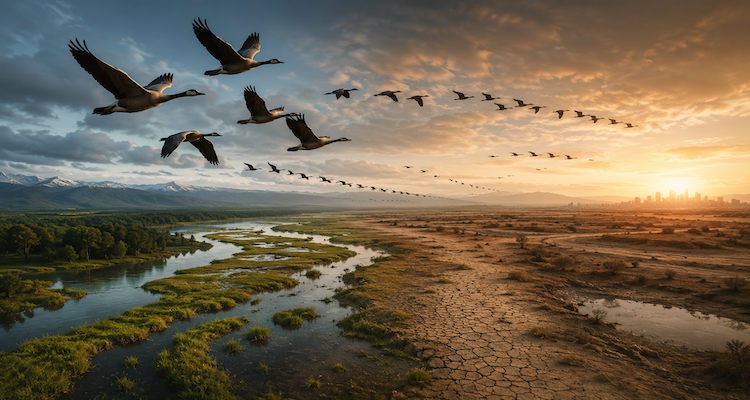
Migration has long been one of nature’s most remarkable survival strategies. From birds crossing continents to whales traveling thousands of miles between feeding and breeding grounds, animal movements have historically followed patterns shaped by seasons, food availability, and environmental cues. Those patterns, refined over generations, are now beginning to shift in ways that scientists, conservationists, and communities are increasingly noticing.
What makes this change significant is not simply that animals are moving differently. It is that the maps they have followed for centuries are becoming less predictable. As temperatures rise, weather patterns become more erratic, and ecosystems transform, many species are adjusting where they travel, when they migrate, and how far they go. The result is a gradual rewriting of migration routes that could reshape wildlife populations and human interactions with nature for decades to come.
Migration Is No Longer Following Familiar Rules
For many migratory species, timing is everything. Birds often begin their journeys based on daylight changes, while food sources and suitable habitats depend on seasonal weather conditions. Historically, these signals aligned closely enough to support successful migration cycles.
Climate change is disrupting that balance.
Warmer temperatures are causing spring to arrive earlier in some regions and altering the availability of food resources. In certain cases, migratory birds reach breeding grounds only to find that the peak abundance of insects or plants has already passed. Marine species face similar challenges as ocean temperatures influence the distribution of prey and suitable habitats.
These changes do not affect every species equally. Some animals adapt relatively quickly, altering their routes or migration schedules. Others struggle to keep pace with rapidly changing environmental conditions.
New Routes Are Emerging Across Continents
One of the most noticeable effects of climate change is the expansion of species into areas where they were once uncommon or absent altogether.
Birdwatchers across parts of Europe and North America have reported sightings of species appearing farther north than historical records would suggest. Some fish populations are moving toward cooler waters, while certain insects are extending their ranges into regions that previously experienced temperatures too low for survival.
These shifts are creating entirely new migration patterns. Traditional stopover sites may become less important, while new habitats emerge as critical resting and feeding areas.
The implications extend beyond wildlife observation. Protected areas, conservation corridors, and wildlife management strategies were often designed around historical migration routes. As those routes change, existing conservation frameworks may no longer provide the protection species need.
The Hidden Challenge of Ecological Timing
One of the less visible consequences of changing migration patterns involves what ecologists often describe as “timing mismatches.”
Many ecosystems depend on species arriving at the right place at the right moment. Migratory birds may rely on insect populations that emerge during a narrow seasonal window. Pollinators often synchronize their movements with flowering plants. Marine animals depend on seasonal cycles of plankton growth and prey abundance.
When climate change alters these schedules at different rates, established relationships can begin to weaken.
A bird species may arrive at a breeding site later than ideal because migration cues remain unchanged, even though warmer conditions have shifted food availability. Over time, such mismatches can affect breeding success, survival rates, and population stability.
These disruptions reveal that migration is not merely about movement. It is part of a larger ecological network where timing often matters as much as location.
Why Human Communities Are Paying Closer Attention
The rewriting of migration maps is not only a wildlife story. It increasingly has human consequences.
Many local economies benefit from seasonal wildlife tourism. Bird migrations, whale-watching seasons, and other nature-based attractions often depend on predictable animal movements. When migration timing shifts, tourism industries may need to adapt.
Agriculture can also be affected. Changes in the distribution of pollinators, insect populations, and migratory species can influence crop productivity and ecosystem health. In some regions, expanding animal ranges may introduce new challenges related to wildlife management, disease monitoring, or resource competition.
Communities that have built cultural traditions around seasonal wildlife events may also notice changes. Annual migrations that once marked the arrival of spring or the transition between seasons can become less predictable, altering long-standing relationships between people and nature.
Technology Is Revealing Changes Faster Than Ever
A major reason public awareness of migration shifts is growing lies in advances in tracking technology.
Satellite transmitters, GPS devices, remote sensing systems, and artificial intelligence tools now allow researchers to monitor animal movements with unprecedented precision. Scientists can track individual birds, mammals, and marine species across vast distances and compare modern migration routes with historical records.
This growing body of data is revealing patterns that would have been difficult to detect even a few decades ago.
Researchers are observing not only where animals move but also how migration behavior changes in response to temperature, drought conditions, habitat loss, and extreme weather events. Such insights are helping conservation organizations identify emerging risks and prioritize protection efforts.
The Bigger Story Behind Migration Shifts
Perhaps the most important insight is that changing migration routes serve as an early indicator of broader environmental transformation.
Animals often respond to environmental changes before humans fully recognize them. A shifting migration pathway may signal changes in ecosystem productivity, water availability, vegetation patterns, or climate conditions across large geographic areas.
In this sense, migratory species act as biological messengers. Their movements provide clues about how landscapes, oceans, and ecosystems are responding to a warming world.
This perspective changes the conversation from wildlife conservation alone to environmental resilience. Migration shifts are not isolated events; they are part of a larger story about how life adapts to rapid change.
Conservation Must Become More Flexible
Traditional conservation efforts frequently focus on protecting specific locations. While protected habitats remain essential, changing migration patterns highlight the importance of connected landscapes and adaptive management strategies.
Wildlife corridors, habitat restoration projects, and international conservation partnerships are becoming increasingly important because migratory species rarely remain within a single region or national boundary.
Conservation planning may need to account not only for where animals live today but also where they may move in the future. This represents a significant shift in how environmental protection is approached.
Rather than preserving static ecosystems, future conservation efforts may focus on supporting ecological flexibility and movement.
What the Future Could Look Like
The future of animal migration will likely vary across species and regions. Some animals may successfully adapt by modifying routes, timing, or destinations. Others may face growing pressures if environmental changes outpace their ability to adjust.
What seems increasingly clear is that migration maps are becoming more dynamic than they once were. The routes etched into nature over centuries are no longer fixed pathways but evolving responses to changing conditions.
For researchers, policymakers, and the public, understanding these shifts offers more than scientific insight. It provides a glimpse into how climate change is reshaping the living world in real time.
The story of migration has always been about adaptation and survival. Today, it is also becoming one of the clearest illustrations of a planet in transition and of the extraordinary ways wildlife is responding to that transformation.
This content is published for informational or entertainment purposes. Facts, opinions, or references may evolve over time, and readers are encouraged to verify details from reliable sources.