









Why Familiar Places Feel Different After Dark
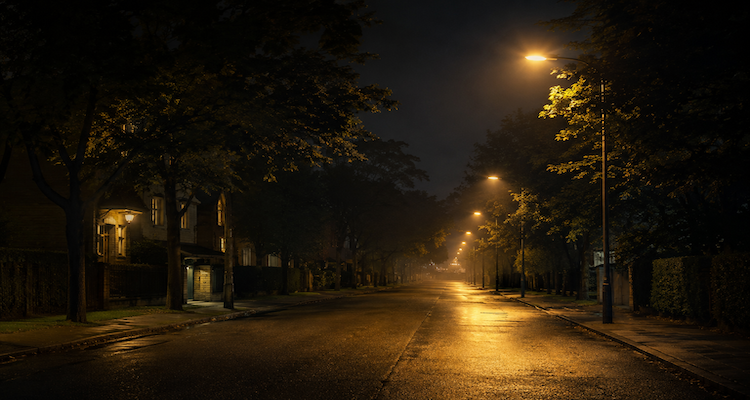
A street walked every day can feel strangely unfamiliar at night. The corner café that seems welcoming in the afternoon may appear distant and mysterious after sunset. A neighborhood park filled with activity during daylight can suddenly feel larger, quieter, and more unpredictable once darkness settles in.
What changes is not usually the place itself. The buildings remain where they are. The roads follow the same paths. The landmarks are unchanged. Yet many people experience a subtle sense of disorientation when returning to familiar environments after dark. The transformation feels real because it is rooted in how human perception works.
This everyday phenomenon reveals something deeper about the relationship between people and their surroundings. As cities become increasingly illuminated and lifestyles extend further into nighttime hours, understanding why darkness alters our experience of familiar spaces offers insight into psychology, urban design, culture, and even modern patterns of social behavior.
The Brain Sees More Than the Eyes
Human beings rarely navigate environments using vision alone. During the day, the brain continuously combines visual details with memory, context, movement, sound, and expectation to create a sense of place.
When darkness arrives, much of that visual information becomes unavailable. Colors fade. Distances become harder to judge. Peripheral details disappear. Objects that normally help people orient themselves become less visible or vanish entirely.
As a result, the brain begins relying more heavily on assumptions and interpretation.
This shift creates a fascinating effect. Familiar places stop feeling entirely predictable. The mind starts filling informational gaps, sometimes producing uncertainty, heightened awareness, or even mild unease. What feels like a change in the environment is often a change in perception itself.
Darkness does not merely reduce visibility. It changes how the brain processes reality.
Familiarity Depends on Predictability
Much of what people describe as comfort comes from predictability.
A familiar street feels safe because its appearance, sounds, and activity levels match expectations. During daylight hours, countless visual cues confirm those expectations every few seconds.
At night, many of those cues disappear.
Shadows conceal details. Fewer people occupy public spaces. Businesses close. Traffic patterns shift. Sounds become more noticeable. Even subtle changes can disrupt the brain’s sense of certainty.
This explains why an ordinary parking lot, office building, or residential road can suddenly feel different despite remaining physically unchanged.
The environment becomes less predictable, and predictability is one of the foundations of psychological comfort.
Why Quiet Feels So Powerful After Sunset
One overlooked factor is the role of sound.
During the day, urban environments are filled with continuous background noise. Conversations, vehicles, construction activity, and countless small sounds create an acoustic landscape that signals normality.
Night often reduces this constant stimulation.
When familiar places become quieter, individual sounds gain significance. A distant footstep, a rustling tree branch, or a passing vehicle can feel unusually prominent. The brain naturally pays closer attention because there is less competing information.
This heightened awareness can create the impression that a place has become more intense, even when nothing threatening is present.
In many cases, people are responding not to danger but to the absence of expected sensory activity.
The Hidden Influence of Human Presence
Places are shaped by the people who occupy them.
A busy city square feels different when filled with commuters than when nearly empty. A school campus feels transformed during holidays. A shopping district changes character after businesses close.
Human activity acts as a form of environmental reassurance. It provides signals that a place is functioning as expected.
After dark, those signals often decline.
The reduction in visible social activity can make spaces feel larger, quieter, or more isolated. This is one reason why even highly familiar locations sometimes evoke emotions ranging from nostalgia to discomfort once night falls.
Interestingly, the same effect can also create positive experiences. Many people find nighttime walks calming because the reduced social activity allows them to experience familiar environments in a new way.
Cities Are Designed Differently at Night
The nighttime transformation of familiar places is not purely psychological. Urban design plays a significant role.
Street lighting, illuminated storefronts, transit systems, building architecture, and public space planning all influence how environments are experienced after dark.
Some cities intentionally create vibrant nighttime atmospheres through lighting and activity. Entertainment districts, waterfront developments, and pedestrian-focused areas often use design to encourage feelings of safety and engagement.
Other locations become visually fragmented after sunset. Uneven lighting, closed businesses, and reduced activity can create stronger contrasts between active and inactive spaces.
As more cities invest in nighttime economies, planners are increasingly recognizing that darkness creates a distinct version of the urban environment rather than simply a less visible version of the daytime city.
The experience of a place at 10 p.m. may be fundamentally different from the experience of that same place at 10 a.m.
Why Nostalgia Often Appears at Night
Nighttime perception is closely connected to memory.
With fewer visual distractions competing for attention, the mind often becomes more reflective. Familiar locations can trigger memories more strongly after dark because the environment feels quieter and emotionally charged.
A childhood street, an old school, or a route once traveled regularly may evoke stronger feelings during evening hours than during the day.
This connection between darkness and reflection appears repeatedly in literature, cinema, photography, and popular culture. Night has long been associated with introspection because it alters the balance between external stimulation and internal thought.
In familiar places, this effect can be particularly powerful.
People are not simply seeing a location differently. They are experiencing it through a different emotional lens.
The Digital Age Has Changed Nighttime Experience
Modern technology has introduced another layer to how familiar places feel after dark.
Smartphones, navigation apps, ride-sharing platforms, and constant connectivity have reduced many of the uncertainties historically associated with nighttime travel.
Yet technology has also changed how people interact with physical spaces.
Many individuals now experience environments while simultaneously engaging with digital content. Attention is divided between the physical world and online interactions. At night, when surroundings become less visually dominant, this contrast becomes even more noticeable.
The result is a curious paradox. People may feel more connected than ever through technology while becoming less connected to the spaces they physically occupy.
This shift may help explain why nighttime experiences often feel uniquely memorable. Darkness reduces visual certainty while increasing awareness of both surroundings and personal thoughts.
What Familiar Places After Dark Reveal About Human Perception
The reason familiar places feel different after dark is not simply because darkness hides things. It is because darkness changes the relationship between perception, memory, expectation, and emotion.
A place is never defined solely by its physical features. It is also shaped by how the brain interprets those features at a particular moment.
Night removes some information, amplifies other signals, and invites greater reflection. The result is an experience that can feel mysterious, peaceful, unsettling, nostalgic, or inspiring, sometimes all at once.
Perhaps the most surprising insight is that darkness does not transform familiar places nearly as much as it reveals how actively the mind participates in creating them.
The streets, buildings, and landmarks remain the same. What changes is the way we see them and, in many ways, the way we see ourselves within them.
This content is published for informational or entertainment purposes. Facts, opinions, or references may evolve over time, and readers are encouraged to verify details from reliable sources.