






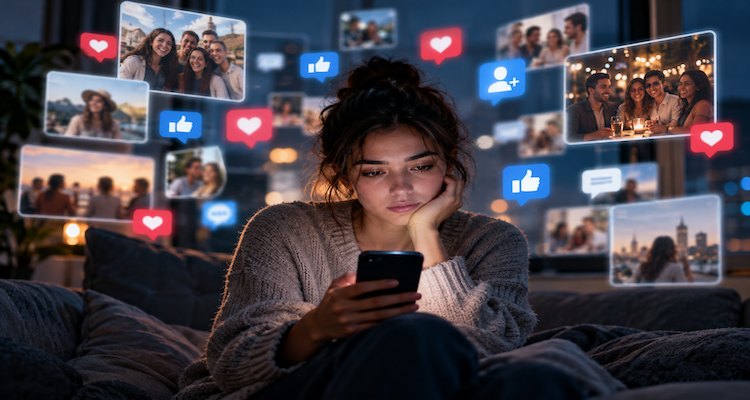



Why “Human-Made” Labels Are Becoming a Powerful Signal of Trust
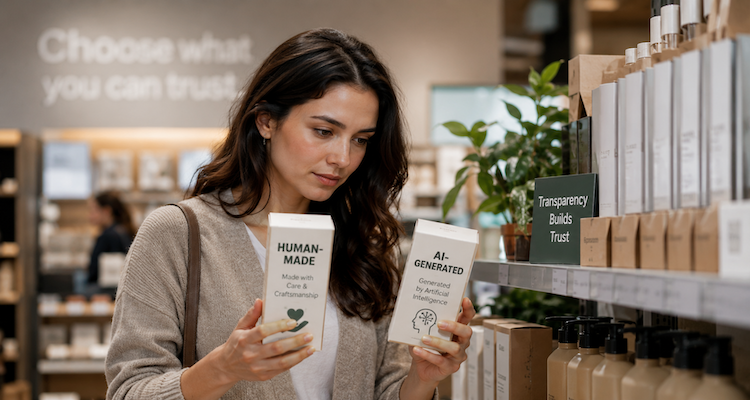
A small label on a product package, a piece of artwork, a news article, or even a marketing campaign is beginning to carry unexpected weight: Human-Made.
Not long ago, consumers were primarily concerned with whether something was organic, sustainable, locally produced, or ethically sourced. Today, another question is quietly entering purchasing decisions: Was this created by a person or generated by a machine?
The growing visibility of artificial intelligence in creative work, customer service, content production, and product design has introduced a new layer of uncertainty into everyday choices. As AI-generated material becomes harder to distinguish from human-created work, many consumers are placing greater value on signs that a real person was involved.
What might appear to be a simple preference is actually revealing a deeper shift in how people define trust, authenticity, and value in a digital-first economy.
The Rise of Authenticity as a Consumer Priority
Trust has always influenced purchasing behavior, but the reasons people trust something are changing.
For decades, trust was built through brand reputation, product quality, and consistent customer experiences. Today, consumers are also evaluating the origin of information, creative work, and even emotional interactions.
AI tools can now generate articles, images, videos, music, customer support responses, and marketing copy at remarkable speed. While many of these tools offer genuine benefits, they have also created an environment where consumers often struggle to understand who or what is behind the content they encounter.
As a result, labels that indicate human involvement can provide reassurance.
The appeal is not necessarily about rejecting technology. Instead, it reflects a desire for transparency. People increasingly want to know how something was created and who was responsible for creating it.
In many cases, trust grows when consumers feel they understand the process behind a product or experience.
Why Human Effort Feels More Valuable
One of the strongest drivers behind the popularity of “human-made” labels is the perception of effort.
Psychologists and consumer researchers have long observed that people often place higher value on items they believe required skill, dedication, creativity, or craftsmanship. A hand-crafted ceramic bowl, a handmade leather wallet, or a painting created by an artist carries a story that extends beyond the final product.
AI-generated outputs can often replicate appearance, structure, and functionality. What they cannot fully replicate is the emotional connection consumers associate with human intention.
When people purchase something created by another person, they are often buying more than an object. They are buying expertise, perspective, and the sense that someone invested time and care into the result.
That emotional dimension can become a competitive advantage in markets increasingly shaped by automation.
The Trust Gap Emerging Around AI Content
The rapid growth of generative AI has produced impressive innovations, but it has also introduced skepticism.
Consumers are encountering AI-generated reviews, AI-written articles, AI-created images, and AI-powered customer interactions on a daily basis. While some experiences are positive, others raise concerns about accuracy, originality, accountability, and transparency.
A key challenge is that AI-generated content can sometimes appear convincing while containing errors, outdated information, or misleading details. When mistakes occur, consumers often struggle to determine who is responsible.
Human-created work, by contrast, offers a clearer sense of accountability.
A journalist signs an article. An artist claims ownership of a painting. A designer stands behind a product. That visible connection between creator and creation can strengthen confidence, particularly when trust is already fragile.
The growing popularity of “human-made” labeling may therefore be less about technology itself and more about the human desire for accountability.
Businesses Are Recognizing the Shift
Across multiple industries, organizations are beginning to highlight human involvement as part of their brand identity.
Creative agencies emphasize human creativity supported by AI rather than replaced by it. Publishers increasingly disclose editorial processes. Luxury brands continue to promote craftsmanship and artisan expertise. Educational platforms highlight instructor-led learning experiences.
Even technology companies are discovering that customers often prefer a balance between automation and human oversight.
Customer service provides a useful example. Many consumers appreciate the convenience of chatbots for simple questions. However, when issues become complex or emotionally sensitive, people frequently want access to a real human representative.
The lesson is becoming clear: efficiency alone does not automatically create trust.
Businesses that combine technological advantages with visible human involvement may be better positioned to earn long-term customer confidence.
The Cultural Meaning Behind “Human-Made”
The growing appeal of human-created products reflects a broader cultural trend.
Modern life is increasingly mediated through algorithms. Recommendation engines influence what people watch, listen to, read, and purchase. Automated systems help determine which content receives visibility online. AI tools are beginning to participate in creative and professional workflows.
Against this backdrop, human-made labels can serve as a form of cultural reassurance.
They signal individuality in an environment that often feels standardized. They suggest personal expression in a landscape dominated by automation. They remind consumers that human creativity remains distinct, even when machines become more capable.
This explains why the trend extends beyond physical products.
People are showing greater interest in live performances, creator-led communities, handcrafted goods, independent journalism, and personal storytelling. In many cases, the attraction stems from a desire to connect with something perceived as genuinely human.
A Hidden Insight: Consumers May Trust Transparency More Than Humanity
One of the most interesting aspects of this trend is that consumers may not actually be demanding the complete absence of AI.
What many people appear to want is honesty.
A company that openly explains how AI contributes to its products may earn more trust than one that hides automation behind marketing language. Likewise, consumers may be comfortable with AI-assisted content if they understand the role humans played in reviewing, editing, or guiding the process.
This distinction matters.
The future may not divide products into “AI-made” and “human-made” categories. Instead, trust could increasingly depend on transparency regarding how both humans and machines contribute.
In that sense, the real value of a human-made label may be the clarity it provides rather than the technology it excludes.
What Happens Next?
As AI becomes more deeply integrated into everyday life, labels emphasizing human involvement are likely to become more common.
Publishers may disclose editorial oversight. Creative professionals may certify original work. Brands may highlight human craftsmanship as a premium feature. Consumers may begin asking more questions about authorship and accountability before making purchasing decisions.
At the same time, the distinction between human-created and AI-assisted work will become increasingly complex.
The organizations that succeed will likely be those that avoid presenting technology and humanity as opposing forces. Instead, they will demonstrate how technology can enhance human capabilities while preserving creativity, responsibility, and trust.
Ultimately, the growing appeal of “human-made” labels reveals something important about consumer behavior. Even in an era defined by intelligent machines, people continue to place exceptional value on human judgment, human creativity, and human connection.
That preference may prove to be one of the most durable market forces of the AI age.
The information presented in this article is based on publicly available sources, reports, and factual material available at the time of publication. While efforts are made to ensure accuracy, details may change as new information emerges. The content is provided for general informational purposes only, and readers are advised to verify facts independently where necessary.