







The Business of Waiting: Why Some Companies Are Deliberately Slowing Down Customer Experiences
Speed has become one of the defining promises of modern business. Groceries arrive within hours, videos stream instantly, and customer support is expected to respond in minutes rather than days. For years, companies competed by removing friction and reducing wait times wherever possible.
Yet an unexpected shift is emerging across industries. Some businesses are intentionally slowing parts of the customer experience not because they lack the ability to move faster, but because waiting itself has become a strategic tool.
From luxury brands limiting access to products to restaurants that maintain reservation lists and digital platforms that introduce gradual onboarding, a growing number of organizations are discovering that immediate gratification is not always the most valuable experience they can offer. In certain situations, slowing things down can increase demand, strengthen loyalty, and even improve customer satisfaction.
When Faster Is Not Necessarily Better
The assumption that speed always improves customer experiences is rooted in a simple idea: people value convenience. In many cases, that remains true. Nobody wants a slow payment system or a delayed emergency service.
However, human psychology is more complicated than pure efficiency.
The anticipation of receiving something often shapes how people value it. A product acquired instantly may feel useful, but a product earned after a period of waiting can feel more meaningful. Businesses have long understood this principle, even if it was not always framed as a customer-experience strategy.
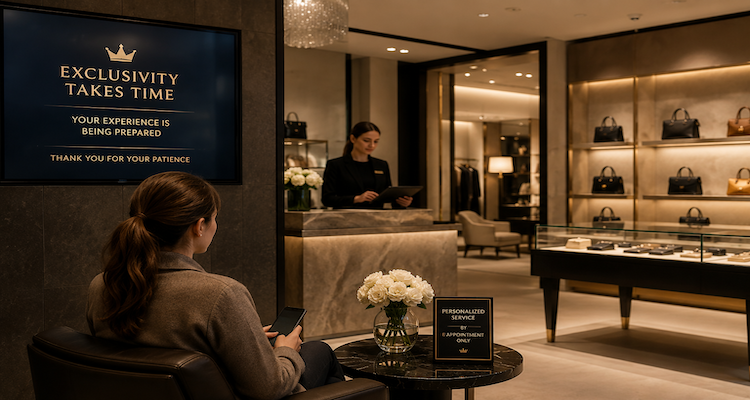
Luxury fashion houses, exclusive clubs, and high-end automotive brands frequently rely on waiting lists. The delay is not merely a supply issue. In many cases, scarcity and anticipation become part of the product itself.
The wait creates a story.
Customers begin imagining ownership before it happens, increasing emotional investment. By the time the product arrives, the experience feels more significant than a simple transaction.
The Rise of Intentional Friction
For years, companies focused on eliminating friction wherever possible. Today, some are reintroducing carefully designed friction in specific areas.
Consider how certain subscription services provide limited access initially and unlock features over time. Some educational platforms encourage gradual progression instead of allowing users to skip directly to advanced content. Fitness apps often rely on streaks and milestones that require patience and consistency.
The goal is not to frustrate users. Instead, it is to increase engagement and commitment.
Behavioral experts have long observed that people tend to value outcomes more when they invest effort, time, or attention into achieving them. Businesses are increasingly applying this principle to customer journeys.
Rather than asking, “How can we make this faster?” companies are beginning to ask, “How can we make this more meaningful?”
That subtle change in perspective is influencing product design, marketing, and customer retention strategies.
Why Waiting Can Increase Perceived Value
One reason intentional delays can work is that waiting creates a sense of importance.
When something is instantly available everywhere, it can begin to feel interchangeable. Scarcity whether real or carefully managed signals that a product, service, or experience may be worth paying attention to.
This dynamic can be seen in industries ranging from hospitality to technology.
Popular restaurants often become more desirable once reservations become difficult to obtain. Limited product launches generate excitement precisely because not everyone can access them immediately. Exclusive membership communities frequently use application processes and waiting periods to reinforce their identity.
The waiting period itself becomes part of the experience.
Interestingly, customers do not always perceive these delays negatively. When waiting appears purposeful and connected to quality, exclusivity, or personalization, it can strengthen rather than weaken brand perception.
The challenge for businesses is ensuring that customers understand the reason behind the wait.
The Digital Economy’s Patience Problem
The deliberate use of waiting also reflects a broader cultural shift.
Consumers have spent years adapting to increasingly immediate experiences. Streaming platforms replaced scheduled television. One-click purchasing reduced shopping friction. Social media created expectations of instant interaction and feedback.
As a result, patience has become a scarce resource.
This creates an unusual opportunity for brands. In a world where nearly everything competes for immediate attention, experiences that unfold gradually can stand out.
Some creators, publishers, and platforms are experimenting with serialized content, staggered releases, and community-driven access models. Rather than delivering everything at once, they encourage audiences to return repeatedly over time.
This approach can deepen engagement because anticipation keeps customers connected between interactions.
The strategy resembles older forms of media consumption, where audiences waited for weekly television episodes or monthly magazine releases. What once seemed outdated is finding renewed relevance in an environment saturated with instant content.
The Difference Between Strategic Waiting and Bad Service
Not all waiting is beneficial.
There is a critical distinction between intentional waiting and poor operational performance.
Customers rarely appreciate delays caused by inefficiency, unclear communication, or inadequate resources. Long customer-service response times, shipping failures, and technical bottlenecks typically damage trust rather than build it.
The effectiveness of strategic waiting depends on transparency.
When customers understand why they are waiting and perceive value at the end of the process, delays can become acceptable—or even desirable.
Many successful companies maintain communication throughout waiting periods. They provide updates, previews, exclusive information, or personalized interactions that reinforce the value of the eventual outcome.
The wait feels active rather than empty.
Without that context, waiting quickly transforms from anticipation into frustration.
A Deeper Insight: Waiting Creates Emotional Ownership
One of the most overlooked effects of waiting is its impact on emotional ownership.
People often begin psychologically attaching themselves to something before they actually possess it. A future vacation, a highly anticipated product, or admission into a desired community can occupy significant mental space long before the experience arrives.
During that period, customers imagine how the product will fit into their lives. They build expectations, create narratives, and develop a sense of connection.
This process can increase loyalty because the relationship starts before the transaction is complete.
In many ways, businesses that strategically use waiting are not simply selling products. They are extending the emotional journey associated with those products.
That insight helps explain why certain brands continue to thrive despite offering slower access than competitors.
They are competing on anticipation rather than convenience.
What This Trend Reveals About Consumer Behavior
The growing interest in slower customer experiences highlights an important reality: consumers are not always optimizing for efficiency.
People seek meaning, status, belonging, achievement, and emotional connection. Sometimes those goals conflict with pure speed.
Businesses that understand this distinction can design experiences that resonate on a deeper level. Rather than treating every delay as a problem to eliminate, they evaluate whether certain forms of waiting contribute to value creation.
This does not mean the future belongs to slower businesses. Fast service will remain essential in countless industries.
Instead, the emerging lesson is more nuanced. The most successful organizations may be those that know exactly when to accelerate and when to slow down.
As competition intensifies and customer expectations evolve, waiting itself is becoming a product feature. For some companies, the experience of anticipation is no longer a side effect of doing business—it is part of the business model.
The information presented in this article is based on publicly available sources, reports, and factual material available at the time of publication. While efforts are made to ensure accuracy, details may change as new information emerges. The content is provided for general informational purposes only, and readers are advised to verify facts independently where necessary.