





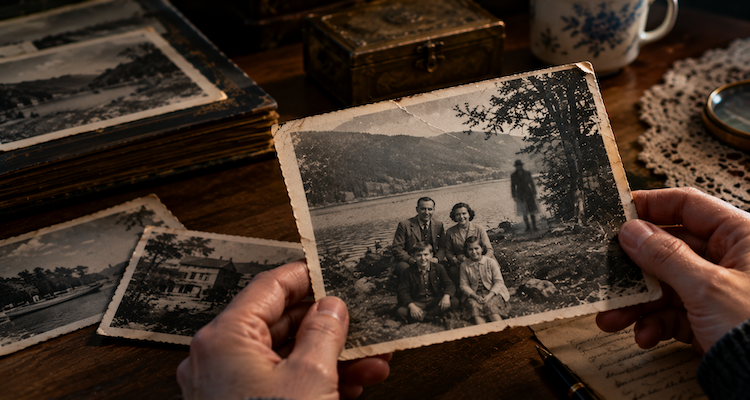



The Sound a City Loses When Its Last Small Workshop Closes
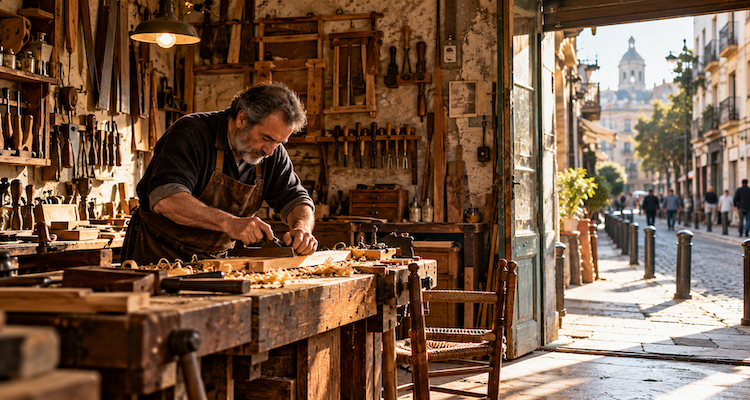
A city can lose part of its identity without demolishing a single building. Sometimes, all it takes is a workshop closing its doors for the last time.
The tapping of a cobbler’s hammer, the grinding of metal, the buzz of a sewing machine, or the scraping of wood beneath a carpenter’s plane may seem like ordinary background noise. Yet these sounds tell us something about the people who work there, the skills they practise, and the ways a neighbourhood functions.
When a small workshop disappears, the loss is not necessarily dramatic. There may be no public announcement or farewell gathering. The shutters simply remain closed. Eventually, another business may occupy the space.
But what happens to a city when the sounds of making and repairing things gradually vanish from its streets?
Key Takeaways
-
Small workshops contribute distinctive sounds to neighbourhoods, forming part of their everyday sensory identity.
-
Their disappearance can reflect changes in property costs, consumer habits, manufacturing, and local economies.
-
Traditional workshops often preserve practical skills that are difficult to learn from written instructions alone.
-
The closure of a workshop can affect relationships between craftspeople, customers, apprentices, and nearby residents.
-
Preserving urban heritage involves more than protecting historic buildings; it can also mean recognising working traditions and everyday sounds.
A Workshop Is More Than a Place Where Things Are Made
Consider a narrow street where a carpenter has worked for several decades.
Each morning, the workshop opens. Wood is carried inside, tools are arranged, and the day’s work begins. A saw cuts through timber. A hammer strikes a nail. Someone stops at the entrance to ask whether an old chair can be repaired.
For people who live nearby, these activities may become part of the street’s familiar rhythm.
They might not consciously notice the sounds. In fact, they may occasionally find them irritating. Yet the repeated presence of those sounds helps make the surroundings recognisable.
Environmental psychology and soundscape research examine how people experience places through sound, including the meanings they attach to familiar acoustic environments.
A workshop contributes to that environment in a way that is different from traffic, recorded music, or mechanical ventilation. Its sounds are connected to visible human activity.
When those activities disappear, the character of the street can change even if its physical appearance remains almost identical.
The Sounds That Tell Us a City Is Still Making Things
Every traditional workshop has its own acoustic character.
A metalworker’s shop may produce sharp, ringing impacts. A tailor’s workspace might be filled with the repeated movement of sewing machines. A bicycle repair shop brings the clicking of tools, spinning wheels, and occasional bursts of compressed air.
These sounds are not necessarily pleasant to everyone. Their importance lies partly in what they reveal.
They tell passers-by that someone is producing, maintaining, adjusting, or restoring something.
In many modern commercial streets, much of this activity happens elsewhere. Products arrive ready for sale, repairs are sent to centralised facilities, and manufacturing takes place far from the neighbourhoods where goods are consumed.
The street may remain economically active, but the relationship between production and everyday urban life becomes less visible.
This distinction matters because workshops allow residents to encounter the process behind an object rather than only its finished form.
A repaired table, a sharpened tool, or a newly fitted pair of shoes becomes evidence of skilled human work happening close to home.
Why Small Workshops Are Disappearing From Some Urban Streets
There is no single explanation for workshop closures.
Some businesses struggle with rising rents or changing property use. Others face competition from inexpensive mass-produced goods or replacement products that cost less than repairs.
Changing consumer expectations can also play a role. When an item breaks, replacing it may appear quicker or more convenient than finding someone who can repair it.
Succession is another challenge. A workshop owner approaching retirement may have no family member, employee, or apprentice willing or able to continue the business.
Not every closure represents economic decline. Some craftspeople move to larger premises, adopt digital tools, or build successful businesses online. Others leave because their skills are in demand elsewhere.
Nevertheless, when workshops disappear from a neighbourhood, residents may lose convenient access to local repair services and opportunities to observe skilled work.
The consequences depend on what replaces them and whether similar services remain accessible.
What Disappears When a Craftsperson Retires?
A workshop contains more than equipment and materials.
It may also contain years of knowledge acquired through repetition, experimentation, and mistakes.
An experienced craftsperson can sometimes recognise a problem through subtle signs: the resistance of a tool, the movement of a mechanism, the texture of a material, or an unusual sound.
Much of this expertise is practical rather than purely theoretical.
Researchers often describe knowledge that is difficult to fully express in words as tacit knowledge. It can be especially important in skilled trades, where observation and guided practice complement formal instruction.
When a craftsperson retires without passing on these abilities, some specialised knowledge may become harder to recover.
That does not mean traditional methods are always superior to modern ones. New technologies can improve accuracy, safety, efficiency, and access to training.
The concern is narrower: when a particular craft disappears locally, a community may lose skills that once helped people maintain and adapt the objects around them.
The Neighbourhood Relationships Hidden Inside a Workshop
A small workshop can function as an informal meeting place.
Customers may return over many years, bringing different objects and occasionally sharing personal news. Neighbours might stop to ask a question. Young people may become curious about the tools or techniques they see through an open doorway.
These encounters do not happen in every workshop, and their significance varies.
But where such relationships exist, they can make a business part of the neighbourhood’s social fabric.
Unlike a transaction conducted entirely online, local repair work often involves explaining a problem, discussing possible solutions, and deciding whether an object is worth restoring.
The craftsperson may know the history of an item, especially when it has been repaired several times.
A workshop’s closure can therefore remove a familiar point of contact as well as a commercial service.
When a City Becomes Quieter but Not Necessarily Better
Noise reduction is generally an important urban goal.
Excessive environmental noise can interfere with sleep, concentration, and well-being. Workshops can also generate harmful noise or expose workers to occupational hazards when appropriate protections are absent.
It would be misleading to suggest that every workshop sound should be preserved.
However, soundscape quality is not simply a question of making every place as quiet as possible.
A useful distinction exists between unwanted noise and sounds that people consider meaningful, appropriate, or characteristic of a location.
The sound of a hammer may be disruptive beside a bedroom at midnight but familiar and acceptable during daytime working hours on a street historically associated with crafts.
A well-designed city needs to consider both acoustic comfort and the diversity of activities that give neighbourhoods their character.
The goal is not to romanticise noise. It is to understand what different sounds represent and how they affect people who share the space.
Can a City Preserve the Sound of a Disappearing Trade?
Some forms of cultural heritage can be preserved through photographs, documents, tools, and restored buildings.
Sounds present a different challenge.
A recording can capture the rhythm of a machine or the movements of a craftsperson, but it cannot fully reproduce the social environment in which those sounds originally occurred.
Still, recordings can become valuable historical evidence.
A local museum, community archive, or cultural organisation could document a workshop through interviews, photographs, sound recordings, and demonstrations of working techniques.
Such documentation could help future generations understand how people once repaired furniture, worked with metal, produced clothing, or maintained everyday objects.
The concept of intangible cultural heritage, recognised by UNESCO, includes knowledge, skills, and practices transmitted through communities. Traditional craftsmanship is one of its recognised domains.
This does not mean every individual workshop automatically qualifies as protected heritage. Rather, it provides a framework for understanding why living skills and practices may deserve attention alongside physical structures.
The Difference Between Remembering a Workshop and Keeping One Alive
Documentation is valuable, but preservation has limits.
A recorded sewing machine cannot mend clothing. A photograph of a carpenter cannot repair a damaged door.
If a community wants traditional skills to remain available, those skills need opportunities to be practised.
Possible approaches include apprenticeships, affordable working spaces, repair initiatives, partnerships with vocational schools, and public programmes that introduce residents to local crafts.
Such efforts require practical judgment.
Subsidising every struggling business indefinitely may not be economically sustainable, and preserving a workshop should not mean preventing craftspeople from changing careers or adopting better technologies.
The stronger objective is to ensure that useful skills can survive, adapt, and find new generations of practitioners.
A workshop does not have to remain unchanged to remain culturally meaningful.
The Last Sound May Be the One Nobody Notices
Imagine a workshop on an ordinary weekday afternoon.
A craftsperson finishes a final repair, returns a tool to its place, and closes the shutters.
Perhaps the business has been sold. Perhaps retirement has arrived. Perhaps the rent has become unaffordable.
The next morning, the street continues as usual.
People walk to work. Deliveries arrive. Traffic passes. Other shops open.
For a while, someone may notice that a familiar sound is missing. Eventually, the silence becomes normal.
That is one of the difficulties of recognising everyday cultural loss: people often understand the significance of a routine only after it has ended.
And unlike the demolition of a historic building, the disappearance of a familiar sound leaves little physical evidence.
Conclusion: A City’s Identity Is Also Something We Hear
Cities are usually remembered through landmarks, streets, architecture, and public spaces.
But they are also experienced through sounds.
The small workshop represents one part of that sensory landscape: the sound of someone making, fixing, adjusting, or restoring an object within the neighbourhood where it will be used.
Its closure does not always mean that a city has become poorer, less creative, or less productive. Economic activities evolve, and new forms of work can bring their own benefits.
Yet the disappearance of workshops raises a question worth asking before the last one closes:
If a city gradually loses the sounds of people making and repairing things, what else might it be losing without noticing?
This content is published for informational or entertainment purposes. Facts, opinions, or references may evolve over time, and readers are encouraged to verify details from reliable sources.