




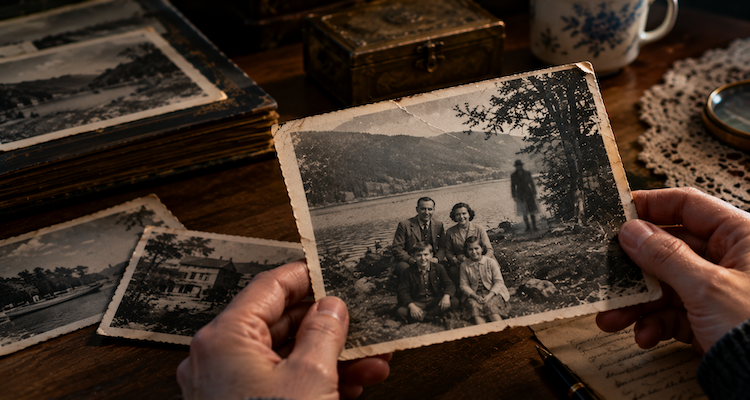




The Invisible Clues Your Brain Uses to Recognise a Place Before You Remember Its Name
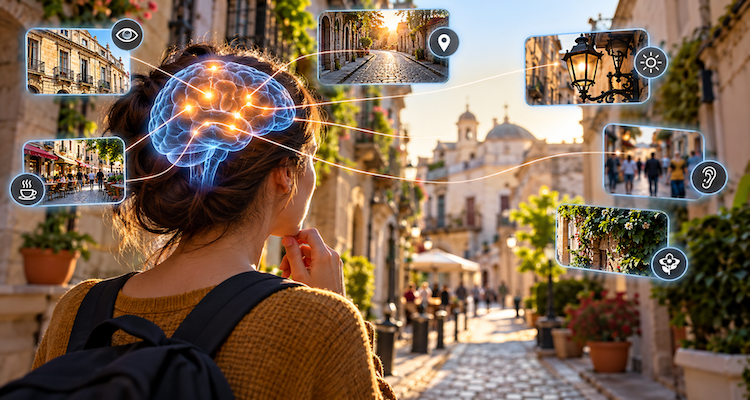
Why familiar streets, forgotten buildings, and subtle sensory details can trigger recognition before conscious recollection.
Imagine walking through an unfamiliar-looking neighbourhood when something suddenly catches your attention. The buildings seem recognisable. The curve of the road feels strangely familiar. Even the atmosphere reminds you of somewhere you have been before.
You stop for a moment, trying to remember the location. You know you have seen it, but the name refuses to appear.
Then, perhaps several seconds later, you remember.
This everyday experience raises an intriguing question: How can your brain recognise a place before you consciously remember what it is called?
The answer lies in the relationship between familiarity, spatial memory, sensory information, and the way the brain retrieves stored experiences.
Your brain does not need a name to recognise a place
Recognition and recollection are related but distinguishable memory processes.
Recognition allows you to identify something as familiar. Recollection involves recovering specific details associated with an earlier experience.
For example, you may immediately recognise the entrance to a railway station without remembering its name. Moments later, you might recall travelling through it during a family holiday.
Researchers studying recognition memory have explored how familiarity and recollection contribute differently to remembering.
The important distinction is that recognising an environment does not always require retrieving the complete story associated with it.
This is why a location can feel familiar before you remember when you visited or what it was called.
The invisible clues hidden in ordinary surroundings
Your brain continuously processes information about the environment. Some of these details become useful cues when you encounter a place again.
1. The shape of a street
The arrangement of buildings, roads, intersections, and open spaces can provide information about a location’s identity.
Even when individual shops have changed, the broader spatial layout may remain recognisable.
A curved street leading towards a small square, for instance, might remind you of a neighbourhood you explored years earlier.
2. Light and shadow
Lighting affects how environments appear.
A narrow street illuminated by afternoon sunlight can look quite different from the same street at night.
Yet distinctive combinations of architecture, lighting, and visual contrast may contribute to a sense of familiarity.
This does not mean the brain stores an exact photograph of every lighting condition. Instead, recognition can draw on multiple visual features and previously learned associations.
3. Sounds that bring back a location
A railway announcement, church bell, passing tram, or particular pattern of street noise can become associated with a place.
When similar sounds occur again, they may help retrieve memories linked to earlier experiences.
Sometimes the sound provides the missing connection between a familiar environment and a remembered event.
4. Smells connected with forgotten experiences
Smell has a particularly interesting relationship with autobiographical memory.
The smell of wet pavement, freshly baked bread, or flowers near a childhood home may evoke memories associated with a location.
Olfactory information has connections with brain systems involved in emotion and memory, helping explain why certain smells can produce vivid personal recollections.
However, not every smell-triggered memory is accurate or unusually detailed.
5. Emotional familiarity
Places can become associated with emotions.
A childhood playground might evoke comfort, while a former examination centre might trigger tension.
When you return to a similar environment, emotional associations may influence how familiar it feels, even before you consciously identify the original experience.
These feelings are not proof that you have visited the location before, but they can contribute to recognition.
The brain’s internal navigation system
One of the most important structures involved in spatial memory is the hippocampus.
This brain region contributes to forming and retrieving memories of experiences and relationships between locations.
Scientists have identified specialised neurons associated with spatial representation.
Place cells, discovered through animal research, become active in relation to particular locations within an environment.
Grid cells, identified in the entorhinal cortex, display distinctive patterns of activity associated with spatial positioning.
These discoveries transformed scientific understanding of how the brain represents space and navigation.
In 2014, John O’Keefe, May-Britt Moser, and Edvard I. Moser received the Nobel Prize in Physiology or Medicine for discoveries concerning cells that constitute a positioning system in the brain.
However, recognising a familiar building is not simply the result of one neuron identifying it. Spatial recognition involves broader networks that integrate sensory information, learned relationships, and memory.
Why you remember the place but forget its name
A location’s physical appearance and its verbal name are different kinds of information.
You may have encountered a building repeatedly without paying much attention to the name displayed outside.
Consequently, your visual familiarity with the building can be stronger than your ability to retrieve its label.
Another possibility is that you learned the name but temporarily cannot access it.
Memory retrieval depends partly on cues. Seeing a neighbouring landmark, hearing someone mention a nearby road, or remembering a previous journey may help you recover the missing name.
This illustrates an important principle: Information can feel familiar even when the details needed to identify it remain temporarily inaccessible.
Why an unfamiliar place can feel strangely familiar
Not every experience of familiarity comes from a genuine previous visit.
A town you have never explored might contain buildings resembling those in your childhood neighbourhood.
A hotel corridor might remind you of a school hallway.
A railway platform might resemble one you remember from a film.
When environments share features, the brain may detect similarities that contribute to a feeling of familiarity.
In some circumstances, this can lead to mistaken recognition.
The phenomenon known as déjà vu also involves an unusual feeling of familiarity, often accompanied by the awareness that the situation should be new.
Researchers have proposed several explanations for déjà vu, including mismatches between familiarity and recollection, but its mechanisms are not fully settled.
Ordinary place recognition and déjà vu should therefore not be treated as identical experiences.
Can your brain recognise a place after many years?
Yes, although the reliability of recognition varies.
Long-term memory can preserve information about environments encountered years earlier, especially when those places were visited repeatedly or associated with meaningful experiences.
Imagine returning to your childhood neighbourhood after twenty years.
The shops may have different names. Trees may have grown taller. Buildings may have been renovated.
Yet the arrangement of streets, the position of a park, or the route towards your former home might remain familiar.
Your brain can use surviving cues to connect the present environment with earlier experiences.
However, memories can change over time, and familiarity does not guarantee accurate identification.
What happens when the missing memory finally appears?
Consider a simple example.
You enter an old marketplace and experience an immediate sense of recognition.
At first, you cannot remember why.
Then you notice a distinctive staircase beside a shop.
Suddenly, you recall visiting the market with a relative many years earlier.
The staircase has provided an additional retrieval cue, helping connect the present scene with a stored autobiographical memory.
This does not necessarily mean that the entire memory was hidden intact and suddenly unlocked. Human remembering is reconstructive, and recalled details may be influenced by present information.
Nevertheless, environmental cues can make previously inaccessible information easier to retrieve.
Why this matters beyond everyday curiosity
Understanding place recognition has implications for several fields.
In neuroscience, it contributes to research on spatial memory and the hippocampus.
In psychology, it helps explain the relationship between familiarity, recollection, and autobiographical experience.
In architecture and urban design, research into navigation and environmental legibility examines how landmarks and spatial layouts help people orient themselves.
It is also relevant to understanding memory difficulties, although ordinary trouble recalling a place name should not automatically be interpreted as a medical problem.
The larger lesson is that remembering a place involves much more than knowing its name.
The remarkable difference between knowing and remembering
A familiar place can trigger recognition through its layout, sensory features, or associations with earlier experiences.
Yet identifying its name may require additional retrieval processes.
This separation explains why you can sometimes navigate confidently through an area while struggling to explain exactly where you are.
Your brain may retain useful information about the environment even when a particular verbal detail is difficult to access.
The next time a street feels familiar but its name escapes you, consider the possibility that several different memory processes are contributing to your experience.
You may not immediately remember the location’s name, but its shape, atmosphere, and associations may already be providing clues.
And that is one of the most fascinating aspects of human memory: recognition can arrive before the explanation.
This content is published for informational or entertainment purposes. Facts, opinions, or references may evolve over time, and readers are encouraged to verify details from reliable sources.