








The Hidden Rivers of Air That Decide Which Parts of a City Can Breathe
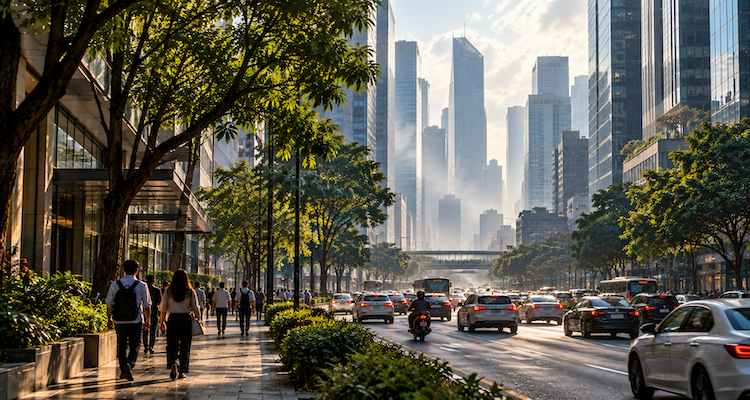
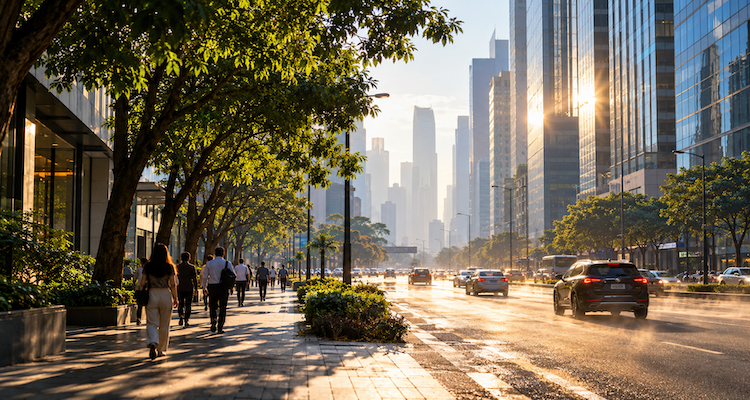
A city can look perfectly still from a distance. Buildings stand in orderly rows, traffic moves along familiar roads, and pedestrians pass beneath the same grey or blue sky. Yet, between those buildings, invisible currents of air are constantly moving. Some carry fresh air into crowded streets. Others redirect wind over rooftops, trap it inside courtyards or influence how quickly pollution disperses.
These currents resemble hidden rivers, flowing through an urban landscape that most people rarely notice.
Unlike rivers of water, however, these streams of air have no fixed banks. They change direction when the wind shifts, speed up around certain structures and slow down in sheltered spaces. Their movement depends on building height, street width, temperature differences, vegetation and the surrounding weather.
The consequences can be significant. Two neighbourhoods separated by only a few streets may experience very different conditions, particularly when traffic emissions, heat and limited ventilation combine. Understanding these hidden movements is becoming an important part of designing cities that are healthier and more comfortable to live in.
How Buildings Create Invisible Rivers of Air
In an open landscape, wind generally encounters fewer obstacles. In a city, every building changes the movement of air around it.
When wind meets a tall structure, some of the air flows over the roof, while other currents move around the sides. Depending on the building’s shape and the direction of the wind, air can accelerate through gaps, form swirling eddies behind structures or descend towards street level.
This is one reason a pedestrian might experience a sudden gust while walking past a tall office building, even when the surrounding weather seems calm.
Street geometry plays an equally important role. Narrow streets surrounded by tall buildings can behave like urban canyons. Air moving above the rooftops does not necessarily reach the pavement efficiently, particularly when buildings obstruct the prevailing wind.
Inside these streets, airflow can become complicated. Wind may circulate in loops, move unevenly between buildings or carry pollutants along a street before dispersing them elsewhere.
The arrangement of buildings also determines how connected different air pathways are. An open avenue may allow more direct ventilation, while a dense cluster of structures may create sheltered areas with weaker air movement.
However, taller buildings do not automatically mean poorer ventilation. Their effects depend on the surrounding architecture, wind direction and atmospheric conditions. A carefully designed development can sometimes channel air effectively, while an apparently open space can still experience uncomfortable gusts.
The essential point is that buildings do not merely occupy space within a city. They actively shape the atmosphere passing through it.
Why Some Streets Struggle to Disperse Pollution
Air pollution is influenced by both emissions and the conditions that determine how those emissions spread.
Consider a busy road enclosed by buildings. Vehicles release pollutants, including nitrogen oxides and fine particles. If the street’s geometry and prevailing weather limit ventilation, some pollutants may remain concentrated near the road rather than dispersing quickly.
A nearby avenue with stronger airflow may experience different concentrations, even if traffic volumes are similar.
Scientists investigate these patterns through atmospheric measurements, dispersion models and studies of urban street canyons. Their findings help explain why pollution levels can vary considerably over relatively short distances.
Yet weak ventilation is only one part of the picture. The amount of traffic, the type of vehicles, building density, wind direction, atmospheric stability and chemical reactions all influence local air quality.
For example, nitrogen dioxide concentrations can be elevated near busy roads because of traffic emissions. Ground-level ozone behaves differently: it forms through chemical reactions involving pollutants in sunlight, so its distribution does not always follow the same pattern as traffic-related pollution.
This distinction matters because a street with limited airflow will not necessarily have the highest concentration of every pollutant. The source of pollution and the atmospheric processes involved must also be considered.
The hidden rivers of air do not create every pollution problem, but they can influence where pollutants travel, how long they remain in a location and which people experience greater exposure.
The Role of Trees, Parks and Open Spaces
Trees can transform the experience of a city street. Their canopies provide shade, reduce direct solar exposure and, when water is available, cool their surroundings through evapotranspiration.
Parks and other green spaces can also create cooler local environments and offer places where people can escape some of the heat associated with heavily paved areas.
However, vegetation affects airflow as well as temperature.
Dense tree canopies can slow wind near the ground. In certain narrow streets, closely spaced trees may reduce ventilation and influence the dispersion of traffic pollution. In other settings, vegetation can provide valuable cooling and help separate pedestrians from nearby roads.
The outcome depends on the species, canopy density, planting arrangement, street geometry and local wind conditions.
Urban planners therefore face a more complicated task than simply adding as much greenery as possible. They must consider how trees interact with buildings, traffic, sunlight and existing airflow patterns.
Parks, connected green corridors and appropriately designed street planting can contribute to a healthier urban environment. Their benefits are greatest when decisions reflect the specific conditions of the place rather than relying on a single design rule.
A well-designed city must consider both the air people breathe and the environment in which that air moves.
Can Urban Design Help a City Breathe Better?
Cities cannot control every gust of wind, but they can influence the pathways through which air travels.
Urban designers and environmental scientists use wind-tunnel experiments, computational fluid dynamics and on-site monitoring to study how proposed buildings and street layouts might affect ventilation.
These methods can identify areas where wind speeds may become uncomfortable, where sheltered spaces may develop or where the movement of polluted air deserves closer attention.
Possible design responses include maintaining suitable gaps between buildings, considering street orientation, protecting ventilation corridors and placing pedestrian areas away from major emission sources where practical.
Reducing pollution at its source remains essential. Cleaner transport, lower vehicle emissions and fewer unnecessary combustion sources can improve air quality regardless of local airflow. Urban design works alongside these measures rather than replacing them.
Monitoring is equally important. Portable sensors and fixed monitoring stations can reveal local variations that broader citywide measurements may overlook. More detailed studies can help authorities identify where interventions are needed and evaluate whether they work.
There are limitations. Computer simulations depend on assumptions and input data, while real-world wind conditions change constantly. A design that improves ventilation under one wind direction may behave differently when the wind shifts.
That is why successful planning combines modelling, measurements and an understanding of local conditions.
The aim is not to create a perfectly controlled atmosphere. It is to reduce avoidable exposure to pollution, manage heat and make urban spaces more comfortable across a range of weather conditions.
The City Is Moving Even When It Looks Still
The next time you walk through a city, notice how the wind changes between streets. A gust may appear around a corner, disappear beneath a sheltered passage or move leaves high above a busy pavement while the air at ground level remains relatively still.
These small experiences offer a glimpse of a much larger atmospheric system.
Every building interacts with the wind. Every road introduces its own sources of emissions. Trees, parks and open spaces influence the movement of heat and air in different ways. Together, these elements create a shifting network of invisible currents that affects the urban environment.
Not every street with weak airflow is polluted, and not every open street is clean. But the relationship between urban form, ventilation and emissions helps explain why air quality can differ so sharply from one location to another.
The challenge for future cities is to understand these differences before they become serious problems. Better building design, cleaner transport, thoughtful green infrastructure and more detailed environmental monitoring can all contribute to that goal.
A city may appear motionless when viewed from above. At street level, however, its atmosphere is constantly in motion.
And within those unseen rivers of air lies an important part of the story of how cities breathe.
This content is published for informational or entertainment purposes. Facts, opinions, or references may evolve over time, and readers are encouraged to verify details from reliable sources.