








The Hidden Environmental Cost of Keeping Cities Cool
The relief of stepping into an air-conditioned building on a sweltering afternoon feels almost effortless. Whether it’s a shopping mall, office tower, apartment, or subway station, cooling has become an invisible part of modern urban life. Yet every degree of comfort comes with an environmental price that most people rarely notice.
As cities grow warmer under the combined pressure of climate change and expanding urban development, demand for cooling is rising almost everywhere. The conversation often focuses on how to stay comfortable during heatwaves, but a more important question is quietly emerging: what happens when the systems designed to cool our cities end up making them hotter in the long run?
Cooling Is Solving One Problem While Creating Another
Air conditioning has transformed public health, productivity, and quality of life. It has reduced heat-related illnesses, enabled economic activity during extreme weather, and made dense urban living more practical.
However, every cooling system produces waste heat. An air conditioner removes heat from inside a building and releases it outdoors. Multiply that process across millions of homes, offices, hotels, hospitals, and commercial buildings, and entire neighborhoods begin absorbing additional heat generated by the very systems meant to provide relief.
Researchers often describe this as a local feedback loop. As outdoor temperatures climb, people rely more heavily on air conditioning. Increased cooling generates more outdoor heat, making cities warmer and driving even greater demand for cooling.
The result is a cycle that is easy to overlook because its effects accumulate gradually rather than dramatically.
The Urban Heat Island Effect Is Intensifying
Many cities are already significantly warmer than nearby rural areas due to what scientists call the urban heat island effect.
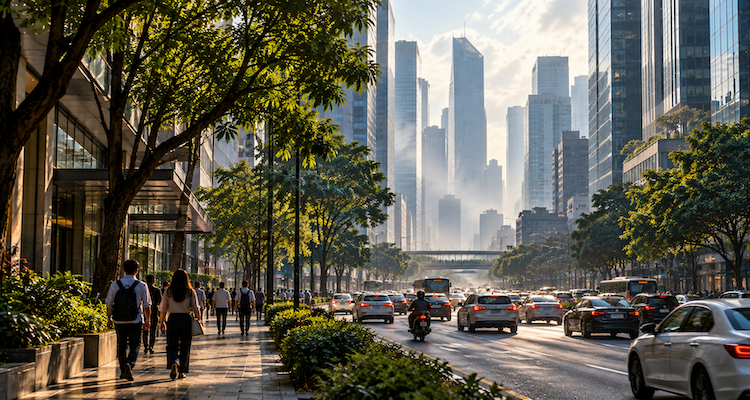
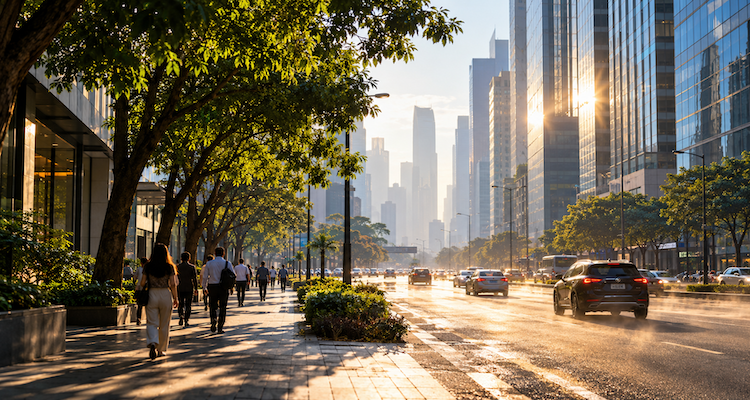
Concrete, asphalt, glass, and steel absorb solar energy throughout the day and slowly release it at night. Limited vegetation reduces natural cooling through shade and evaporation. Dense construction also restricts airflow that might otherwise carry heat away.
Cooling equipment adds another layer to this challenge.
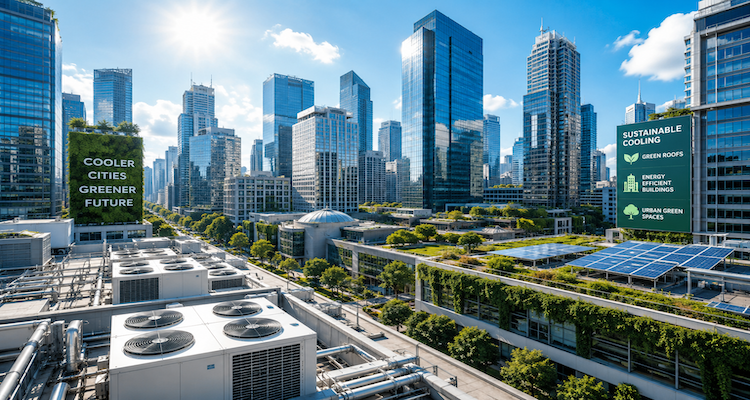
Large commercial buildings often operate powerful chillers continuously during hot periods. Data centers, industrial facilities, transportation hubs, and retail complexes also generate substantial amounts of heat that eventually enters the surrounding environment.
The combined effect can make nighttime temperatures remain unusually high, preventing cities from cooling naturally after sunset.
Electricity Demand Carries Its Own Environmental Footprint
Cooling itself is not inherently harmful. The environmental impact depends largely on how electricity is generated and how efficiently buildings use it.
In regions where electricity still relies heavily on fossil fuels, increased air conditioning demand often leads to higher greenhouse gas emissions. During periods of extreme heat, electricity grids can experience sharp demand spikes as millions of cooling systems operate simultaneously.
These peaks may require utilities to activate additional generating capacity, sometimes from less efficient power plants that remain idle during normal conditions.
Even in areas rapidly expanding renewable energy, managing peak cooling demand remains a major infrastructure challenge because electricity consumption is concentrated during the hottest hours of the day.
Refrigerants Are Part of the Story Too
Another often overlooked factor is the refrigerants circulating inside cooling equipment.
Modern systems increasingly use alternatives with lower climate impacts than many older refrigerants. However, leakage from poorly maintained or aging equipment can still contribute to greenhouse gas emissions, depending on the specific refrigerant involved.
Many countries are gradually phasing down high-global-warming-potential refrigerants while encouraging more climate-friendly alternatives. These transitions represent important progress, but replacing millions of existing systems takes time and investment.
Cities Are Beginning to Rethink Cooling
Rather than simply installing more air conditioners, urban planners are increasingly exploring ways to reduce the need for mechanical cooling altogether.
Tree-lined streets, green roofs, reflective building materials, shaded public spaces, better building insulation, and improved ventilation can lower indoor temperatures before an air conditioner ever switches on.
Some cities are investing in district cooling systems that supply chilled water to multiple buildings through centralized infrastructure. These systems can operate more efficiently than thousands of separate cooling units while reducing overall energy consumption.
Building design is also evolving. Architects increasingly incorporate passive cooling techniques such as strategic window placement, natural airflow, external shading, and materials that reflect rather than absorb heat.
These approaches demonstrate that cooling is no longer viewed solely as an appliance issue but as an urban design challenge.
A Shift in Consumer Expectations
One of the less discussed changes is cultural rather than technological.
For decades, colder indoor temperatures were often associated with comfort, luxury, and productivity. Many offices, hotels, shopping centers, and entertainment venues maintained temperatures far below what was strictly necessary.
Today, attitudes are beginning to shift.
Businesses increasingly balance employee comfort with energy efficiency. Hotels frequently encourage guests to reuse towels and reduce energy consumption. Smart thermostats automatically adjust cooling based on occupancy, while building management systems optimize energy use throughout the day.
This reflects a broader transition from maximizing cooling to optimizing it.
Comfort is becoming more personalized instead of universally colder.
Smarter Cities May Depend Less on Bigger Air Conditioners
Artificial intelligence, connected sensors, and smart grids are introducing new possibilities for urban cooling.
Instead of every building operating independently, intelligent systems can coordinate cooling based on occupancy patterns, weather forecasts, electricity availability, and real-time demand.
Commercial buildings already use predictive software that precools spaces before peak temperatures arrive, reducing strain on electricity networks later in the day.
Similarly, advanced weather forecasting helps utilities prepare for extreme heat events while balancing renewable energy sources more effectively.
The important insight is that future cooling may depend less on producing more cold air and more on using existing cooling capacity intelligently.
The Hidden Cost Extends Beyond Energy Bills
When people think about air conditioning, they usually focus on electricity costs.
Yet the broader environmental costs include higher carbon emissions where fossil fuels remain dominant, additional urban heating from waste heat, increased pressure on aging power grids, refrigerant management challenges, and infrastructure investments required to support growing demand.
These costs are distributed across society rather than appearing on an individual utility bill, making them easier to ignore.
As global temperatures continue rising, this invisible environmental burden could become one of the defining infrastructure challenges for rapidly expanding cities.
Cooling the Future Means Cooling Cities Differently
No realistic future involves abandoning air conditioning. For millions of people, especially older adults, children, healthcare facilities, and workers exposed to extreme heat, cooling is essential for safety and well-being.
The challenge is not whether cities should stay cool, it is how they achieve that goal.
Future solutions are likely to combine cleaner electricity, more efficient cooling technologies, better building design, expanded urban greenery, smarter infrastructure, and thoughtful city planning rather than relying solely on more air conditioners.
Perhaps the biggest lesson is that cooling should no longer be viewed as an isolated household decision. It is increasingly a shared urban system whose environmental consequences affect everyone.
The comfort enjoyed inside buildings is deeply connected to what happens outside them. Recognizing that connection is the first step toward designing cities that remain livable without quietly adding to the very heat they are trying to escape.
This content is published for informational or entertainment purposes. Facts, opinions, or references may evolve over time, and readers are encouraged to verify details from reliable sources.