










Why Some Species Thrive After Natural Disasters
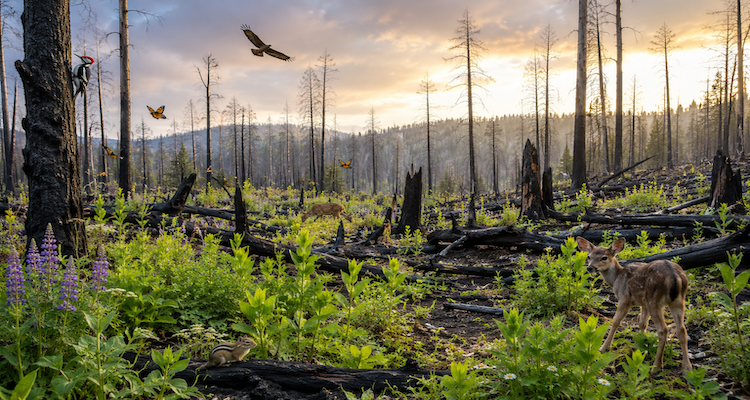
When wildfires race through forests, hurricanes reshape coastlines, or volcanic eruptions blanket landscapes in ash, the immediate images are almost always those of destruction. Entire ecosystems can appear devastated, leaving behind charred trees, flooded plains, and barren terrain. Yet beneath this apparent ruin, nature often begins an extraordinary process of renewal one in which certain species don’t merely survive but flourish.
This remarkable resilience challenges a common assumption that natural disasters are universally harmful to wildlife. While many species suffer severe losses, others have evolved to exploit the opportunities these events create. Understanding why this happens reveals not only the adaptability of life on Earth but also offers valuable lessons about biodiversity, conservation, and the changing environmental conditions humans increasingly face.
Destruction Creates Opportunity
Natural disasters dramatically alter habitats. Trees fall, rivers change course, vegetation disappears, and new landforms emerge. These rapid changes remove long-standing competitors while creating fresh sources of food, sunlight, nesting areas, and breeding grounds.
For many organisms, these transformed environments are ideal rather than hostile.
Following a forest fire, for example, sunlight reaches the forest floor for the first time in years. This encourages the growth of grasses, wildflowers, and shrubs that provide food for herbivores. As these populations expand, predators often follow, creating an entirely new ecological balance.
Similarly, flooding can deposit nutrient-rich sediments across wetlands and floodplains, encouraging rapid plant growth that supports insects, fish, birds, and mammals.
Rather than viewing disasters solely as destructive events, ecologists often recognize them as powerful forces that reshape ecosystems through a process known as ecological succession the gradual rebuilding of biological communities over time.
Evolution Has Prepared Some Species
Not every species responds the same way to environmental upheaval. Those that thrive often possess characteristics shaped by thousands or even millions of years of evolution.
Some plants produce seeds that remain dormant until exposed to intense heat. Certain pine species, for instance, have cones that only release their seeds after experiencing wildfire temperatures. What appears catastrophic to many organisms becomes the trigger for their next generation.
Animals also display remarkable adaptations.
Many insects reproduce quickly and colonize disturbed landscapes before competitors arrive. Opportunistic birds rapidly occupy newly opened nesting sites, while scavengers benefit from increased food availability following storms or fires.
Generalist species those capable of eating a wide variety of foods or living in multiple habitats often outperform specialists after disasters because they can adapt more readily to changing conditions.
This flexibility has become one of nature’s greatest survival strategies.
The Surprising Role of Fire
Fire is often portrayed as an ecological enemy, but in many parts of the world it serves as a natural maintenance system.
Grasslands, Mediterranean ecosystems, and certain forests have evolved alongside periodic fires. Without occasional burning, dead vegetation accumulates, reducing habitat diversity and increasing the risk of even more destructive megafires.
After low- to moderate-intensity fires, many landscapes experience bursts of biological activity. Fresh vegetation attracts grazing animals, while insects quickly colonize burned wood. Woodpeckers, for example, frequently move into recently burned forests because fire-damaged trees become ideal habitats for insects they feed on.
This doesn’t diminish the devastating effects of increasingly intense, human-driven wildfires. Instead, it highlights the important distinction between naturally occurring ecological disturbances and disasters intensified by climate change, invasive species, or poor land management.
New Habitats Mean New Winners
Earth’s ecosystems are constantly changing, even without dramatic disasters. Natural disturbances simply accelerate this process.
Landslides expose fresh soil where pioneer plants establish themselves first. Volcanic eruptions create entirely new landscapes that gradually become home to microbes, mosses, insects, and eventually forests. Hurricanes may open forest canopies, allowing species dependent on sunlight to flourish after decades of shade.
These changing conditions often increase habitat diversity, supporting a wider variety of organisms over time.
Ecologists sometimes refer to this as the “intermediate disturbance” concept, which suggests that ecosystems experiencing occasional natural disturbances can support greater biodiversity than those that remain completely unchanged for long periods.
While the exact relationship varies between ecosystems, the broader principle underscores that stability is not always nature’s preferred state.
Climate Change Is Altering the Equation
The ability of some species to benefit from natural disasters should not be mistaken as evidence that increasing disasters are beneficial overall.
Climate change is altering both the frequency and intensity of many extreme events. Longer droughts, hotter temperatures, stronger storms, and larger wildfires can overwhelm the adaptive capacity of ecosystems.
Species that historically benefited from occasional disturbances may struggle when those disturbances occur too frequently.
For example, forests that once had decades to recover between fires may now experience repeated burning before young trees reach maturity. Coral reefs damaged by warming oceans may not recover before the next marine heatwave arrives.
Nature’s resilience has limits.
Recognizing these limits is essential for conservation planning and ecosystem management.
What Scientists Are Learning
Advances in satellite imagery, environmental DNA analysis, remote sensors, and long-term ecological monitoring are giving researchers unprecedented insights into how wildlife responds after disasters.
Rather than focusing solely on immediate damage, scientists increasingly study recovery patterns.
These observations help identify which species serve as ecological “first responders” by stabilizing soil, dispersing seeds, controlling pests, or rebuilding food webs.
The findings are influencing conservation strategies worldwide. Instead of attempting to restore every landscape exactly as it existed before a disturbance, some restoration efforts now emphasize supporting natural recovery processes where appropriate.
This shift reflects a deeper understanding that ecosystems are dynamic rather than static.
A Lesson Beyond Wildlife
Perhaps the most valuable insight extends beyond ecology.
Nature demonstrates that resilience is rarely about resisting change completely. More often, it depends on adaptation.
Species that succeed after natural disasters tend to share common traits: flexibility, diversity, rapid response, and the ability to exploit new opportunities rather than rely exclusively on familiar conditions.
This principle increasingly resonates in human systems as well. Communities, businesses, and industries facing environmental disruption often prove most resilient when they diversify resources, strengthen adaptive capacity, and plan for uncertainty instead of assuming stability.
The comparison is not perfect human societies face complex economic and social challenges but the broader lesson is difficult to ignore.
Looking Ahead
Natural disasters will remain an unavoidable part of Earth’s environmental systems. Wildfires, floods, storms, volcanic eruptions, and earthquakes have shaped life for millions of years.
What is changing is the context in which these events occur.
As climate pressures grow, understanding how ecosystems recover becomes increasingly important. Protecting biodiversity will depend not only on preventing environmental damage where possible but also on recognizing and preserving the natural processes that allow landscapes to regenerate.
Some species will continue to find opportunity in upheaval because evolution has equipped them for changing conditions. Others will require careful conservation efforts to survive.
Nature’s story after disaster is therefore neither one of simple destruction nor guaranteed recovery. It is a story of constant adaptation a reminder that resilience is built through diversity, ecological balance, and the remarkable capacity of life to begin again, even in places that seem beyond repair.
This content is published for informational or entertainment purposes. Facts, opinions, or references may evolve over time, and readers are encouraged to verify details from reliable sources.