










How Human Food Systems Are Quietly Reshaping Wildlife Populations
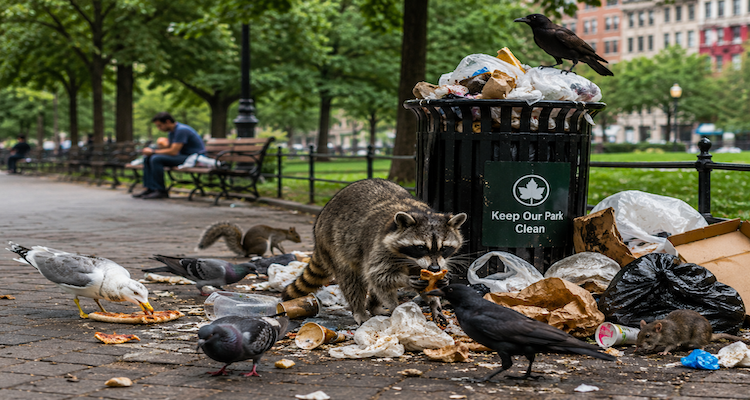
A discarded sandwich in a city park, overflowing garbage behind a restaurant, crop fields stretching across former grasslands, or bird feeders in suburban gardens may seem unrelated to wildlife conservation. Yet these everyday elements of human food systems are quietly altering the behavior, health, and even evolution of countless wild species. The changes are often subtle enough to go unnoticed, but together they are transforming ecosystems in ways that scientists are only beginning to fully understand.
For decades, discussions about wildlife conservation focused primarily on habitat destruction, climate change, and pollution. While those challenges remain significant, researchers are increasingly recognizing another powerful influence: the way humans produce, distribute, consume, and waste food. From urban foxes thriving on discarded meals to marine animals feeding on fishing bycatch, human food systems have become an unexpected ecological force that extends far beyond farms and cities.
A New Food Landscape for Wildlife
Wild animals have always adapted to changing environments, but today’s food landscape is unlike anything they have experienced before. Human activity has introduced a vast and predictable supply of food into ecosystems that were once governed by seasonal cycles and natural scarcity.
Cities, agricultural regions, tourist destinations, and transportation corridors all generate food opportunities for wildlife. Birds gather around outdoor restaurants, raccoons raid trash bins, monkeys visit markets, and bears increasingly encounter residential neighborhoods where food waste is readily available.
These interactions often begin as isolated incidents but can gradually reshape entire populations. Animals that learn to exploit human food sources may survive harsh seasons more easily, produce more offspring, or expand into areas where they previously struggled to live.
The result is not simply wildlife adapting to humans—it is wildlife adapting to human food.
Winners and Losers in a Human-Dominated World
Not every species benefits equally from this new reality.
Generalist animals—those capable of eating a wide variety of foods—often thrive. Crows, gulls, rats, wild boars, foxes, coyotes, pigeons, and raccoons have become remarkably successful because they readily exploit food associated with human settlements.
By contrast, specialists that depend on specific plants, insects, or natural prey may struggle as ecosystems shift. If abundant human-related food allows certain predator populations to increase, those predators may place additional pressure on more vulnerable native species.
This imbalance can gradually alter food webs, changing relationships among predators, prey, and plants without dramatic or immediately visible ecosystem collapse.
The shift illustrates an important ecological principle: when humans change the availability of food, they also change the balance of nature.
Agriculture’s Expanding Ecological Footprint
Modern agriculture feeds billions of people, but it also reshapes wildlife habitats on a massive scale.
Crop fields provide concentrated food sources that attract deer, elephants, wild pigs, birds, rodents, and numerous insect species. While these animals are often labeled as agricultural pests, their behavior reflects an ecological response to abundant and predictable resources.
At the same time, intensive farming can reduce habitat diversity by replacing native vegetation with monocultures. Pollinators, amphibians, and many small mammals may lose the varied environments they need to survive.
Efforts such as wildlife corridors, buffer zones, diversified farming practices, and habitat restoration aim to reduce these conflicts while supporting both food production and biodiversity.
The challenge is not simply producing more food but producing it in ways that allow ecosystems to remain resilient.
Urban Wildlife Is Changing Its Habits
Cities are no longer ecological deserts. Many have become entirely new habitats where wildlife develops behaviors that differ significantly from their rural counterparts.
Urban birds often adjust feeding times to match human activity. Some mammals have become increasingly nocturnal to avoid people while still accessing food. Others learn traffic patterns, recognize garbage collection schedules, or repeatedly visit locations where people intentionally feed animals.
These behavioral adaptations demonstrate remarkable intelligence and flexibility.
However, dependence on human food can also introduce risks. Processed foods may not provide balanced nutrition. Crowded feeding sites can increase disease transmission. Frequent interactions with people may lead to conflicts that ultimately harm both humans and wildlife.
The same behaviors that help animals survive today may create vulnerabilities in the future if food availability suddenly changes.
The Hidden Cost of Food Waste
One of the least discussed drivers of wildlife change is food waste.
Globally, significant amounts of edible food are discarded throughout production, transportation, retail, and household consumption. Some of this waste becomes an unintended food supply for wild animals.
Landfills, open dumping sites, fishing waste, and improperly managed garbage all attract wildlife. Over time, predictable waste sources can influence migration routes, breeding locations, and population density.
For example, some seabird populations increasingly rely on fish discarded during commercial fishing operations. Urban scavengers often concentrate near waste disposal sites rather than traditional feeding grounds.
Although these food sources may appear beneficial in the short term, they can increase dependence on unstable human systems and expose animals to plastics, chemicals, and harmful materials mixed with discarded food.
Wildlife Is Adapting Faster Than Many Realize
Perhaps the most fascinating aspect of this transformation is the speed of adaptation.
Researchers have documented behavioral changes occurring over surprisingly short periods. Animals learn from experience, observe one another, and pass successful feeding strategies across generations through social learning.
This does not necessarily mean species are evolving genetically overnight. Instead, many are displaying behavioral flexibility that allows them to exploit changing environments remarkably quickly.
In some cases, these adaptations may eventually influence long-term evolutionary pressures if certain behaviors consistently improve survival and reproduction.
Human food systems are therefore shaping wildlife not only through habitat modification but also through the opportunities and challenges they create every day.
Why This Matters Beyond Conservation
The effects extend beyond biodiversity.
Changing wildlife populations can influence agriculture, public health, tourism, infrastructure, and urban planning. Increased encounters between people and wildlife may raise concerns about disease transmission, property damage, road safety, or livestock protection.
Conversely, healthier ecosystems support pollination, pest control, water quality, and many natural processes that underpin food production itself.
This creates a feedback loop: the systems humans build to feed themselves ultimately influence the ecosystems that sustain agriculture and environmental stability.
Recognizing these connections encourages a broader view of food systems not merely as economic networks but as ecological networks that affect every species sharing the landscape.
Rethinking Our Relationship With Food and Nature
One of the most underappreciated insights emerging from ecological research is that food has become an environmental signal.
Wildlife increasingly interprets roads, neighborhoods, farms, restaurants, fishing ports, and waste facilities not simply as human spaces but as sources of opportunity. Animals are responding less to the presence of people and more to the resources people unintentionally provide.
This shift suggests that conservation efforts cannot focus solely on protecting remote wilderness. Managing food waste, designing wildlife-friendly cities, improving agricultural practices, and reducing unnecessary human-wildlife interactions are becoming equally important.
Small changes secure waste storage, responsible feeding policies, habitat restoration near agricultural land, and smarter urban planning can collectively reduce conflicts while helping ecosystems function more naturally.
Looking Ahead
As global populations grow and food production continues to expand, the relationship between human food systems and wildlife will become increasingly important.
Future conservation strategies are likely to involve closer collaboration among ecologists, farmers, urban planners, food producers, policymakers, and local communities. Understanding where human food intersects with wildlife behavior may prove just as valuable as protecting forests or restoring wetlands.
The story is not simply about animals adapting to civilization. It is about recognizing that every stage of the human food chain—from farms and fisheries to supermarkets and household kitchens—has ecological consequences that ripple far beyond our dinner tables.
By viewing food systems through the lens of ecology, we gain a deeper appreciation of how everyday human choices quietly shape the natural world, often in ways that remain invisible until the effects become impossible to ignore.
This content is published for informational or entertainment purposes. Facts, opinions, or references may evolve over time, and readers are encouraged to verify details from reliable sources.