










When Wildlife Recovery Success Creates New Conservation Challenges
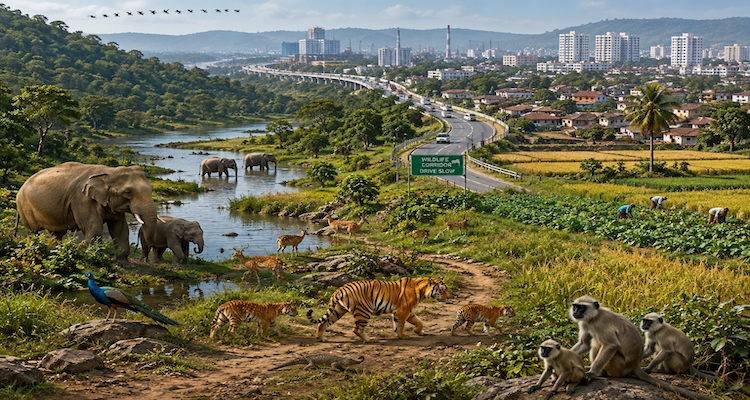
For decades, conservation success was often measured in simple terms: a species was declining, action was taken, and populations began to recover. Whether it was wolves returning to former habitats, elephants increasing in protected areas, or marine animals rebounding after hunting restrictions, recovery represented a rare environmental victory.
Yet conservationists are increasingly discovering that success can create its own set of complex problems. As wildlife populations recover, they often encounter landscapes that have changed dramatically since their decline. Human settlements have expanded, agricultural areas have grown, transportation networks have multiplied, and natural habitats have become fragmented. The result is a new conservation reality in which recovery is not the end of the story but the beginning of a different challenge.
This shift is changing how scientists, policymakers, and communities think about conservation. The question is no longer simply how to save wildlife. Increasingly, it is how humans and recovering wildlife can coexist in environments that both now depend on.
The Unexpected Consequences of Recovery
When a species is endangered, public support often centers on protection. People rally behind efforts to prevent extinction, restore habitats, and reduce threats. However, once populations begin to grow, new tensions can emerge.
Predators provide one of the clearest examples. Wolves, big cats, and bears often play essential ecological roles by helping regulate prey populations and maintaining ecosystem balance. Yet when their numbers recover, encounters with livestock, rural communities, and recreational areas can increase.
The ecological success remains real, but it may create economic and social concerns for people living near wildlife habitats. Conservation then shifts from rescue to management, requiring solutions that address both ecological goals and human needs.
Similar challenges arise with large herbivores. Recovering populations of deer, elephants, or wild boar can place pressure on crops, forests, and local infrastructure. In some regions, species that were once rare have become common enough to influence land-use decisions and community planning.
Recovery Reveals How Much the World Has Changed
One of the most overlooked aspects of wildlife recovery is that species are often returning to landscapes that no longer resemble the environments they once inhabited.
A century ago, many ecosystems were connected through vast stretches of natural habitat. Today, roads, cities, industrial zones, and agricultural developments divide those landscapes into smaller fragments.
As animal populations increase, they naturally seek new territory. Migration routes that once existed may now be interrupted by highways, fences, or urban development. This can lead to more vehicle collisions, habitat conflicts, and population bottlenecks.
In some cases, wildlife recovery exposes weaknesses in modern infrastructure. Roads, rail systems, and expanding suburbs were often designed without considering the future movement of recovering species. As a result, conservation increasingly involves engineering solutions such as wildlife crossings, habitat corridors, and landscape planning.
The challenge is no longer just protecting animals within reserves. It is designing entire regions that can accommodate both human activity and ecological movement.
The Human Dimension of Conservation Success
Wildlife recovery is often celebrated at a national or global level, but its impacts are felt locally.
Communities living closest to recovering populations frequently experience the benefits and challenges first. Ecotourism opportunities may increase. Local ecosystems may become healthier. Biodiversity may improve.
At the same time, farmers may face crop damage, ranchers may worry about livestock losses, and residents may encounter wildlife more frequently than previous generations.
This creates an important reality: conservation success depends not only on biological outcomes but also on public acceptance.
A species can recover scientifically while becoming socially controversial. If local communities feel excluded from conservation decisions, support can weaken even when environmental goals are being achieved.
This is why modern conservation increasingly emphasizes coexistence strategies rather than protection alone. Compensation programs, community engagement, habitat planning, and conflict-reduction measures have become as important as traditional wildlife protection efforts.
Nature’s Success Can Alter Entire Ecosystems
Recovery does not affect only a single species. It can reshape entire ecological systems.
Predators can influence prey behavior, vegetation growth, and biodiversity patterns. Herbivores can alter forests, grasslands, and water systems. Marine species can affect fisheries and coastal ecosystems.
These ecological shifts are often positive because they restore natural processes that were lost during periods of decline. However, they can also produce unexpected outcomes that require careful monitoring.
Conservationists sometimes describe ecosystems as dynamic rather than static. In other words, the goal is not necessarily to return nature to a specific historical moment but to maintain healthy ecological relationships that can adapt over time.
Wildlife recovery reminds us that ecosystems are living systems capable of change, sometimes in ways that are difficult to predict.
A New Insight: Conservation Is Becoming a Coexistence Challenge
Perhaps the most important lesson emerging from wildlife recovery is that conservation is evolving.
Historically, conservation focused heavily on preventing loss. The central question was how to stop species from disappearing.
Today, in many regions, a growing question is how to manage success.
This represents a significant shift in environmental thinking. Recovery demonstrates that conservation efforts can work. However, it also highlights that environmental victories do not eliminate complexity.
The future of conservation may depend less on saving isolated species and more on building systems that allow people and wildlife to share increasingly crowded landscapes.
This insight has implications far beyond wildlife. It reflects a broader trend visible in environmental management, urban planning, agriculture, and resource policy. Many modern challenges involve balancing competing needs rather than choosing one side over another.
Wildlife recovery is therefore not simply a story about animals. It is a story about how societies adapt when environmental success changes the conditions under which people and nature interact.
What Happens Next?
As conservation programs mature, the next generation of challenges is likely to focus on integration rather than protection alone.
Technology may play a growing role through satellite monitoring, wildlife tracking systems, predictive migration models, and smarter infrastructure design. Land-use planning may increasingly incorporate ecological corridors. Communities may become more involved in local conservation decisions.
Climate change adds another layer of complexity. As temperatures, weather patterns, and habitats shift, recovering species may move into new areas, creating fresh interactions and new management questions.
Success will likely depend on flexibility. Conservation strategies that worked during periods of decline may not be sufficient during periods of recovery.
The emerging lesson is both encouraging and challenging. Wildlife recovery demonstrates that environmental action can produce meaningful results. At the same time, it shows that conservation is an ongoing process rather than a final destination.
The most successful conservation efforts of the future may not be those that simply increase wildlife numbers, but those that create lasting frameworks for coexistence in a rapidly changing world.
This content is published for informational or entertainment purposes. Facts, opinions, or references may evolve over time, and readers are encouraged to verify details from reliable sources.