










When ‘Extinct’ Isn’t Final: The Return of Ghost Species
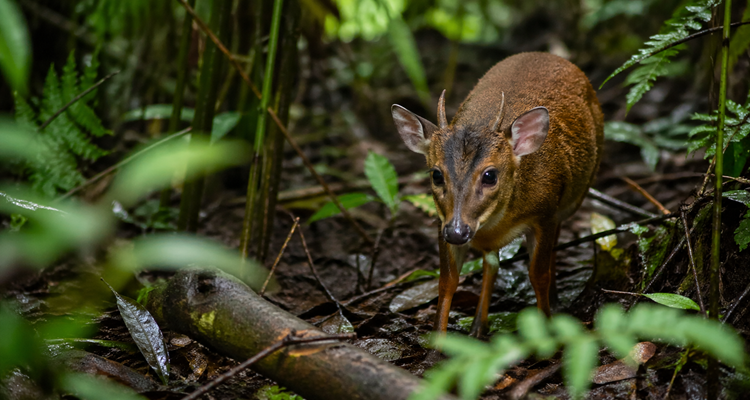
For decades, they existed only in textbooks and museum records, animals declared lost to time, casualties of habitat destruction, climate shifts, or human expansion. Now, some of these so-called “ghost species” are reappearing in the wild, quietly challenging what scientists thought they knew about extinction.
The phenomenon is not science fiction. Across continents, researchers and conservationists are documenting species once believed extinct or long missing, only to find them surviving in remote pockets of the world. These rediscoveries are reshaping conservation science and raising urgent questions about how we define loss in the natural world.
The quiet comeback of the unseen
“Ghost species” refers to animals that vanish from scientific observation for decades, sometimes even centuries, before being rediscovered. Unlike mythical creatures, these species were real, documented, and then seemingly gone.
Examples have surfaced in recent years: amphibians reappearing in South American cloud forests, rare birds spotted again in Southeast Asia, and small mammals rediscovered in isolated ecosystems. In many cases, these animals were not extinct at all; they were simply overlooked, hiding in habitats too difficult or politically unstable to study.
Advancements in technology are playing a key role in these discoveries. Tools like camera traps, environmental DNA (eDNA) sampling, and satellite mapping have expanded scientists’ reach into previously inaccessible areas. Organizations such as the World Wildlife Fund (WWF) and Conservation International increasingly rely on these tools to survey biodiversity hotspots.
In some cases, local communities have known all along. Indigenous knowledge has helped guide researchers back to species thought lost, highlighting a gap between scientific records and lived ecological awareness.
Why they disappeared from view
The disappearance of these species from scientific observation often has less to do with extinction and more to do with human limitations. Many ecosystems, dense rainforests, deep caves, and high-altitude regions remain poorly studied due to logistical and financial constraints.
Political instability and conflict have also played a role. Regions rich in biodiversity, such as parts of Central Africa or Southeast Asia, have been difficult to access for decades. During those gaps, species may have persisted unnoticed.
There’s also a statistical reality: rare species are inherently difficult to detect. A population may survive at extremely low numbers, slipping below the threshold of observation. When surveys fail to locate them, they are sometimes prematurely declared extinct.
The International Union for Conservation of Nature (IUCN), which maintains the global Red List of threatened species, has long acknowledged this uncertainty. A classification of “possibly extinct” exists precisely because the absence of evidence is not evidence of absence.
Why rediscovery matters now
The return of ghost species is more than a scientific curiosity; it has immediate implications for conservation policy and environmental funding.
When a species is rediscovered, it often triggers renewed protection efforts. Governments and NGOs may move quickly to preserve their habitat, restrict development, or launch breeding programs. In some cases, rediscovery has led to the creation of new protected areas.
But there’s a paradox. While rediscoveries generate optimism, they can also mask deeper ecological decline. A species found again after decades is often surviving in fragile, shrinking habitats, with populations too small to be sustainable in the long term.
For businesses and policymakers, especially in sectors like agriculture, mining, and infrastructure, these findings complicate development decisions. Projects that once faced minimal ecological scrutiny may now encounter new restrictions if a “lost” species is found nearby.
What’s different this time
Historically, rediscoveries were rare and often accidental. Today, they are becoming more systematic.
Technology companies and research institutions are collaborating in new ways. Google’s AI-powered mapping tools, for instance, are being used to analyze satellite imagery and identify potential habitats. Meanwhile, startups focused on biodiversity data are helping scientists process vast amounts of environmental information faster than ever before.
Citizen science is also playing a growing role. Platforms like iNaturalist allow everyday people to upload wildlife observations, sometimes leading to significant findings. In a few cases, amateur photographers have captured images of species unseen for decades.
This shift reflects a broader change: conservation is no longer confined to academic circles. It is becoming a distributed effort, involving technology, communities, and global networks.
A deeper shift in how we see extinction
The reappearance of ghost species challenges a fundamental assumption, that extinction is always a clear, final event. Instead, it reveals a more complex reality where disappearance can be temporary, ambiguous, and sometimes reversible.
This uncertainty is reshaping scientific thinking. Researchers are becoming more cautious about declaring species extinct, emphasizing long-term monitoring over definitive conclusions. It also highlights the resilience of nature, even under significant pressure.
But it raises an uncomfortable question: how many species have truly vanished without a trace, simply because no one was looking closely enough?
The human lens: what we choose to see
There’s a subtle but powerful insight behind the ghost species phenomenon. It reflects not just the state of nature, but the limits of human attention.
In an era dominated by data and visibility, what isn’t measured often doesn’t exist in decision-making. Species that fall outside economic or scientific focus can effectively disappear, not from the planet, but from awareness.
This has parallels in other domains, from overlooked communities in urban planning to underreported issues in global policy. The rediscovery of ghost species is, in a sense, a reminder that the absence of visibility does not equal the absence of reality.
What comes next
As exploration tools improve and global attention on biodiversity intensifies, more ghost species are likely to be rediscovered. The United Nations’ push for stronger biodiversity targets and the growing ESG (Environmental, Social, Governance) focus in business are driving investment into conservation efforts.
However, rediscovery is only the first step. Protecting these species requires sustained action, habitat preservation, climate mitigation, and careful land-use planning.
There is also a race against time. Climate change is altering ecosystems faster than many species can adapt. For some ghost species, being found again may be their last chance at survival.
The story of these animals is not just about survival against the odds. It’s about the gaps in human knowledge and the possibility that even in a world mapped by satellites and sensors, there are still mysteries waiting in the shadows.
This content is published for informational or entertainment purposes. Facts, opinions, or references may evolve over time, and readers are encouraged to verify details from reliable sources.