






A Girl’s Bond With Trees Brings Climate Lessons Alive
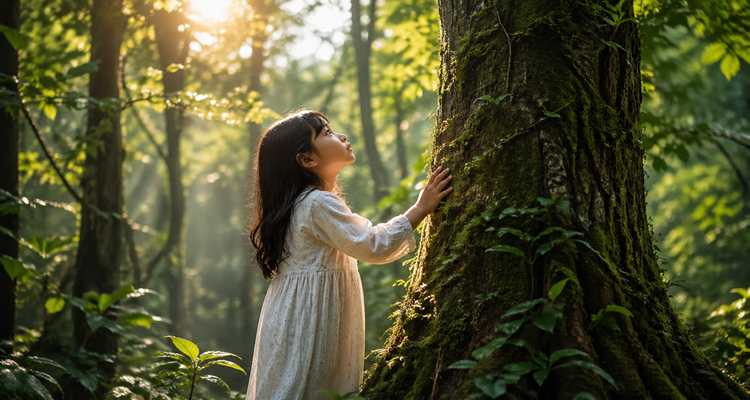
A quiet story about a girl and her conversations with trees is finding new relevance in a world grappling with climate anxiety. What might seem like a whimsical tale is, in fact, becoming a subtle yet powerful way to introduce children to one of the most urgent issues of our time.
At its heart, The Girl Who Talked to Trees follows a young protagonist who believes the forest speaks back. Through her imagination, trees share their fears of disappearing roots, changing weather, and the silence of birds that no longer return. It’s a simple narrative, but one that mirrors real-world environmental challenges in a way children can understand without feeling overwhelmed.
The story is part of a growing wave of children’s literature that tackles climate change not through statistics or warnings, but through empathy and connection. Publishers and educators are increasingly recognizing that storytelling, especially magical realism, can bridge the gap between complex science and young minds. Books like these are quietly reshaping how climate education begins.
The timing is not accidental. Climate change is no longer an abstract concept reserved for policymakers and scientists. Heatwaves, floods, and air pollution have become part of everyday conversations in cities across the globe, including rapidly urbanizing regions in India. Children are hearing these concerns at home, in classrooms, and even on social media platforms like YouTube Kids or educational apps such as Khan Academy Kids.
But explaining climate change to children has always posed a challenge. Traditional methods, charts, graphs, or dire warnings often fail to resonate emotionally. Stories like this take a different route. They focus on relationships: between a child and nature, between humans and the environment, and ultimately, between actions and consequences.
This shift reflects a broader change in how climate awareness is being communicated. Tech companies like Google and Microsoft have invested heavily in educational tools that simplify environmental data for schools, but even these tools are increasingly incorporating storytelling elements. Interactive platforms now use animated characters, narratives, and gamified learning to make climate science more engaging.
What makes The Girl Who Talked to Trees stand out is its refusal to preach. The story doesn’t lecture; it invites curiosity. When the girl listens to the trees, children reading along begin to ask their own questions: Why are the trees worried? What can we do to help? The learning happens organically.
That approach marks a departure from earlier environmental messaging aimed at children. Past efforts often leaned heavily on fear, images of melting ice caps or endangered animals. While impactful, such imagery can also lead to anxiety or helplessness. Today’s storytellers are more focused on agency. They want children to feel that their actions, no matter how small, can make a difference.
The impact extends beyond the page. Schools are beginning to integrate similar narratives into their curriculum, using storytelling as a gateway to discussions about sustainability. Teachers report that students engage more actively when lessons are framed through characters and emotions rather than abstract concepts.
There’s also a cultural dimension at play. In many parts of the world, including India, traditional folklore has long emphasized a deep connection between humans and nature. Stories of sacred groves, talking animals, and living forests are embedded in local traditions. This modern tale taps into that legacy while addressing contemporary challenges, creating a bridge between past wisdom and present realities.
The bigger picture reveals a shift in how society approaches climate education as a whole. It’s no longer just about informing; it’s about shaping behavior early. When children grow up seeing nature as something they can “talk to” or empathize with, they are more likely to develop sustainable habits as adults.
This is the story’s most powerful insight: climate action doesn’t begin with policy, it begins with perception. If a child learns to see a tree as a living entity rather than an object, the idea of protecting it becomes instinctive, not obligatory. That emotional connection could prove more influential than any classroom lecture or government campaign.
The publishing industry has taken note. Children’s books addressing environmental themes have seen a steady rise in recent years, driven by both demand from parents and recommendations from educators. Digital formats are also expanding the reach of such stories, with audiobooks and animated adaptations making them accessible to wider audiences.
Looking ahead, the role of storytelling in climate awareness is likely to grow. As climate issues become more complex, the need for simple, relatable narratives will only increase. Stories like The Girl Who Talked to Trees may not offer solutions in the traditional sense, but they plant something equally important: awareness rooted in empathy.
And in a world searching for ways to inspire meaningful change, that might be where the real transformation begins.
This content is published for informational or entertainment purposes. Facts, opinions, or references may evolve over time, and readers are encouraged to verify details from reliable sources.