








AI Already Knows More About You Than You Realize

You didn’t tell it your habits, but it learned them anyway.
Every search, scroll, pause, and click is quietly shaping a version of you that artificial intelligence understands with unsettling precision.
The shift isn’t coming. It’s already here.
The silent data trail you leave behind
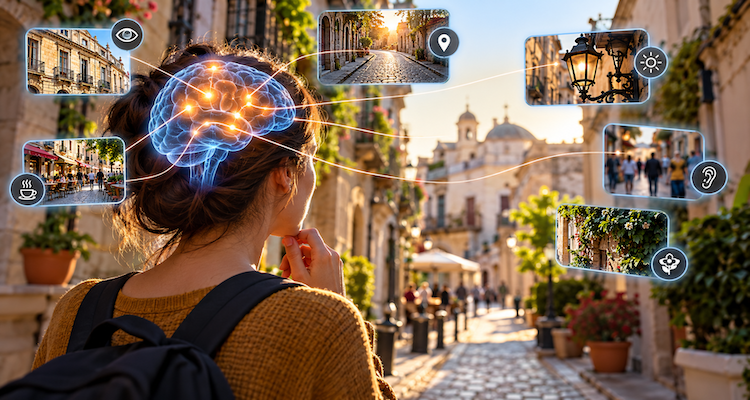
Artificial intelligence today doesn’t need direct input to understand people. It learns passively by observing behavior at scale.
When you watch a video on YouTube, linger on a product page on Amazon, or type half a sentence into Google before deleting it, those micro-actions become signals. Over time, AI systems stitch these signals into a behavioral profile that is often more accurate than what users consciously reveal.
Platforms like Meta, Google, and TikTok rely on machine learning models that continuously refine predictions about what users want, how they feel, and what they might do next. This isn’t just about recommending content anymore. It’s about anticipating intent.
Even tools that seem neutral, like Gmail’s smart replies or Microsoft’s Copilot features, are learning patterns of how you write, what you prioritize, and how you respond.
The result is a system that doesn’t just react. It predicts.
Why AI is learning faster now
The acceleration comes from two converging forces: massive data availability and more advanced models.
Over the past decade, digital activity has exploded. Smartphones, wearable devices, voice assistants, and connected apps generate continuous streams of data. At the same time, AI models, especially those based on deep learning, have become significantly better at identifying patterns across that data.
Unlike earlier systems that relied on explicit user inputs, modern AI can infer meaning from context. A pause while scrolling can signal hesitation. A repeated search at night might suggest urgency or anxiety. These patterns are subtle, but at scale, they become powerful indicators.
Companies are also integrating AI across ecosystems. Google’s services, for instance, connect search, maps, email, and browsing behavior. Apple emphasizes privacy, but even its on-device intelligence analyzes user habits to personalize experiences. Microsoft is embedding AI across productivity tools, learning how individuals work and collaborate.
The learning isn’t isolated; it’s cumulative.
What AI already knows about you
The idea of AI “knowing” someone may sound abstract, but in practice, it’s remarkably concrete.
It likely understands your daily rhythms when you wake up, when you’re most active online, and when your attention drops. It recognizes your interests, not just broadly but with nuance. It can distinguish between curiosity and intent, between casual browsing and serious consideration.
It may also infer emotional states. Sudden changes in browsing behavior, shifts in content consumption, or patterns in communication can signal stress, excitement, or uncertainty.
In commerce, this translates into targeted recommendations that feel eerily timely. In social media, it shapes the content you see, often reinforcing existing preferences. In professional tools, it adapts workflows to match how you operate.
What’s striking is not just the depth of insight, but the speed at which it evolves. AI doesn’t need months or years; it can refine its understanding in days.
Why this matters more than ever
The implications extend far beyond convenience.
Personalization has become the default digital experience, but it comes with trade-offs. When AI systems curate what you see, they also shape what you don’t see. This can influence opinions, decisions, and even opportunities.
In business, companies are using AI-driven insights to optimize pricing, marketing, and customer engagement. Retailers adjust offers based on browsing patterns. Streaming platforms decide which content to promote. Employers are beginning to explore AI tools that analyze work habits and productivity.
For individuals, the line between assistance and influence is becoming harder to define.
There’s also the question of control. Most users are only vaguely aware of how much data is being collected or how it’s used. Privacy policies are often complex, and the underlying algorithms remain opaque.
The result is an asymmetry: AI systems know more about users than users know about the systems.
What makes this moment different
Data-driven personalization isn’t new. What’s changed is the level of autonomy AI now has.
Earlier systems relied heavily on predefined rules. Today’s AI models learn dynamically. They don’t just follow instructions; they adapt based on outcomes.
Generative AI adds another layer. Tools like ChatGPT, Google Gemini, and Microsoft Copilot can interact conversationally, making the experience feel more human. But behind that interaction is a continuous learning process, shaped by user inputs and feedback.
This creates a feedback loop. The more you interact, the more the system learns. The more it learns, the more tailored and persuasive its responses become.
The shift is subtle but significant: from tools that assist to systems that understand.
A behavioral turning point
The deeper insight isn’t just about technology, it’s about human behavior.
As AI becomes more predictive, people may begin to rely on it not just for answers but for decisions. Recommendations can gradually turn into defaults. Over time, this could reshape how individuals explore options, form opinions, and make choices.
The risk isn’t loss of control in a dramatic sense. It’s a gradual narrowing of perspective.
When AI consistently presents what it believes you want, it can reduce exposure to the unexpected, the very experiences that often drive growth and creativity.
This raises a critical question: if AI knows you so well, will it challenge you or simply reinforce you?
The broader shift across industries
The impact is visible across sectors.
In healthcare, AI systems analyze patient data to predict risks and recommend treatments. In finance, algorithms assess spending patterns to detect fraud or suggest investments. In retail, personalization engines drive everything from product discovery to pricing strategies.
Even education is evolving. Adaptive learning platforms adjust content based on student performance, tailoring lessons in real time.
These applications offer clear benefits: efficiency, accuracy, and personalization. But they also deepen the reliance on data-driven insights.
As industries adopt AI at scale, the understanding of individuals becomes a competitive advantage.
What comes next
The trajectory points toward even more integrated and predictive systems.
Future AI models will likely combine data from multiple sources, devices, platforms, and environments to create richer profiles. Advances in multimodal AI, which can process text, images, audio, and video together, will enhance this capability.
Regulation is beginning to catch up. Governments are exploring frameworks to address data privacy, transparency, and accountability. The European Union’s AI Act and similar initiatives signal growing awareness of the risks.
At the same time, companies are investing in privacy-preserving technologies, such as on-device processing and federated learning, to balance personalization with user control.
For individuals, awareness will be key. Understanding how AI systems operate and how they learn can help users make more informed choices about their digital interactions.
AI doesn’t need to ask who you are. It’s already building the answer in the background, one interaction at a time.
The real question is no longer whether AI understands you, but how much of that understanding you’re willing to accept.
This content is published for informational or entertainment purposes. Facts, opinions, or references may evolve over time, and readers are encouraged to verify details from reliable sources.