








When AI Stops Assisting and Starts Deciding for Us
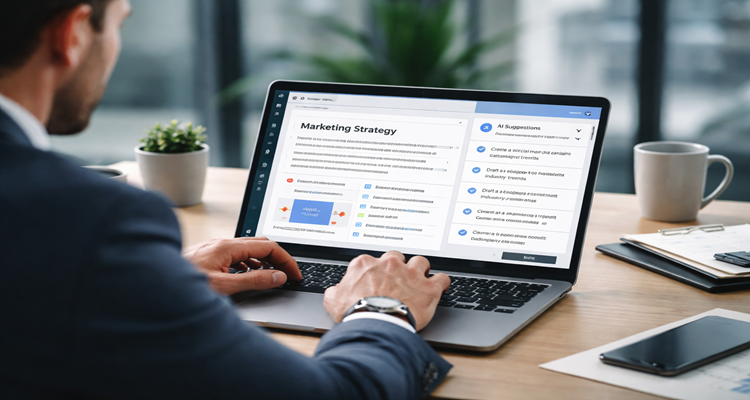
A quiet shift is underway in offices, classrooms, and even daily conversations. The tools once designed to assist are beginning to influence and sometimes replace our decisions.
What started as autocomplete is now advice. And that advice is increasingly being followed without question.
The rise of AI as a decision engine
Artificial intelligence has moved far beyond simple task automation. Tools like ChatGPT, Microsoft Copilot, and Google Gemini are now embedded into workflows where judgment matters, drafting emails, summarizing reports, recommending strategies, and even guiding hiring decisions.
In many cases, the line between assistance and authority is becoming blurred.
A marketing executive might use AI to generate campaign ideas, then choose one with minimal modification. A developer may rely on AI-generated code suggestions without fully reviewing the logic. Students increasingly turn to AI not just for explanations, but for answers they directly submit.
The convenience is undeniable. But so is the shift in responsibility.
Why this moment feels different
Technology has always helped people think faster. Calculators replaced manual arithmetic. Search engines replaced library research. But those tools still required a human to interpret results.
AI is different because it produces conclusions, not just information.
When Google Search returns results, users evaluate multiple sources. When AI delivers a single, polished answer, it often feels definitive. The cognitive effort shifts from analysis to acceptance.
That subtle change is what makes this moment significant.
The convenience trap
The appeal of AI lies in its speed and fluency. It reduces friction in decision-making, especially in fast-paced environments where time is limited.
Companies like Microsoft are actively integrating AI into everyday tools. Word drafts entire documents, Excel analyzes data patterns, and Outlook suggests responses. Google’s AI features summarize long email threads and documents in seconds.
These features are designed to help users move faster. But speed can come at the cost of depth.
When decisions are made quickly based on AI-generated outputs, there is less room for questioning assumptions or exploring alternatives. Over time, this can lead to a reliance that feels efficient—but may quietly erode critical thinking.
The human cost of outsourcing thought
The impact is not just technical, it’s behavioral.
One emerging concern is the gradual weakening of independent judgment. When people consistently defer to AI recommendations, they may begin to trust the system more than their own reasoning.
This is especially visible in workplaces where junior employees rely heavily on AI tools. Instead of developing problem-solving skills through trial and error, they may default to AI-generated solutions as a starting and ending point.
The risk isn’t immediate failure. It’s a long-term dependency.
A generation of workers could become highly efficient at executing AI-assisted tasks, but less confident in making decisions without it.
A subtle shift in accountability
Another challenge lies in accountability. When a decision is influenced by AI, who is responsible for the outcome?
In sectors like finance, healthcare, and law, this question is already becoming complex. AI tools are being used to analyze data, suggest diagnoses, and even draft legal arguments.
If a recommendation turns out to be flawed, it is often unclear whether the fault lies with the user, the tool, or the underlying data.
This ambiguity can lead to a diffusion of responsibility, where decisions feel less personal and therefore less scrutinized.
What makes this wave of AI different from past tech trends
Previous technological shifts enhanced human capability without replacing core thinking processes. A calculator doesn’t decide what equation to solve. A spreadsheet doesn’t choose the strategy.
AI, however, increasingly operates at the level of interpretation and suggestion.
It doesn’t just process inputs; it shapes outputs in ways that feel authoritative. Its responses are structured, confident, and often indistinguishable from human reasoning.
This creates a psychological effect: people are more likely to trust AI outputs because they resemble expert advice.
That resemblance can be misleading.
The bigger industry shift
Tech giants are racing to position AI as a central layer in productivity. OpenAI, Google, Microsoft, and others are competing to embed AI into every digital touchpoint, from search engines to enterprise software.
This is not just about innovation; it’s about control over how decisions are made.
If AI becomes the default interface for information and action, it effectively becomes a gatekeeper of thought. The way questions are framed, answers are generated, and options are presented can subtly influence outcomes at scale.
For businesses, this means rethinking not just tools, but processes. For individuals, it raises questions about autonomy.
A critical insight: convenience is reshaping cognition
The real transformation is not happening in the technology itself, but in how humans are adapting to it.
Convenience is quietly changing cognitive habits.
When thinking becomes optional, it is often skipped. When answers are immediate, curiosity can decline. Over time, this may lead to a form of “cognitive outsourcing,” where people rely on external systems for tasks they once handled internally.
This doesn’t mean people are becoming less intelligent. But it does suggest a shift in how intelligence is applied, and where it resides.
Navigating the balance
The challenge is not to reject AI, but to use it deliberately.
AI can enhance productivity, surface insights, and reduce repetitive work. But it should remain a tool, not a substitute for judgment.
Organizations are beginning to recognize this. Some are implementing guidelines that require human review of AI-generated outputs. Others are training employees to treat AI suggestions as starting points rather than final answers.
The goal is to maintain a balance, leveraging AI’s strengths without surrendering human agency.
What comes next
As AI continues to evolve, its role in decision-making will likely expand. More industries will integrate AI into critical processes, and more individuals will rely on it in daily life.
The key question is not whether AI will think for us, but how much we will allow it to.
The future may not be defined by smarter machines alone, but by how consciously humans choose to engage with them.
Because the real risk is not that AI becomes more capable.
It’s that people become less willing to question it.
This content is published for informational or entertainment purposes. Facts, opinions, or references may evolve over time, and readers are encouraged to verify details from reliable sources.