










How Regional Food Traditions Are Finding New Audiences Through Digital Communities
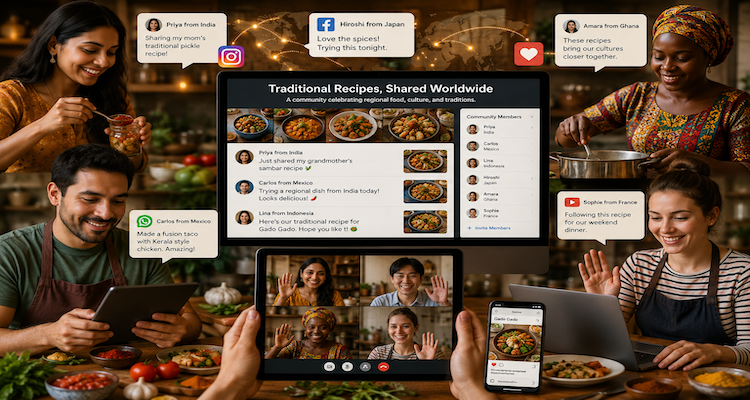
A grandmother in Kerala shares a decades-old pickle recipe on a social media group. A home cook in Canada recreates it, posts the results, and sparks a discussion involving people from three continents. Meanwhile, a food enthusiast in Japan discovers a traditional millet dish from rural India through a short video and begins exploring its cultural history. What once depended on geography, family ties, or local communities is now traveling across borders through digital networks.
This shift is changing more than how people discover recipes. Regional food traditions often overlooked in mainstream culinary conversations are finding renewed relevance through online communities that celebrate local knowledge, cultural identity, and authentic storytelling. Digital platforms are becoming modern gathering places where food is not just consumed but documented, preserved, discussed, and reimagined.
The growing popularity of regional cuisines online reveals a larger cultural movement: people are searching for deeper connections to place, heritage, and identity in an increasingly globalized world.
The Digital Revival of Local Food Culture
For decades, culinary globalization favored a relatively small group of internationally recognized cuisines and dishes. Local food traditions often remained confined to families, villages, or regional communities, passed down through oral tradition rather than formal documentation.
Digital communities are helping reverse that pattern.
Social media platforms, food forums, video-sharing sites, and community-driven content channels have created opportunities for local food traditions to reach audiences that would have been unimaginable a generation ago. Recipes once written in personal notebooks are now shared through videos, blogs, discussion groups, and community archives.
Importantly, these communities do more than distribute recipes. They provide context. Users discuss ingredients, regional histories, cooking techniques, seasonal variations, and cultural significance. Food becomes a gateway to understanding the people and places behind it.
As a result, regional cuisine is no longer viewed merely as a local curiosity. It is increasingly recognized as an important expression of cultural heritage.
Why Audiences Are Seeking Regional Food Stories
The growing interest in regional foods reflects changing consumer behavior.
Many people have become accustomed to globally available dishes and standardized dining experiences. While convenience remains important, there is also a growing desire for authenticity and uniqueness. Regional food traditions offer something difficult to replicate at scale: a sense of place.
Digital audiences are particularly drawn to stories that feel personal and rooted in lived experience. A traditional recipe connected to a family celebration often generates more engagement than a polished commercial food advertisement because it carries emotional and cultural meaning.
This explains why content creators focusing on local cuisines frequently attract dedicated audiences. Viewers are not only interested in what is being cooked; they want to understand why the dish matters, how it evolved, and what role it plays within a community.
Food, in this context, becomes cultural storytelling.
Digital Communities Are Becoming Cultural Archives
One of the most significant developments is the emergence of online communities as informal archives of culinary heritage.
Historically, preserving regional food knowledge depended on families, local institutions, or academic documentation. Today, digital platforms allow communities themselves to participate in preservation efforts.
Videos demonstrate traditional preparation methods. Community members contribute ingredient substitutions, historical details, and local variations. Discussions help document practices that may otherwise disappear as lifestyles change and younger generations move away from their hometowns.
This collaborative preservation creates a living archive rather than a static record.
Unlike traditional archives, digital communities allow traditions to remain active. Recipes are tested, adapted, debated, and shared continuously. The result is a dynamic form of cultural preservation that evolves alongside modern life.
The Unexpected Role of Diaspora Communities
Diaspora communities have become some of the most influential contributors to the online revival of regional food traditions.
For many people living far from their places of origin, food serves as a powerful connection to home. Digital platforms enable them to maintain cultural ties, share family recipes, and introduce traditional dishes to new audiences.
These communities often act as cultural bridges. They translate recipes, explain unfamiliar ingredients, and provide historical context for audiences who may have little prior knowledge of a particular region.
As a result, regional foods frequently gain international visibility through people who carry those traditions beyond their original geographic boundaries.
A traditional dish that once existed primarily within a local community can suddenly become part of a global conversation because members of a diaspora chose to share their experiences online.
What Makes This Moment Different
Food has always traveled between cultures, but the speed and scale of digital discovery have transformed the process.
In the past, exposure to regional cuisine often depended on travel, migration, or specialized media coverage. Today, a single post can introduce thousands—or even millions of people to a local culinary tradition within hours.
What makes this particularly significant is that discovery is increasingly driven by communities rather than institutions. Users recommend dishes, share cooking experiences, and amplify stories through social interaction.
This creates a more diverse food ecosystem where lesser-known traditions have opportunities to gain visibility alongside globally established cuisines.
The shift also changes who gets to tell culinary stories. Local cooks, home chefs, and community members can now reach audiences directly without relying on traditional media gatekeepers.
Beyond Food: A Search for Identity and Belonging
The resurgence of interest in regional cuisines points to a broader social trend.
People are increasingly using digital spaces not only to consume content but to explore identity. Regional food traditions provide a tangible way to connect with ancestry, community, and cultural memory.
For younger generations, especially those raised in highly connected digital environments, regional foods can offer a sense of continuity with the past. Learning a traditional recipe becomes an act of cultural discovery.
For others, exploring unfamiliar regional cuisines provides a way to engage with cultures respectfully and meaningfully. Instead of reducing food to a trend, digital communities often encourage deeper understanding of the traditions behind it.
This is an important distinction. The most successful food communities tend to emphasize context, history, and lived experience rather than novelty alone.
Opportunities and Challenges Ahead
The growing visibility of regional food traditions creates new opportunities for local producers, culinary entrepreneurs, tourism initiatives, and cultural organizations.
Greater awareness can support local economies, encourage culinary tourism, and create demand for traditional ingredients and products. Small-scale food businesses can reach customers who would have been inaccessible in the past.
However, increased visibility also brings challenges.
As regional cuisines gain popularity, there is a risk that complex traditions may be simplified, commercialized, or detached from their cultural origins. Digital communities often play a crucial role in addressing this issue by providing context and encouraging respectful engagement.
The future of regional food culture online will likely depend on balancing accessibility with authenticity.
A New Chapter for Culinary Heritage
Regional food traditions are not simply surviving in the digital age they are adapting to it.
What began as local knowledge shared within families and communities is increasingly becoming part of global cultural conversations. Digital communities are enabling people to preserve traditions, discover new perspectives, and build connections across geographic boundaries.
The deeper story is not just about food. It is about how people use technology to protect cultural memory while creating new forms of community.
As digital spaces continue to evolve, regional cuisines may become one of the most powerful examples of how heritage can remain relevant in a connected world. The recipes themselves matter, but the conversations surrounding them may prove even more important. They remind us that every dish carries a story and today, those stories can travel farther than ever before.
This content is published for informational or entertainment purposes. Facts, opinions, or references may evolve over time, and readers are encouraged to verify details from reliable sources.