










Why Consumers Are Paying More for Foods With Shorter Ingredient Lists
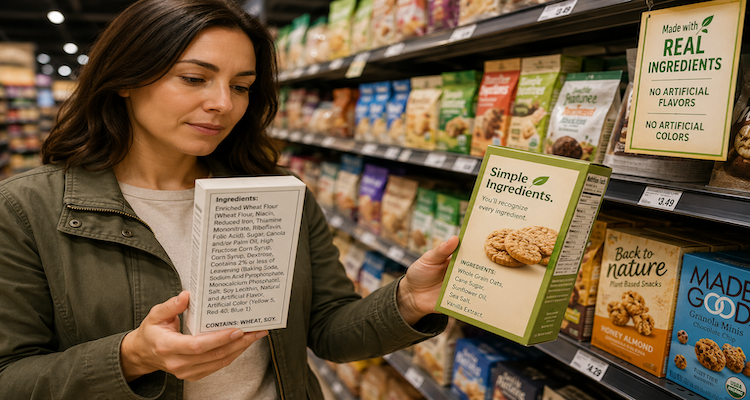
A growing number of shoppers are standing in grocery store aisles doing something that would have seemed unusual a decade ago: turning packages around and reading ingredient labels before checking the price tag. In many cases, they are willingly choosing products that cost more simply because they contain fewer ingredients.
This shift is not limited to specialty health stores or niche consumer groups. It is becoming visible across supermarkets, online grocery platforms, and premium food brands. Products marketed with simple ingredient lists, whether yogurt, bread, snacks, sauces, or beverages are attracting consumers who increasingly associate simplicity with quality.
What makes this trend particularly interesting is that it runs against a long-standing consumer habit. For years, shoppers often sought the best value for money. Today, many are willing to pay a premium for what appears to be less. The appeal of fewer ingredients reveals a deeper transformation in how people think about food, trust, health, and transparency.
Simplicity Has Become a Signal of Trust
Food labels have become one of the most visible points of contact between brands and consumers. In an era where people are exposed to endless information about nutrition, processing methods, and food production, ingredient lists have taken on a symbolic role.
Many consumers are not nutrition experts, nor do they have the time to analyze every scientific claim. Instead, they rely on simpler cues when making decisions. A shorter ingredient list often feels easier to understand, and products with recognizable ingredients can appear more trustworthy than those filled with unfamiliar terms.
This does not automatically mean that foods with longer ingredient lists are unhealthy or inferior. However, perception plays a powerful role in consumer behavior. When shoppers recognize every ingredient on a package, they often feel more confident about what they are buying.
The result is a growing preference for foods that communicate transparency rather than complexity.
The Rise of the “Clean Label” Mindset
One of the most influential forces behind this trend is the clean-label movement. While there is no universally accepted definition of “clean label,” the concept generally refers to foods made with simple, familiar ingredients and minimal additives.
Consumers increasingly look for products that avoid artificial colors, preservatives, flavor enhancers, or highly processed components. In response, food manufacturers have reformulated products, simplified recipes, and redesigned packaging to highlight ingredient transparency.
This movement reflects more than a health trend. It represents a broader desire for control in a world where many aspects of daily life feel increasingly complex.
People may not always know exactly how food is manufactured, but they appreciate products that appear easier to understand. Simplicity offers reassurance.
Health Consciousness Is Evolving
Health-focused consumers once concentrated heavily on calorie counts, fat content, or specific nutrients. While those factors remain important, many shoppers are now paying closer attention to the overall composition of food.
Instead of asking only, “How many calories does this contain?” consumers are increasingly asking, “What is actually in this product?”
This shift reflects a broader interest in food quality rather than merely nutritional metrics. Consumers are becoming more aware of food processing, sourcing practices, and ingredient origins. They are seeking products that align with their personal definitions of wellness, even if those definitions vary from person to person.
For some, fewer ingredients suggest less processing. For others, it signals authenticity or a closer connection to traditional food preparation methods.
The growing popularity of simple ingredient products demonstrates that consumers are evaluating food through a wider lens than they once did.
Social Media Has Changed Food Transparency
The rise of social media has significantly accelerated interest in ingredient awareness.
Food creators, nutrition educators, wellness influencers, and consumer advocates regularly analyze ingredient labels in videos and posts. A product’s ingredient list can now become a public talking point within hours.
Consumers are exposed to discussions about additives, sweeteners, preservatives, and processing methods more frequently than ever before. Whether all of these conversations are scientifically rigorous is another question, but they undeniably influence purchasing decisions.
As a result, brands are under greater pressure to communicate clearly and avoid ingredients that consumers may perceive negatively.
The label itself has become part of the marketing strategy.
Premium Pricing Is Becoming Easier to Justify
One of the most surprising aspects of this trend is consumers’ willingness to spend more.
Traditionally, higher prices were justified through larger quantities, luxury branding, or superior performance. Today, simplicity itself can create perceived value.
Consumers often believe that products with fewer ingredients require better sourcing, higher-quality raw materials, or more careful manufacturing processes. Whether that assumption is always accurate varies by product, but the perception remains powerful.
This reflects a broader economic pattern seen in multiple industries. People increasingly pay premiums for products that reduce complexity, save time, or provide peace of mind.
In food, a shorter ingredient list can function as a form of reassurance, and reassurance has become a valuable commodity.
The Hidden Shift: Consumers Are Buying Confidence
Perhaps the most overlooked aspect of this trend is that people are not merely purchasing food they are purchasing confidence in their choices.
Modern consumers face an overwhelming number of options. Grocery stores contain thousands of products competing for attention. Nutritional advice frequently changes, and conflicting health information is readily available online.
In this environment, shorter ingredient lists offer a shortcut for decision-making.
The appeal is not necessarily rooted in chemistry or nutrition alone. It is psychological.
Consumers often feel more comfortable choosing a product when they understand what is inside it. A simple label reduces uncertainty. In many cases, the premium price becomes secondary to the confidence that accompanies the purchase.
This insight helps explain why the trend extends beyond health-conscious shoppers. It resonates with busy parents, young professionals, older consumers, and anyone seeking clarity in a crowded marketplace.
How Food Companies Are Responding
Manufacturers have taken notice.
Many brands are reformulating products to remove unnecessary additives, shorten ingredient lists, and emphasize recognizable components. Packaging increasingly highlights statements such as “made with real ingredients” or “contains only a few ingredients.”
At the same time, companies must balance simplicity with practical realities. Ingredients often serve important functions related to shelf life, safety, taste, and consistency.
The challenge for food producers is not simply removing ingredients but maintaining product quality while meeting evolving consumer expectations.
Brands that successfully combine transparency, functionality, and trust may gain a significant competitive advantage.
What This Trend Reveals About the Future of Food
The popularity of foods with fewer ingredients points to a larger cultural shift. Consumers are becoming more interested in understanding how products are made, where they come from, and why specific ingredients are included.
This desire for transparency extends beyond food. Similar expectations are emerging in cosmetics, personal care products, technology services, and even financial products.
People increasingly reward brands that make complex systems easier to understand.
For the food industry, this means transparency may become as important as taste, convenience, or price. Consumers are signaling that they want more than products—they want clarity, trust, and confidence in what they buy.
As this trend continues, the most successful food brands may not be those offering the longest list of features or claims. They may be the ones that can explain their products in the simplest terms.
This content is published for informational or entertainment purposes. Facts, opinions, or references may evolve over time, and readers are encouraged to verify details from reliable sources.