










How Data Centers Are Quietly Reshaping Local Electricity Markets
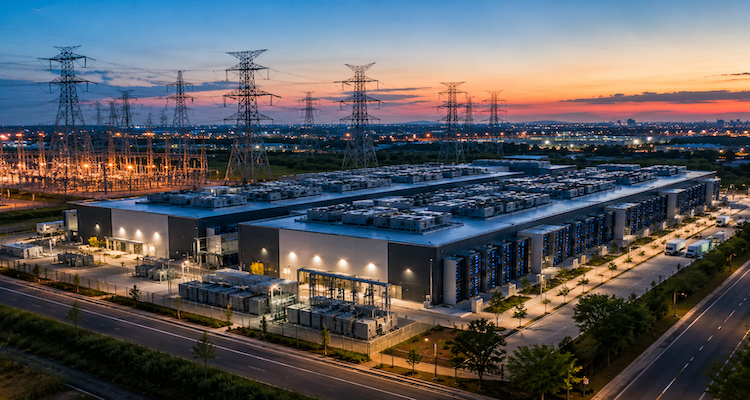
A growing number of communities are discovering that the digital economy has a very physical footprint. While cloud computing, artificial intelligence, video streaming, and online services often seem invisible to users, the infrastructure powering them is anything but. Behind the scenes, data centers are becoming some of the largest consumers of electricity in many regions, altering local energy demand patterns in ways that few residents ever notice.
For decades, electricity markets were shaped by familiar drivers: households, manufacturing facilities, commercial districts, and seasonal weather patterns. Today, a new force is emerging. Massive server farms filled with computing equipment operate around the clock, requiring continuous power and sophisticated cooling systems. Their presence is beginning to influence how utilities plan infrastructure, how energy prices evolve, and where future economic development takes place.
The result is a subtle but significant transformation that extends well beyond the technology sector.
The New Heavy Industries of the Digital Age
Historically, large industrial facilities such as steel mills, chemical plants, and automotive factories were among the biggest electricity consumers. In many regions, data centers are increasingly joining that category.
The difference lies in their operating profile. Manufacturing plants often experience fluctuations in production, while data centers typically require a steady and uninterrupted flow of electricity. Downtime can be costly, making reliability a top priority.
As cloud services expand and artificial intelligence workloads become more demanding, energy consumption is rising alongside computational needs. Training advanced AI models, processing vast datasets, and supporting millions of online interactions require substantial computing capacity. That capacity ultimately translates into electricity demand.
This shift is prompting utilities to rethink long-term forecasting models. Areas once considered unlikely candidates for major energy growth are suddenly becoming attractive locations for large-scale digital infrastructure.
Why Location Matters More Than Ever
Not all electricity markets experience the impact of data centers equally.
Technology companies often seek regions that offer a combination of affordable land, reliable power grids, favorable regulatory environments, and access to high-speed network connections. As a result, clusters of data centers have emerged in specific locations rather than being evenly distributed.
When multiple facilities are built within the same region, local electricity demand can increase dramatically. Utilities may need to expand transmission networks, upgrade substations, or invest in additional generation capacity to accommodate future growth.
For communities, these developments can create both opportunities and challenges. Data center projects often bring investment, construction activity, and tax revenue. At the same time, they can place new pressure on energy infrastructure that was originally designed for different consumption patterns.
The Hidden Influence on Electricity Planning
One of the less visible consequences of data center growth is its impact on utility planning cycles.
Electricity providers traditionally relied on relatively predictable demand forecasts. Residential growth, commercial development, and industrial expansion generally followed gradual patterns. Data center projects can alter those expectations significantly.
A single large facility may require power equivalent to that used by thousands of households. Multiple projects arriving within a short period can accelerate infrastructure planning timelines and force utilities to make substantial investments years earlier than anticipated.
This dynamic is changing conversations about grid modernization. Utilities are increasingly evaluating how to strengthen networks, improve resilience, and prepare for concentrated demand growth in specific regions.
The challenge is not merely generating enough electricity. It is ensuring that power can be delivered reliably where and when it is needed.
Renewable Energy and a New Competitive Landscape
The rise of data centers is also influencing renewable energy development.
Many technology companies have publicly committed to sustainability goals and seek to source electricity from renewable resources whenever possible. To support these objectives, companies often enter into agreements that help finance new solar, wind, or other clean-energy projects.
In some regions, data center demand has become an important driver of renewable energy investment. New clean-energy facilities can help utilities meet growing electricity requirements while supporting broader environmental goals.
However, the relationship is not always straightforward.
Renewable generation varies based on weather conditions and time of day, while data centers require constant power. This has increased interest in energy storage technologies, advanced grid management systems, and new approaches to balancing supply and demand.
As a result, the growth of data centers is accelerating conversations about how future electricity systems should operate.
What This Means for Consumers
Many residents may assume that large-scale technology infrastructure has little connection to their daily lives. In reality, the effects can be surprisingly close to home.
When utilities invest in new transmission lines, substations, or generation facilities, those costs become part of broader infrastructure planning discussions. Regulatory decisions, investment strategies, and long-term pricing structures can all be influenced by changing demand patterns.
The presence of major data center developments may also affect local economic priorities. Communities competing for technology investment often evaluate land use, energy availability, and infrastructure readiness differently than they did in previous decades.
Even individuals who never think about cloud computing or AI are increasingly connected to these shifts because electricity systems serve entire communities rather than isolated industries.
A Bigger Story About the Future of AI
Perhaps the most important insight is that data centers are not merely a technology story, they are becoming an energy story.
Artificial intelligence has captured public attention because of its capabilities, but far less discussion focuses on the physical resources required to support it. Every AI application, cloud platform, streaming service, and digital tool depends on infrastructure that consumes real-world energy.
This creates an unusual connection between two sectors that were once viewed separately. Decisions made by software companies now have implications for utilities, energy planners, regulators, and local governments.
In many ways, the future of AI may be influenced not only by advances in algorithms but also by the availability, affordability, and reliability of electricity.
That shift represents a broader transformation in how digital innovation interacts with physical infrastructure.
The Emerging Competition for Power
Looking ahead, one of the most significant questions is how electricity systems will balance growing demand from multiple sources.
Transportation is becoming increasingly electrified. Industries are exploring cleaner energy alternatives. Buildings are adopting more electric technologies. At the same time, data centers continue to expand as digital services become more deeply integrated into everyday life.
These overlapping trends could create new competition for energy resources in some regions. Utilities, policymakers, and businesses may face difficult decisions about infrastructure investment, generation capacity, and long-term planning priorities.
While the outcomes will vary by location, the underlying trend is clear: electricity is becoming an increasingly strategic resource in the digital economy.
The Quiet Transformation Underway
The rise of data centers rarely generates the same public attention as new consumer technologies. Few people notice a server facility on the outskirts of a city or think about the electricity required to power online services.
Yet these facilities are quietly influencing local electricity markets, shaping infrastructure investment, accelerating renewable energy development, and redefining how communities prepare for future growth.
What appears to be a technology trend is increasingly becoming an economic and energy transition story. As artificial intelligence, cloud computing, and digital services continue expanding, the influence of data centers on electricity systems is likely to become even more significant.
The next chapter of the digital economy may be written not only in software code, but also in power grids, substations, and energy markets that are adapting to a new era of demand.
The information presented in this article is based on publicly available sources, reports, and factual material available at the time of publication. While efforts are made to ensure accuracy, details may change as new information emerges. The content is provided for general informational purposes only, and readers are advised to verify facts independently where necessary.
Related News
- The Energy Paradox of Efficiency: Why Using Less Electricity Does Not Always Mean Using Less Energy
- Why Extreme Weather Is Turning Electricity Resilience Into an Everyday Consumer Issue
- Why Energy Independence Is Becoming a Household Decision, Not Just a National Strategy
- The Hidden Energy Cost of Keeping Everything Available Instantly