








Artificial Rain Is Expanding Faster Than the Rules That Govern It
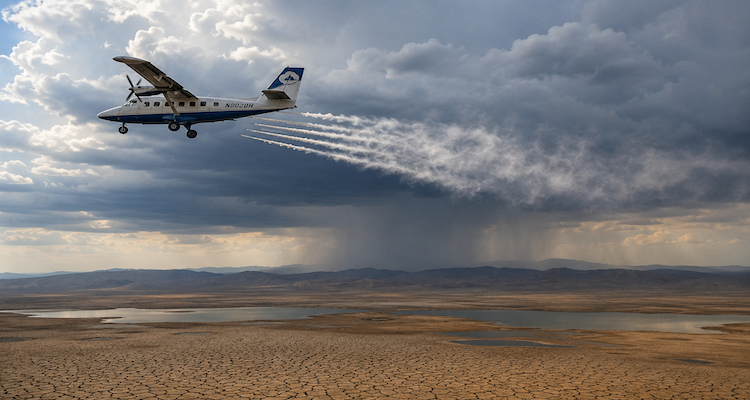
Cloud seeding was once a niche scientific experiment. Today, it is becoming a tool that governments, water authorities, and even private interests are increasingly willing to consider when faced with droughts, extreme heat, shrinking reservoirs, and growing pressure on food production.
The idea sounds deceptively simple: encourage clouds to release more rain where it is needed. Yet as weather intervention moves from research programs into broader public discussion, a larger debate is emerging. The question is no longer just whether humans can influence rainfall. It is whether society is prepared for the environmental, political, and ethical consequences of trying.
As climate variability intensifies and water security becomes a strategic concern in many regions, artificial rain has shifted from a scientific curiosity to a subject with far-reaching implications. What makes this moment different is that the technology is advancing at the same time that weather itself is becoming less predictable.
Why Interest in Artificial Rain Is Rising
The growing interest in weather intervention reflects a practical challenge facing communities around the world: water is becoming harder to manage.
Many regions are experiencing longer dry spells, irregular rainfall patterns, and increased pressure on groundwater resources. Farmers, city planners, and policymakers are searching for solutions that can help stabilize water supplies without waiting for large-scale infrastructure projects to be completed.
Cloud seeding has therefore gained renewed attention. The process typically involves dispersing particles such as silver iodide or salt into suitable clouds. These particles act as nuclei around which water droplets can form, potentially increasing precipitation under the right atmospheric conditions.
Several countries have experimented with cloud-seeding programs over the years. Nations including China, the United Arab Emirates, the United States, and India have all explored weather modification projects for various purposes, from supporting agriculture to replenishing water reserves.
Yet enthusiasm for artificial rain often collides with a critical reality: weather systems are extraordinarily complex, making outcomes difficult to measure with certainty.
The Challenge of Proving Success
One reason artificial rain remains controversial is that determining its effectiveness is not straightforward.
When rain falls after a cloud-seeding operation, it can be difficult to establish exactly how much of that rainfall resulted from human intervention rather than natural atmospheric processes. Weather systems involve countless variables, and separating cause from coincidence is often challenging.
Supporters argue that modern technologies, improved atmospheric modeling, and decades of operational experience have increased confidence in cloud-seeding programs. Critics counter that evidence remains mixed and that expectations sometimes exceed what science can reliably deliver.
This uncertainty places weather intervention in a unique position. Unlike many infrastructure investments, where outcomes can be directly measured, cloud seeding often operates in a gray area where probabilities matter more than guarantees.
For policymakers, that creates a difficult balancing act between potential benefits and public accountability.
The Hidden Shift: Weather as a Managed Resource
Perhaps the most significant development is not the technology itself but the changing way society views weather.
Historically, rainfall was largely considered a natural phenomenon beyond human control. Today, some governments increasingly see precipitation as something that can be managed, optimized, or influenced through technology.
This shift reflects a broader trend visible across multiple sectors. From genetically modified crops to climate engineering proposals, societies are becoming more comfortable with interventions designed to reduce environmental uncertainty.
Artificial rain fits into this larger story. It represents an attempt to transform weather from an uncontrollable force into a partially manageable resource.
That change in mindset carries consequences. Once weather becomes something that can potentially be influenced, expectations change as well. Citizens may begin asking why interventions were not attempted during droughts. Agricultural communities may seek targeted rainfall support. Political leaders may face pressure to act whenever water shortages emerge.
The debate therefore extends beyond meteorology into governance, public trust, and resource management.
Environmental and Ethical Questions
Supporters often emphasize the potential benefits of cloud seeding, particularly in water-stressed regions. Additional rainfall could help agriculture, replenish reservoirs, reduce wildfire risks, and support economic stability.
However, critics raise important environmental and ethical concerns.
One concern involves unintended consequences. Weather systems do not respect administrative boundaries. If rainfall is increased in one area, could that affect precipitation patterns elsewhere? Scientific understanding of such large-scale impacts remains limited.
Questions also arise regarding the materials used in cloud-seeding operations. While many studies have examined commonly used substances such as silver iodide, public concern persists about long-term environmental effects and cumulative exposure.
Beyond environmental considerations lies a deeper ethical issue: who gets to decide where rain should fall?
As water becomes increasingly valuable, decisions about weather intervention could carry economic and political consequences. Regions competing for agricultural productivity, industrial growth, or water access may view weather modification through very different lenses.
The challenge is no longer purely scientific. It is increasingly social and political.
A New Dimension of Climate Adaptation
Artificial rain is often discussed as a technological solution, but its growing popularity reveals something important about climate adaptation.
Communities are searching for tools that provide immediate relief from environmental stress. Large-scale climate mitigation efforts may take decades to produce measurable results. Water shortages, however, demand responses today.
This creates a powerful incentive to explore interventions that promise near-term benefits.
The broader trend can be seen in other areas as well. Cities are investing in cooling infrastructure. Farmers are adopting precision agriculture technologies. Water managers are deploying advanced monitoring systems. Artificial rain becomes part of a wider toolkit aimed at increasing resilience in an uncertain climate.
The key insight is that weather intervention reflects not just technological ambition but societal impatience with environmental unpredictability.
People increasingly expect technology to solve problems that were once considered unavoidable.
What Happens If Weather Modification Expands?
If artificial rain programs become more common, governance may become as important as science.
International cooperation could become necessary when weather systems cross national borders. Regulatory frameworks may need to address transparency, environmental monitoring, and accountability. Public communication will also play a crucial role, particularly when expectations exceed what current technologies can realistically achieve.
The future debate may center less on whether cloud seeding works and more on how weather intervention should be managed responsibly.
Emerging technologies, including advanced atmospheric modeling, satellite monitoring, and artificial intelligence, may improve the precision of future weather modification efforts. Yet greater capability could also raise more complex questions about control, fairness, and oversight.
In many ways, artificial rain sits at the intersection of climate adaptation, technological innovation, and public policy. It represents a future in which humanity may become increasingly willing to influence natural systems in pursuit of stability.
Whether that future proves beneficial will depend not only on scientific progress but also on the rules, transparency, and public trust that accompany it.
The Bigger Question Behind the Rain
The debate over artificial rain is ultimately about more than precipitation.
It reflects a broader question facing modern societies: how much should humans intervene in natural systems when environmental pressures become difficult to ignore?
Cloud seeding may help address certain water challenges under specific conditions. It is unlikely to be a universal solution. Yet its growing adoption signals a profound shift in how people think about nature, technology, and responsibility.
As climate pressures intensify, weather intervention will likely remain a topic of increasing interest. The real challenge may not be whether humanity can influence rainfall, but whether it can do so wisely, transparently, and equitably.
This content is published for informational or entertainment purposes. Facts, opinions, or references may evolve over time, and readers are encouraged to verify details from reliable sources.