








Where Borders End and New Travel Cultures Begin
A traveler crossing from France into Spain through the Basque Country may notice something unusual. The language changes, but not entirely. The food feels familiar yet distinct. Traditions seem rooted in more than one nation. The experience is neither fully French nor fully Spanish. Instead, it reflects something new an identity shaped by life at the edge of both.
Border regions have long been viewed as dividing lines between countries. Increasingly, however, they are becoming cultural meeting points where traditions, languages, cuisines, and lifestyles blend into entirely new travel experiences. For travelers seeking authenticity rather than standard tourist attractions, these areas are emerging as some of the most fascinating destinations in the world.
The rise of border-region tourism reveals a broader shift in how people travel. Visitors are no longer satisfied with simply checking countries off a list. Many now seek places where cultures intersect, evolve, and create stories that cannot be found elsewhere.
The Border Is Becoming the Destination
For much of modern history, borders were associated with checkpoints, political divisions, and national identity. Travelers often viewed them as places to pass through rather than places to explore.
That perception is changing.
In many parts of the world, border regions are developing their own cultural ecosystems. Communities living near borders frequently share trade networks, family connections, languages, and traditions that extend beyond political boundaries. Over time, these interactions create cultural identities that feel unique to the region itself.
The result is a travel experience that differs from visiting either neighboring country independently. Travelers encounter blended cuisines, hybrid architectural styles, multilingual communities, and celebrations influenced by multiple cultures at once.
Rather than serving as edges of nations, these regions are becoming centers of cultural creativity.
A New Kind of Cultural Authenticity
One reason border destinations are attracting attention is that they challenge traditional ideas of authenticity.
Travel marketing has often focused on presenting destinations as culturally pure or distinctly national. Yet reality is often more complex. Many communities have been shaped by centuries of migration, trade, conflict, and cooperation.
Border regions make that complexity visible.
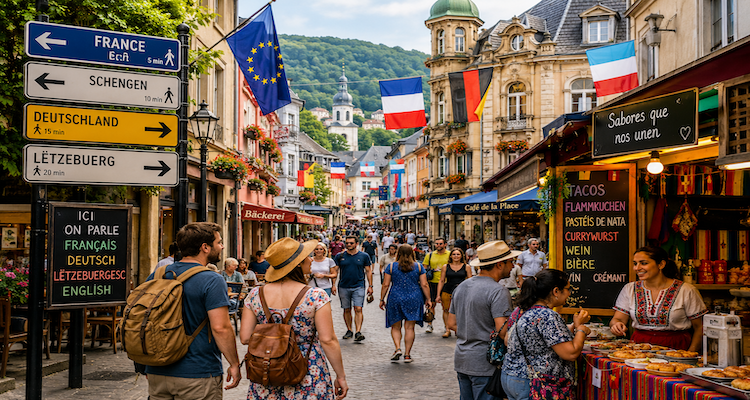
The area between Germany and France, for example, contains communities whose food, language, and customs reflect influences from both countries. Similar patterns can be found along the borders of Mexico and the United States, Thailand and Laos, or Argentina and Brazil.
Travelers increasingly value these layered cultural experiences because they feel more representative of how people actually live. Instead of encountering a carefully packaged version of national identity, visitors witness cultures adapting and evolving in real time.
This shift reflects a broader trend in tourism: the search for places that feel lived-in rather than staged.
Food Is Leading the Transformation
Perhaps nowhere is the emergence of new travel cultures more visible than in food.
Border regions often develop culinary traditions that combine ingredients, cooking methods, and flavors from neighboring countries. These dishes become cultural symbols that belong to neither side entirely.
In many cases, food serves as a bridge between communities that may speak different languages or maintain different national identities.
Travelers increasingly plan trips around these culinary intersections. Markets, family-owned restaurants, and regional food festivals offer experiences that cannot easily be replicated elsewhere.
What makes these destinations appealing is not simply the food itself but the story behind it. Every recipe reflects generations of cultural exchange, adaptation, and coexistence.
As travelers become more interested in local narratives, border-region cuisine provides a powerful way to understand how cultures influence one another.
Language Creates Unique Travel Experiences
Language plays an equally important role in shaping these emerging travel cultures.
Many border communities develop bilingual or multilingual environments where residents move comfortably between languages depending on context. Some regions even maintain local dialects that incorporate elements from multiple linguistic traditions.
For visitors, this creates a distinctive atmosphere.
Street signs, conversations, music, and media often reveal overlapping cultural influences. Travelers gain a deeper appreciation for how identity can be fluid rather than fixed.
This is particularly appealing to younger travelers, who tend to embrace cultural diversity and global perspectives. Rather than viewing mixed identities as confusing, many see them as enriching.
The popularity of language-learning apps, cultural exchange programs, and international remote work has further increased interest in destinations where multiple cultures coexist naturally.
The Rise of Borderland Festivals and Events
Another factor driving interest is the growth of cultural festivals that celebrate cross-border heritage.
Many border regions host events that highlight shared traditions rather than national differences. Music festivals, food fairs, art exhibitions, and community celebrations increasingly emphasize cultural connections that span political boundaries.
These events offer travelers something difficult to find in major tourist hubs: participation in living traditions rather than performances designed primarily for visitors.
The appeal lies in their spontaneity and local character. Travelers often feel they are witnessing culture as it is actively created and maintained, not merely preserved for display.
As experiential tourism continues to grow, these gatherings are becoming important attractions in their own right.
The Hidden Insight: Borders Are Becoming Innovation Zones
One of the most overlooked aspects of border-region travel is what it reveals about the future of culture itself.
Border communities often act as early indicators of broader social changes. Because they regularly navigate multiple identities, languages, and economic systems, they tend to develop adaptive ways of living.
This adaptability can influence everything from business practices to education, food culture, and creative industries.
In many ways, border regions function as cultural laboratories where new forms of identity emerge before they become visible elsewhere.
For travelers, this means these destinations offer more than scenic experiences. They provide a glimpse into how societies may evolve in an increasingly interconnected world.
The growing popularity of border tourism reflects a deeper curiosity about cultural blending, global mobility, and the ways communities respond to change.
Why Travelers Are Seeking These Experiences Now
Several trends are converging to make border-region travel more attractive.
Remote work has expanded travel flexibility, allowing people to spend more time exploring lesser-known destinations. Social media has increased awareness of unique cultural experiences beyond traditional tourist routes. At the same time, travelers are showing greater interest in local stories, community engagement, and meaningful cultural exchange.
Border regions satisfy all of these interests.
They offer experiences that feel both international and local. Visitors can encounter multiple cultural perspectives within a single journey while avoiding some of the overcrowding associated with major tourist centers.
This combination of authenticity, diversity, and discovery makes border destinations particularly appealing to modern travelers.
What Comes Next for Border Tourism?
As tourism continues to evolve, border regions may become some of the most influential destinations in the travel industry.
Governments, tourism boards, and local communities are increasingly recognizing the value of cross-border heritage. Collaborative tourism initiatives, shared cultural routes, and regional branding efforts are beginning to highlight these unique identities.
The future may see more travelers choosing destinations based not on national boundaries but on cultural ecosystems that transcend them.
What makes border regions remarkable is not simply that they connect two countries. It is that they often create something entirely new—a culture born from interaction, adaptation, and exchange.
For travelers looking beyond conventional sightseeing, these places offer a powerful reminder that some of the most interesting stories emerge not at the center of a map, but along its edges.
This content is published for informational or entertainment purposes. Facts, opinions, or references may evolve over time, and readers are encouraged to verify details from reliable sources.