










How Population Decline Is Opening New Frontiers for Travelers
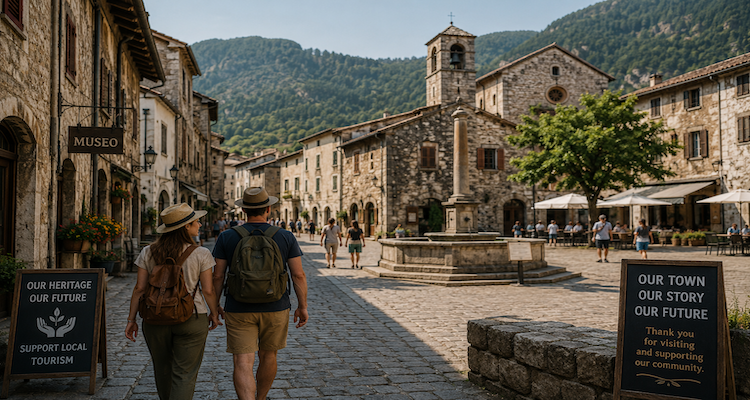
For decades, tourism growth has been linked to rising populations, expanding cities, and increasing economic activity. Yet an unexpected trend is beginning to reshape parts of the travel industry: population decline. Across several regions of the world, shrinking populations are creating new opportunities for travelers, local communities, and tourism businesses in ways that few anticipated.
While population loss is often discussed in terms of economic challenges, labor shortages, or aging societies, it is also changing how people experience destinations. Less crowded towns, abandoned heritage sites, revitalized rural communities, and new approaches to sustainable tourism are emerging from demographic shifts that were once viewed only as problems.
The result is a growing category of destinations where fewer residents can sometimes mean richer experiences for visitors.
When Fewer People Create More Space
Many popular tourist destinations struggle with overcrowding. Historic districts become difficult to navigate, local infrastructure comes under pressure, and residents increasingly push back against the impacts of mass tourism.
In contrast, regions experiencing population decline often have the opposite challenge: maintaining economic vitality and preserving cultural assets despite a shrinking resident base.
Across parts of Japan, Southern Europe, Eastern Europe, and rural areas in North America, declining populations have left behind underused infrastructure, vacant buildings, and communities eager to attract new visitors. Rather than competing with already crowded tourism hotspots, these destinations are offering travelers something increasingly rare pace.
Visitors can explore historic streets, cultural landmarks, and natural landscapes without the long lines and congestion associated with major tourist centers. For many travelers, especially those seeking authenticity, this has become a major attraction.
The Rise of “Rediscovery Tourism”
A notable shift is occurring in how destinations market themselves. Instead of promoting famous landmarks alone, many communities are inviting travelers to discover places that were previously overlooked.
Population decline often draws attention to small towns and rural regions that once played important roles in national history or local culture. As younger generations move toward urban centers, these places frequently develop tourism initiatives aimed at preserving heritage while generating economic activity.
Old railway stations become museums. Vacant schools transform into cultural centers. Historic homes become guest accommodations. Former industrial sites evolve into creative spaces.
This transformation has given rise to what some tourism observers describe as a form of rediscovery tourism—travel focused on experiencing places that are quietly reinventing themselves rather than competing with globally recognized destinations.
For travelers, the appeal lies not only in seeing something different but also in participating in the preservation of communities facing demographic change.
Authentic Experiences Are Becoming More Valuable
One of the most significant consequences of population decline is a growing emphasis on authenticity.
In heavily visited destinations, tourism sometimes becomes detached from local life. Businesses cater primarily to visitors, and cultural experiences can become highly commercialized.
Smaller communities experiencing population loss often offer a different dynamic. Local traditions, regional cuisine, craftsmanship, and community events remain closely tied to daily life rather than being designed exclusively for tourists.
Travelers increasingly value these experiences because they provide genuine connections with people and places. The desire for authenticity has become especially important among younger travelers who prioritize meaningful experiences over checklist-style tourism.
This shift reflects a broader change in consumer behavior. Many travelers are moving away from simply collecting destinations and toward seeking stories, cultural understanding, and personal enrichment.
Population decline, unexpectedly, is creating environments where these experiences can flourish.
Rural Tourism Is Benefiting From Demographic Shifts
Rural tourism has gained momentum in recent years, and demographic change is playing a role in that growth.
As populations shrink in rural regions, local governments and community organizations often look to tourism as a way to support local economies. Investments may focus on outdoor recreation, agricultural experiences, heritage tourism, wellness retreats, and cultural festivals.
The appeal extends beyond sightseeing. Travelers increasingly want opportunities to slow down, disconnect from urban pressures, and engage with nature.
Regions experiencing population decline frequently possess exactly the assets modern travelers seek: open landscapes, preserved ecosystems, lower population density, and a slower pace of life.
What was once viewed as geographic isolation is increasingly being reframed as exclusivity and tranquility.
The Economic Opportunity Few Expected
An important insight often overlooked in discussions about demographic decline is that tourism can transform unused capacity into economic value.
Communities with shrinking populations frequently have infrastructure that was originally designed for larger numbers of residents. Housing, transportation facilities, public buildings, and cultural venues may become underutilized over time.
Tourism creates an opportunity to put some of these assets back into productive use.
Vacant buildings can be converted into boutique accommodations. Historic structures can become visitor attractions. Local businesses can serve new customer groups. Seasonal tourism can help sustain services that might otherwise disappear.
This does not solve every challenge associated with population decline. However, it demonstrates that demographic change can create opportunities alongside risks.
The most successful destinations are often those that view tourism not as a replacement for population growth but as one component of broader community revitalization.
Why Travelers Are Paying Attention
Several travel trends are converging to increase interest in destinations affected by population decline.
Remote work has expanded the geographic flexibility of many professionals. Some travelers are choosing longer stays in smaller communities rather than short visits to major cities.
Interest in sustainable tourism continues to grow. Travelers increasingly consider the impact of their spending and often seek destinations where tourism supports local residents.
At the same time, social media has made it easier for lesser-known destinations to gain visibility. A scenic village, unique cultural tradition, or distinctive local experience can attract global attention without requiring massive tourism marketing budgets.
Together, these trends are helping smaller communities compete in ways that were far more difficult a decade ago.
The Challenges Remain Real
It would be misleading to suggest that population decline is universally beneficial for tourism.
Many communities face significant obstacles, including limited transportation links, labor shortages, aging infrastructure, and reduced public services. Tourism alone cannot reverse long-term demographic trends.
There is also the risk of creating economic dependence on visitors, which can make communities vulnerable to fluctuations in travel demand.
Success depends on balance. Destinations must preserve local identity while welcoming visitors, support residents while encouraging economic activity, and avoid repeating the overcrowding issues seen elsewhere.
The most resilient tourism strategies tend to focus on quality rather than volume, emphasizing meaningful visitor experiences over rapid growth.
A Different Vision of the Future
Population decline is often framed as a story of loss. Yet from a tourism perspective, it is also becoming a story of adaptation.
Communities facing demographic change are finding creative ways to preserve culture, repurpose historic assets, and attract visitors seeking something beyond conventional travel experiences.
For travelers, these destinations offer a chance to experience places in transition locations where history, community, and innovation intersect in unexpected ways.
The broader lesson extends beyond tourism. Demographic shifts are not simply reducing populations; they are reshaping how places define themselves, how economies evolve, and how people choose to travel.
As the travel industry continues to move toward authenticity, sustainability, and deeper cultural engagement, some of the most compelling destinations of the future may emerge not from growth, but from the creative response to decline.
This content is published for informational or entertainment purposes. Facts, opinions, or references may evolve over time, and readers are encouraged to verify details from reliable sources.