










Why Climate Volatility Is Quietly Changing the Taste of Everyday Foods
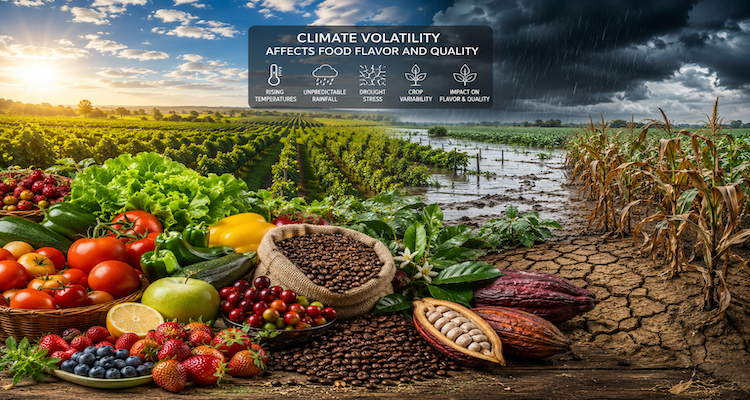
The next time a strawberry tastes less sweet than usual, a cup of coffee seems slightly more bitter, or a favorite wine feels different from the bottle you enjoyed a few years ago, the reason may not be your imagination. Increasingly, scientists, farmers, and food producers are paying attention to a subtle consequence of climate volatility: it is changing the flavor of many foods people consume every day.
While discussions about climate change often focus on rising temperatures, extreme weather events, and environmental risks, a quieter transformation is unfolding across farms, orchards, vineyards, and fisheries. The conditions that help create flavor temperature, rainfall, soil moisture, sunlight exposure, and growing seasons are becoming less predictable. As those conditions shift, so do the characteristics that influence taste, texture, aroma, and nutritional quality.
For consumers, the change may seem small at first. Yet it reveals a much larger story about the future of food, agriculture, and the relationship between nature and what ends up on our plates.
Flavor Begins Long Before Food Reaches the Table
Taste is not determined only by a recipe or a manufacturing process. Many of the flavors people associate with fresh foods develop during growth.
A tomato’s sweetness, for example, depends on the balance of sugars and acids produced while it ripens. Coffee beans develop distinctive flavor compounds based on elevation, temperature, and rainfall patterns. Grapes used for wine are especially sensitive to environmental conditions, with slight shifts in climate capable of affecting aroma, acidity, and sugar content.
When weather becomes more volatile, these delicate processes can be disrupted.
Longer heat waves may accelerate ripening before plants fully develop their flavor profiles. Unexpected rainfall can dilute certain compounds. Drought stress may alter how plants allocate energy, sometimes affecting taste and texture. In some cases, crops survive difficult conditions but produce fruit or grains that differ noticeably from historical norms.
The result is not necessarily worse food. It is often simply different food.
Coffee, Chocolate, and Wine Are Early Warning Signs
Some of the most visible examples are appearing in products whose flavors are closely studied and highly valued.
Coffee growers in parts of Latin America, Africa, and Asia have reported increasing challenges from shifting weather patterns. Temperature changes can affect bean development, while irregular rainfall influences harvest quality. Because specialty coffee relies on precise growing conditions, even small environmental variations can alter flavor characteristics.
Chocolate faces similar pressures. Cocoa trees thrive within relatively narrow climatic ranges. As weather patterns become less predictable, growers must contend with changing rainfall, pests, and disease pressures that can affect bean quality and yield.
Wine producers have perhaps become the most vocal observers of climate-driven flavor shifts. Vineyards around the world are adjusting planting practices as warmer temperatures influence grape ripening. Some wine regions are seeing higher sugar levels, altered acidity, and changing harvest schedules. In response, producers are experimenting with new grape varieties and cultivation techniques to preserve desired flavor profiles.
These industries highlight a broader reality: climate volatility is influencing not only how much food is produced but also how it tastes.
Fruits and Vegetables Are Feeling the Impact Too
The effects extend far beyond luxury products.
Many fruits and vegetables depend on stable growing conditions to develop consistent flavor. Heat stress can reduce sweetness in some crops while increasing bitterness in others. Water shortages may affect size, texture, and nutrient composition.
Consumers may already be experiencing greater variability in produce quality from season to season. A peach purchased one year may taste remarkably different from a peach grown in the same region several years later. Similar patterns can emerge in berries, citrus fruits, leafy greens, and other staple foods.
For farmers, maintaining consistency has become increasingly difficult. Traditional planting calendars are becoming less reliable as weather events occur outside historical patterns. Growing techniques that worked for decades may require adaptation to preserve crop quality.
This challenge is particularly significant because consumer expectations are often built around consistency. People expect familiar foods to taste familiar.
The Hidden Economic Pressure Behind Flavor
Changes in flavor are not merely a culinary issue. They also carry economic consequences.
Food companies invest heavily in maintaining product consistency because consumers tend to notice even minor variations. Whether producing breakfast cereals, packaged snacks, sauces, or beverages, manufacturers often rely on agricultural ingredients with predictable characteristics.
As climate volatility affects crop quality, companies may need to adjust sourcing strategies, reformulate products, or diversify supplier networks. These adaptations can increase costs and complexity throughout the food supply chain.
In some cases, ingredients may need to be sourced from new regions altogether. Certain crops traditionally associated with specific locations may gradually shift toward areas with more suitable growing conditions.
This creates a ripple effect that touches farmers, distributors, manufacturers, retailers, and ultimately consumers.
A New Era of Agricultural Adaptation
One of the most important developments emerging from this trend is the growing emphasis on resilience rather than simple productivity.
For decades, agricultural innovation focused heavily on increasing yields. Today, there is rising interest in developing crops that can maintain quality under a wider range of environmental conditions.
Researchers are exploring drought-resistant varieties, heat-tolerant crops, regenerative farming practices, and precision agriculture technologies designed to help farmers respond more effectively to changing weather patterns.
Advanced monitoring systems can track soil moisture, temperature fluctuations, and crop health in real time. These tools enable farmers to make more informed decisions about irrigation, planting schedules, and resource management.
The goal is increasingly about protecting both quantity and quality.
What Consumer Preferences Reveal
An interesting shift is emerging in consumer behavior as awareness grows around food origins and production methods.
Many shoppers are becoming more interested in where their food comes from, how it is grown, and why products may vary from season to season. The popularity of local food movements, farmers’ markets, and transparent sourcing reflects a broader desire to understand the journey from farm to table.
This trend suggests a deeper cultural change.
For years, industrial food systems trained consumers to expect perfect consistency regardless of season or geography. Climate volatility may challenge that expectation, encouraging greater acceptance of natural variation.
Rather than viewing every difference as a flaw, consumers may increasingly recognize that flavor is influenced by environmental conditions in much the same way weather influences landscapes.
That perspective could reshape how people evaluate food quality in the future.
What Happens Next?
Climate volatility is unlikely to produce a single dramatic transformation in global food taste. Instead, change will probably occur gradually, unevenly, and differently across regions and crops.
Some foods may become harder to grow in traditional locations. Others may thrive under new conditions. Agricultural innovation will continue to evolve, helping producers adapt while preserving quality whenever possible.
Yet one reality is becoming increasingly clear: flavor is not separate from the environment. The conditions that shape ecosystems also shape the foods people eat every day.
The most significant insight may be that climate volatility is making visible something that has always been true. Taste is not fixed. It is a reflection of complex interactions between nature, farming practices, and human adaptation.
As weather patterns become more unpredictable, the future of food will not be defined solely by availability or price. It may also be defined by how familiar flavors evolve and how consumers learn to adapt alongside them.
This content is published for informational or entertainment purposes. Facts, opinions, or references may evolve over time, and readers are encouraged to verify details from reliable sources.