









When Football Became More Than a Game Between England and Argentina
Key Takeaways
- England and Argentina’s World Cup encounters have repeatedly shaped sporting, cultural, and political narratives beyond football itself.
- Several iconic moments, including controversial decisions and dramatic goals, became lasting symbols for both nations.
- Historical tensions, media narratives, and national identity have amplified the significance of each meeting.
- Players often carried the burden of public expectations, turning individual incidents into defining career moments.
- The rivalry continues to influence how international football stories are told and remembered worldwide.
Introduction
Few international football rivalries carry the emotional weight, historical complexity, and enduring symbolism of England versus Argentina. While many sporting contests are remembered for trophies and statistics, this rivalry has produced moments that have become part of collective memory on both sides of the Atlantic.
From disputed refereeing decisions to unforgettable goals and controversial dismissals, the encounters between England and Argentina have consistently transcended football. They have reflected broader themes of national pride, political tensions, media influence, and the extraordinary power of sport to shape public consciousness.
As the two footballing nations prepare for another major World Cup chapter, revisiting the rivalry offers more than nostalgia. It provides insight into how sporting events can become cultural landmarks, influencing generations of supporters long after the final whistle. Understanding this rivalry means understanding how football can serve as a stage where history, identity, and emotion collide.
Understanding the Development of a Footballing Rivalry
How a Sporting Contest Became a National Story
International football rivalries often emerge from repeated competition. However, England and Argentina represent something different. Their rivalry was built through a series of defining moments that carried significance far beyond the pitch.
The relationship between the two nations in football was relatively ordinary until the 1960s. What changed was not merely the outcome of matches but the circumstances surrounding them. Controversial decisions, emotional reactions, and differing interpretations created narratives that endured for decades.
Each subsequent meeting added another layer. Fans were not simply remembering previous scores; they were revisiting moments that had become part of national folklore.
The 1966 Turning Point
England’s victory over Argentina during the 1966 World Cup quarter-final remains one of the earliest flashpoints.
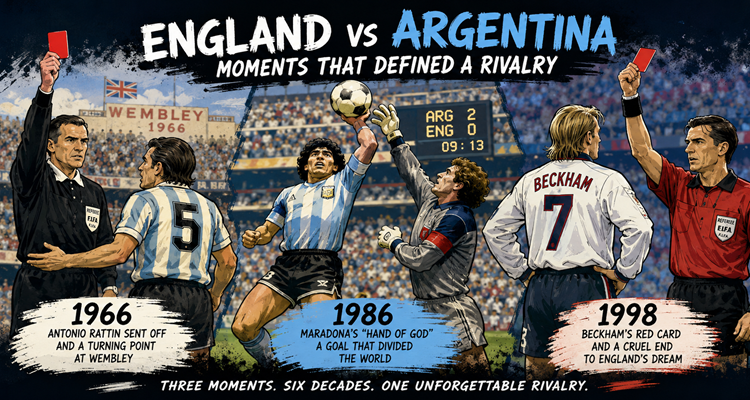
The match became famous not only because England progressed on its way to winning the tournament but also because of the controversial dismissal of Argentine captain Antonio Rattin. His refusal to leave the field created one of the earliest World Cup scenes that sparked international debate.
What made the incident memorable was the absence of modern technology. There were no replay screens, VAR reviews, or social media analysis. Fans were forced to interpret events through newspaper reports and television coverage, often reinforcing national perspectives rather than objective conclusions.
The controversy planted the seeds of mistrust and resentment that would later resurface in future encounters.
Why This Rivalry Matters Beyond Football
National Identity and Collective Memory
Most sports rivalries remain confined to stadiums. England and Argentina crossed that boundary.
Football became a vehicle through which broader national emotions were expressed. Victories felt larger. Defeats felt deeper. Every controversial moment seemed to confirm existing beliefs held by supporters and media outlets.
The rivalry demonstrates how sports can become intertwined with national identity. For many fans, these matches are remembered not simply because of football quality but because they represented something larger about their country’s standing and pride.
The Role of Media Amplification
An important but often overlooked factor is the role of media storytelling.
Journalists, broadcasters, and commentators helped transform individual incidents into legendary narratives. A disputed decision or emotional reaction that might have faded elsewhere became a permanent reference point because it was repeatedly revisited and discussed.
This pattern reveals an important truth about modern sports culture: moments become iconic not merely because they occur, but because societies continue telling their stories.
What Is Changing in the Modern Era
From Political Symbolism to Sporting Legacy
One of the defining features of the England-Argentina rivalry was the geopolitical backdrop that intensified public interest.
The 1986 World Cup quarter-final came only four years after the Falklands/Malvinas conflict, creating a unique emotional environment. Football suddenly carried symbolic significance far beyond the competition itself.
Diego Maradona’s infamous “Hand of God” goal remains one of the most debated moments in sports history. Yet what makes it remarkable is how differently it is interpreted depending on perspective.
For some, it represents deception.
For others, it symbolizes ingenuity and triumph.
The lasting debate highlights how sporting moments often become mirrors reflecting broader cultural attitudes.
The Human Side of Controversy
Modern football analysis increasingly focuses on the human impact of iconic incidents.
David Beckham’s red card during the 1998 World Cup is a prime example. What is frequently forgotten is the immense personal scrutiny he endured afterward.
In today’s environment, discussions around athlete welfare and mental health have become more prominent. Looking back, Beckham’s experience illustrates how quickly public opinion can turn against individuals following high-profile mistakes or controversial decisions.
This shift reflects a broader evolution in sports culture. Audiences increasingly recognize that athletes are people first and symbols second.
The Bigger Picture
Why Certain Moments Never Fade
Many World Cup incidents disappear from memory within a few years. England versus Argentina has produced moments that remain relevant decades later.
There are several reasons for this durability.
First, the stakes were consistently high. Most memorable meetings occurred in knockout rounds where elimination was immediate and dramatic.
Second, the incidents themselves were visually powerful. A captain refusing to leave the pitch, a handball goal, a red card, and penalty shootouts are all moments that lend themselves to storytelling.
Third, each event carried emotional complexity. There were heroes and villains, triumph and heartbreak, controversy and redemption.
Stories with these elements tend to survive across generations.
Football’s Power to Shape Historical Narratives
The rivalry also demonstrates how sport contributes to historical memory.
Many younger fans know about the “Hand of God” despite never watching the match live. Similarly, Beckham’s dismissal remains a talking point decades after it occurred.
Football’s greatest moments become cultural reference points, often outlasting political speeches, policy debates, and even major news events.
That staying power highlights the unique role of sports in preserving shared experiences.
Opportunities and Challenges
The Positive Side of Intense Rivalries
Rivalries bring enormous benefits to sport.
They create anticipation, attract global audiences, and generate emotional investment. Matches become occasions rather than routine fixtures.
For broadcasters, sponsors, and tournament organizers, these narratives increase engagement and commercial value.
For fans, rivalries provide a sense of continuity that links generations. Parents pass stories to children, ensuring that sporting history remains alive.
The Risk of Oversimplification
However, rivalries can also create challenges.
Media narratives sometimes reduce complex sporting events to simplistic themes of revenge, hostility, or national conflict. This can overshadow the skill, preparation, and professionalism displayed by players.
There is also a tendency to view every encounter through the lens of past controversies, preventing appreciation of the current generation’s achievements.
Modern football increasingly seeks balance, honoring historical narratives without allowing them to dominate every discussion.
Economic and Cultural Impact
Major rivalry matches generate significant economic activity through broadcasting rights, sponsorships, merchandise sales, tourism, and digital engagement.
At the same time, they influence popular culture. Documentaries, books, interviews, and social media discussions continue to revisit famous incidents years later.
This creates a long-term value cycle where historic moments remain commercially and culturally relevant long after the players involved have retired.
What Comes Next
A New Generation Inherits the Story
Today’s footballers enter England-Argentina matches carrying a legacy they did not create.
Most current players were not born when many of the rivalry’s defining moments occurred. Yet they inevitably become connected to that history.
The challenge for modern athletes is balancing respect for tradition with the need to create their own narratives.
Future encounters are likely to be shaped less by political tensions and more by footballing excellence. Globalized sports culture, increased player mobility, and international club football have altered relationships between nations.
Nevertheless, the emotional power of history remains.
The Evolution of Football Storytelling
Technology is also changing how future chapters will be remembered.
VAR reduces certain controversies. Social media accelerates discussion. Digital archives preserve every angle of every incident.
Yet despite these changes, the essential ingredients of memorable sporting stories remain unchanged: drama, emotion, uncertainty, and human vulnerability.
England and Argentina continue to provide all four.
Conclusion
The England-Argentina World Cup rivalry endures because it represents more than competition between two talented football nations. It is a story about how sporting events become woven into cultural identity, historical memory, and public imagination.
From Antonio Rattin’s controversial departure in 1966 to Diego Maradona’s unforgettable handball and David Beckham’s painful dismissal, the rivalry has repeatedly produced moments that reshaped careers, fueled debate, and captured global attention.
What makes these encounters remarkable is not simply what happened on the field, but what those moments came to mean afterward. They became symbols, stories, and reference points that continue to resonate decades later.
As football evolves, new chapters will inevitably be written. Yet the enduring lesson of England versus Argentina remains the same: sometimes a match lasts far longer than ninety minutes, living on in the memories, emotions, and identities of millions who witnessed it.
This content is published for informational or entertainment purposes. Facts, opinions, or references may evolve over time, and readers are encouraged to verify details from reliable sources.