










The Hidden Lifestyle Costs of Never Feeling Finished
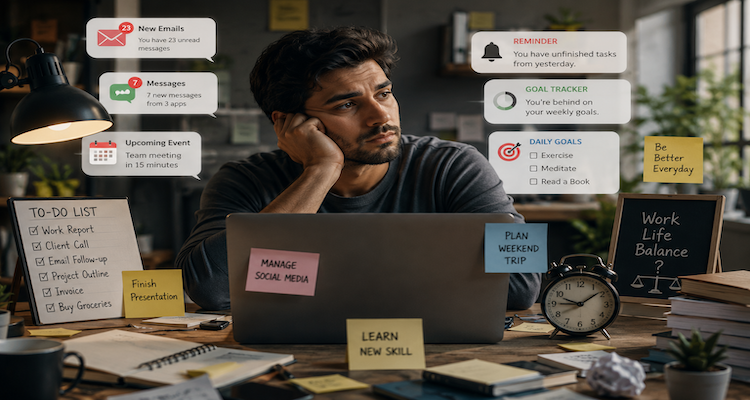
There was a time when completion felt easier to recognize. You finished a project, wrapped up a task, reached a milestone, and moved on. Today, that sense of closure is becoming surprisingly rare.
For many people, work follows them home through notifications, personal goals evolve into endless self-improvement checklists, and digital platforms constantly suggest the next thing to learn, optimize, fix, or achieve. The result is a growing lifestyle pattern in which people are always moving forward but rarely feel finished.
At first glance, this might seem like ambition or productivity. Yet beneath the surface lies a less discussed reality: the inability to feel complete can carry significant emotional, social, and even economic costs. What appears to be progress can gradually reshape how people rest, spend, connect with others, and evaluate their own lives.
The Rise of the Perpetual Work-in-Progress
Many modern systems reward ongoing engagement rather than completion.
Streaming services recommend another episode before the credits finish rolling. Professional networking platforms encourage continuous skill development. Fitness apps track the next milestone. Productivity tools generate new tasks as quickly as old ones disappear.
None of these developments are inherently negative. In fact, many provide genuine value. The challenge emerges when the pursuit of improvement becomes endless.
People increasingly measure themselves against moving targets. Career advancement, financial security, physical health, social influence, and personal growth often become projects without clear endpoints. Achievements that once felt significant can quickly become temporary checkpoints.
The result is a subtle shift in mindset. Instead of asking, “What have I accomplished?” many begin asking, “What am I still missing?”
When Rest Starts Feeling Unproductive
One of the most overlooked consequences of never feeling finished is the changing relationship with rest.
Traditionally, rest served as recovery after effort. Today, many individuals struggle to enjoy downtime because unfinished goals remain mentally present.
A weekend can become a reminder of unread books, unfinished side projects, unanswered emails, or postponed ambitions. Even leisure activities are sometimes evaluated through the lens of productivity. Reading becomes self-improvement. Exercise becomes optimization. Hobbies become opportunities for monetization.
This mindset can create a strange paradox. People may have more tools, resources, and conveniences than previous generations, yet feel less permission to fully disconnect.
The issue is not necessarily working harder. It is carrying a persistent sense that work, growth, or improvement should always continue.
The Financial Cost of Constant Self-Optimization
The desire to become a better version of oneself has fueled entire industries.
Online courses, coaching programs, productivity software, wellness subscriptions, fitness memberships, and personal development products all promise progress. Many deliver meaningful benefits. However, the pressure to keep improving can also encourage continuous spending.
When people rarely feel finished, they may believe the next purchase will finally solve the problem.
A new planner promises better organization. Another course promises career advancement. A new device promises efficiency. A wellness program promises balance.
Often, the purchases themselves are not the issue. The deeper challenge is the belief that satisfaction exists just beyond the next upgrade.
This creates a cycle where improvement becomes a consumer activity rather than a destination. Instead of celebrating growth, individuals may continuously invest in future versions of themselves while overlooking current achievements.
Relationships Can Become Another Project
The mindset of endless optimization can also affect personal relationships.
Friendships, family connections, and romantic partnerships thrive on presence. Yet people who constantly feel behind may find it difficult to be fully present.
Conversations become interrupted by mental to-do lists. Social gatherings compete with productivity goals. Personal interactions are squeezed between obligations rather than experienced as meaningful parts of life.
Even relationship advice has increasingly adopted the language of performance and optimization. People are encouraged to improve communication, strengthen habits, develop emotional intelligence, and build stronger connections.
These goals are valuable. But when every aspect of life becomes something to improve, relationships can begin to feel like projects instead of experiences.
The pressure to become a better partner, parent, friend, or colleague can sometimes overshadow the simple act of being one.
The Attention Economy Thrives on Incompletion
A deeper trend connects many of these experiences.
Modern digital platforms often benefit when users remain engaged rather than satisfied.
Algorithms are designed to maintain attention. Content feeds rarely end. Recommendations continuously appear. Notifications create new reasons to return.
This environment can reinforce the feeling that something important remains unfinished.
There is always another article to read, another skill to acquire, another trend to follow, or another opportunity to pursue. Completion becomes difficult because the flow of information never stops.
The hidden cost is cognitive. Mental energy becomes fragmented across dozens of open loops competing for attention.
Many people are not overwhelmed because they have too much work. They are overwhelmed because they have too many unfinished mental commitments.
Success Has Become More Visible and Less Final
Another factor contributing to this phenomenon is the visibility of other people’s achievements.
Social media platforms expose users to a constant stream of promotions, launches, travels, purchases, fitness transformations, and personal milestones. Even when people understand that these platforms present curated highlights, comparisons remain difficult to avoid.
The traditional markers of success no longer feel definitive because someone else always appears to be reaching a higher level.
A promotion becomes less satisfying when another professional announces a bigger achievement. Completing a goal can feel temporary when new benchmarks immediately appear.
This dynamic can create a persistent sense of incompletion even among objectively successful individuals.
The challenge is not failure. It is the inability to recognize enoughness.
The Cultural Shift From Achievement to Optimization
Perhaps the most important insight is that society may be experiencing a broader cultural shift.
Previous generations often organized life around major milestones: education, career establishment, homeownership, family, retirement. While these goals were never simple, they offered recognizable points of progress.
Today, many people operate within a culture of continuous optimization.
The goal is not merely to succeed but to become increasingly efficient, healthy, informed, connected, productive, creative, and adaptable.
This shift creates opportunities for growth, but it also changes how people define completion. If improvement itself becomes the goal, then the finish line continuously moves.
The consequence is psychological rather than practical. People may accomplish more than ever while feeling less accomplished.
Relearning the Value of Completion
The solution is not abandoning ambition.
Growth remains valuable. Learning remains important. Improvement remains worthwhile.
The challenge is creating intentional moments of closure.
Completion does not require perfection. It requires acknowledging that something is sufficient for now.
Finishing a project, celebrating a milestone, taking an uninterrupted day off, or appreciating progress without immediately chasing the next objective can restore a sense of balance.
In a culture that rewards constant motion, completion becomes a surprisingly powerful skill.
The ability to say “this is enough for today” may become one of the most important lifestyle habits of the coming decade.
The people who thrive will likely not be those who achieve the most at all times. They may be those who learn when to keep moving—and when to recognize that they have already arrived, at least for the moment.
This content is published for informational or entertainment purposes. Facts, opinions, or references may evolve over time, and readers are encouraged to verify details from reliable sources.