










The Hidden Cost of Food Convenience: When Cooking Skills Fade Away
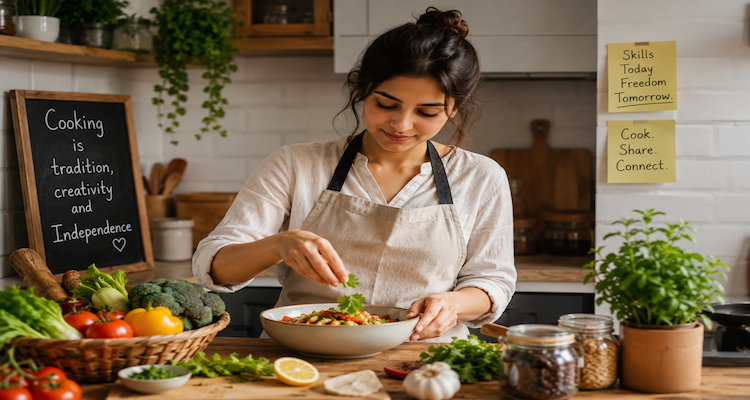
For many households, the kitchen has quietly changed from a place of creation into a place of quick decisions. A few taps can bring restaurant meals to the doorstep, packaged foods fill supermarket shelves with endless choices, and ready-to-eat options promise more time for everything else.
But behind this convenience is a cultural shift that receives far less attention: the gradual disappearance of everyday cooking skills. The ability to prepare a simple meal from basic ingredients, understand flavors, adapt recipes, or pass traditional food knowledge between generations is becoming less common in many communities.
The issue is not that convenience is harmful. Modern lifestyles often demand faster solutions, and prepared food can provide accessibility, affordability, and variety. The deeper concern is what happens when convenience stops being a choice and becomes the only option.
Cooking is more than a household task. It is a practical skill, a connection to culture, a form of independence, and a way people understand what they consume. As these skills decline, the hidden costs may appear in unexpected areas — from family traditions and personal confidence to food choices and resilience during uncertain times.
Convenience Has Changed the Relationship With Food
Food has always reflected the way societies live. As work patterns, family structures, and urban lifestyles have evolved, the relationship between people and cooking has changed as well.
Previous generations often learned cooking through observation. Children watched parents or grandparents prepare meals, understood ingredients through experience, and developed an instinct for balancing taste and texture. These lessons were rarely written down, yet they carried valuable knowledge about nutrition, culture, and resourcefulness.
Today, many people grow up in environments where cooking is optional rather than essential. Busy schedules, smaller living spaces, limited time, and the availability of affordable prepared food have reduced everyday exposure to traditional cooking practices.
The result is not simply fewer homemade meals. It represents a change in how people interact with food itself.
When cooking becomes unfamiliar, ingredients can start to feel complicated rather than accessible. A vegetable that requires preparation may seem less convenient than a packaged alternative. A family recipe without exact measurements may disappear because fewer people know how to recreate it.
The Loss Is Bigger Than a Recipe
Cooking skills are often viewed as practical abilities, but their impact reaches much further.
A person who knows how to cook has greater control over their food choices. They can adjust meals based on preferences, available ingredients, cultural traditions, or changing circumstances. Cooking creates flexibility , an ability to solve problems rather than depend entirely on external systems.
When those skills disappear, people may become more dependent on processed foods, delivery platforms, and pre-prepared options. This does not mean convenience foods are automatically unhealthy or undesirable. The concern is the loss of balance.
A society where fewer people know how to prepare basic meals may gradually lose an important form of independence.
The same pattern can be seen in other areas of life. Skills that appear ordinary often become valuable when circumstances change. Basic repair knowledge, gardening abilities, financial literacy, and cooking all provide a sense of control. They reduce dependence and increase adaptability.
Cooking belongs in that category.
Technology Has Made Eating Easier, But Not Always More Connected
Digital platforms have transformed food culture in fascinating ways. Recipe websites, cooking videos, and social media have introduced millions of people to global cuisines. Someone with no family cooking background can now learn techniques from chefs and creators around the world.
This creates an interesting contradiction.
Technology has made cooking knowledge more available than ever, yet fewer people may practice cooking regularly.
The challenge is not access to information. It is turning information into habit.
Watching a recipe video is different from developing the confidence to improvise a meal. Saving hundreds of recipes online does not necessarily translate into cooking more often.
The future of food culture may depend less on whether people can find instructions and more on whether they build a personal relationship with the process.
Cultural Knowledge Risks Being Lost
Food carries stories. Traditional dishes often represent migration, geography, family history, and community identity.
A recipe can reveal how people adapted to local environments, used seasonal ingredients, celebrated important events, or preserved memories across generations.
When cooking traditions fade, communities may lose more than specific dishes. They may lose the stories attached to those dishes.
Around the world, many younger generations are rediscovering traditional cooking through digital communities, cultural movements, and interest in authentic food experiences. This suggests that the desire for connection has not disappeared.
Instead, it has changed form.
People are increasingly looking for meaningful experiences in a world filled with convenience. Cooking can provide something many digital activities cannot: a physical connection between people, ingredients, and shared memories.
The Economic and Social Impact of a Cooking Skills Gap
The decline of cooking knowledge also influences how people think about food costs.
Preparing meals at home often requires planning, ingredient selection, and basic skills. Without those abilities, food decisions can become more dependent on immediate convenience rather than long-term value.
A person who understands cooking can transform inexpensive ingredients into satisfying meals. Someone without those skills may struggle to recognize the potential of basic foods.
This creates a hidden inequality. Access to information and affordable ingredients does not always equal access to practical food knowledge.
Cooking education, therefore, is not only about teaching recipes. It can also be about improving confidence, independence, and decision-making.
Schools, communities, and families may increasingly view cooking skills as part of essential life education rather than an outdated household responsibility.
A Future Where Cooking Becomes a Choice Again
The future of cooking will likely not involve abandoning convenience. Ready-made meals, delivery services, and food technology will continue to play an important role in modern life.
The more important question is whether people maintain the ability to cook when they want or need to.
A healthy food culture does not require everyone to prepare every meal from scratch. It requires a balance where convenience exists alongside knowledge.
Someone who can cook has more options. They can choose convenience on busy days and creativity when they want connection. They can explore cultures through food, manage resources more effectively, and share traditions with others.
The disappearance of cooking skills is not just about fewer people spending time in kitchens. It represents a broader shift in how societies preserve knowledge, build independence, and connect with everyday experiences.
The hidden cost of convenience is not convenience itself. It is forgetting the skills that allow people to move beyond it.
This content is published for informational or entertainment purposes. Facts, opinions, or references may evolve over time, and readers are encouraged to verify details from reliable sources.