










Why More Wildlife Is Becoming Nocturnal and What It Reveals About Our Changing World
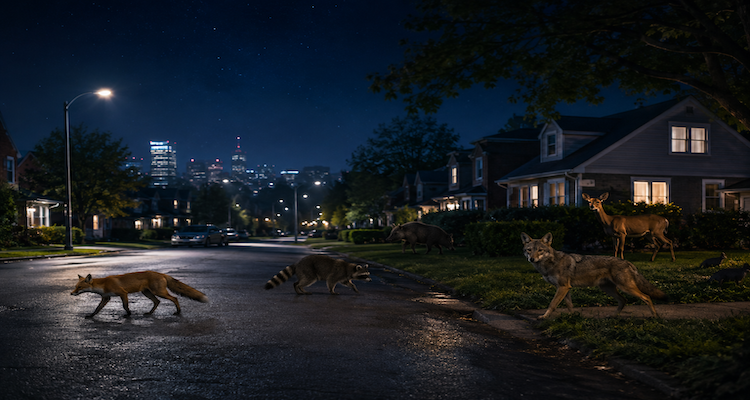
A growing number of animals are active under the cover of darkness in places where they once spent much of their time during daylight hours. From urban foxes roaming city streets at midnight to deer, coyotes, wild boars, and even some bird species shifting their routines, wildlife behavior is changing in ways that are becoming increasingly difficult to ignore.
At first glance, this might seem like a simple adaptation. Animals have always adjusted to environmental conditions. Yet the expanding trend toward nocturnal activity points to something larger: many species are altering their daily rhythms in response to the world humans have created around them. The shift offers a revealing window into how wildlife is coping with expanding cities, changing landscapes, rising temperatures, and growing human presence.
Understanding why this is happening helps explain not only the future of wildlife but also the hidden influence people have on ecosystems they rarely think about.
The Quiet Transformation Happening After Sunset
For many species, the distinction between day and night is not arbitrary. Activity patterns evolved over thousands of years to maximize food access, avoid predators, conserve energy, and improve survival.
Traditionally, many mammals occupied daytime or twilight hours. However, researchers and conservationists across different regions have increasingly documented animals becoming more active at night, particularly in areas with substantial human activity.
The trend is visible in diverse environments. In suburban neighborhoods, animals venture out after people have gone indoors. In agricultural landscapes, wildlife often waits until machinery and human traffic decrease. Even in protected natural areas, species may shift their behavior when visitor numbers are high.
What makes this phenomenon noteworthy is not the behavior of any single species but the growing consistency of the pattern across multiple ecosystems.
Human Presence Has Become a New Ecological Force
Predators have always influenced animal behavior. What is changing today is that humans increasingly function as a dominant source of disturbance.
Road traffic, construction, recreational activities, tourism, agriculture, and urban expansion create environments where daytime activity can involve greater risks. Animals may encounter noise, vehicles, pets, crowds, or habitat fragmentation that did not exist in the same form historically.
Nighttime offers a temporary refuge.
When streets become quieter and human movement declines, many animals find opportunities to forage, travel, and interact with less disturbance. In some cases, nocturnal activity can reduce direct conflict with people while allowing animals to continue using habitats that might otherwise become inaccessible.
This adaptation demonstrates remarkable behavioral flexibility. Rather than immediately abandoning altered environments, some species adjust their schedules to coexist with changing conditions.
Climate Change May Be Reinforcing the Shift
Another factor attracting increasing attention is temperature.
As heatwaves become more frequent in many regions, daytime conditions can place greater physiological stress on wildlife. Moving activities into cooler nighttime hours can help animals conserve energy and reduce heat exposure.
This response is especially relevant in arid and semi-arid environments where daytime temperatures may become increasingly challenging. Even species that historically tolerated daytime activity may benefit from exploiting cooler periods.
The interaction between climate pressures and human disturbance creates a powerful incentive for nocturnal behavior. Animals are not responding to a single challenge but often to several overlapping pressures simultaneously.
Cities Are Creating Unexpected Wildlife Habitats
One of the most surprising aspects of the nocturnal trend is its connection to urban ecosystems.
Cities are often viewed as environments hostile to wildlife. Yet many species have demonstrated an impressive ability to adapt to urban living. Foxes, raccoons, coyotes, wild pigs, bats, and numerous bird species have established populations in or near metropolitan areas around the world.
Their success frequently depends on timing.
Urban environments provide food sources, water, shelter, and relatively few natural predators. However, these benefits come with constant human activity. Becoming more active at night allows animals to take advantage of urban resources while minimizing encounters with people.
This creates a fascinating paradox: cities can simultaneously threaten wildlife and provide opportunities for species capable of behavioral adaptation.
The Hidden Ecological Consequences
The rise of nocturnal behavior is often presented as a success story of adaptation. In many ways, it is. Yet adaptation does not necessarily mean conditions are ideal.
Changing activity schedules can influence feeding patterns, reproduction, competition, and predator-prey relationships. When one species shifts its behavior, other species may be affected as well.
For example, animals that forage at different times may encounter new competitors or predators. Pollination, seed dispersal, and other ecological processes can also change when activity patterns shift.
Some species adapt successfully, while others struggle. Generalist animals with flexible diets and behaviors often perform better than specialists that depend on specific conditions.
As a result, nocturnal adaptation may contribute to broader changes in ecosystem composition over time.
What This Reveals About Wildlife Intelligence
Perhaps the most intriguing insight is what this trend reveals about animal decision-making.
The shift toward nighttime activity highlights that wildlife is not simply reacting mechanically to environmental change. Many species demonstrate a remarkable capacity for behavioral adjustment, learning, and risk assessment.
Animals continuously balance competing demands: finding food, avoiding danger, conserving energy, and reproducing successfully. When conditions change, behavior can often change faster than biology.
This distinction matters.
Evolutionary adaptations may require generations to emerge. Behavioral adaptations can occur within a single lifetime. The rise of nocturnal wildlife illustrates how flexible behavior serves as a critical survival tool in rapidly changing environments.
In a sense, animals are reorganizing their schedules to fit a world increasingly shaped by human activity.
Why This Matters Beyond Conservation
The story of nocturnal wildlife is not only about animals. It reflects a broader reality about how human societies influence the natural world.
Many environmental discussions focus on habitat loss, pollution, or climate change. These issues remain critically important. Yet behavioral changes often provide an earlier and more visible signal that ecosystems are under pressure.
When wildlife alters long-established daily routines, it suggests environmental conditions are changing in meaningful ways.
For communities, this can affect road safety, urban planning, wildlife management, and conservation strategies. Understanding when animals are active helps reduce conflicts and improve coexistence.
It also challenges a common assumption that wildlife disappears when humans arrive. Often, animals remain present but become less visible by moving their activities into hours when people are least likely to notice them.
The Future May Belong to the Most Adaptable Species
As urbanization continues and environmental pressures intensify, behavioral flexibility may become one of the most valuable survival traits in nature.
Species capable of adjusting their schedules, diets, and movement patterns could find ways to persist in human-dominated landscapes. Others may face increasing challenges if they cannot adapt quickly enough.
The growing presence of nocturnal wildlife serves as both a sign of resilience and a reminder of environmental change. Animals are finding creative ways to navigate a transformed world, but their altered behavior also reflects the scale of human influence on ecosystems.
The next time a city street seems empty after dark or a rural landscape falls silent at sunset, it may be worth remembering that another world is waking up. Many animals are not disappearing from the places they once occupied. They are simply living on a different schedule one shaped by the realities of the twenty-first century.
This content is published for informational or entertainment purposes. Facts, opinions, or references may evolve over time, and readers are encouraged to verify details from reliable sources.