








The Knowledge That Vanishes When Nobody Needs to Teach It Anymore
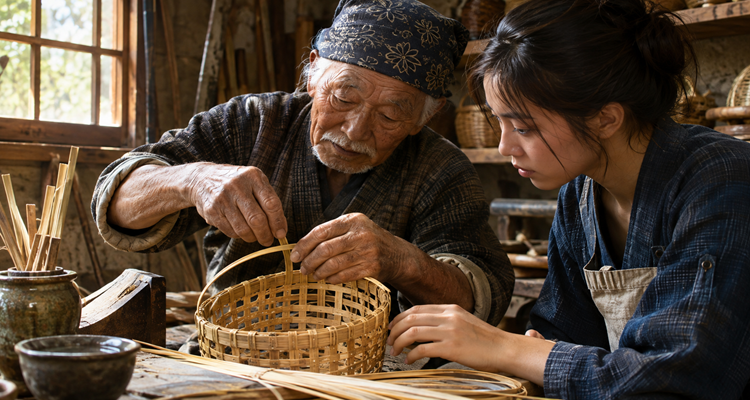
Some of humanity’s most valuable knowledge is disappearing not because people have forgotten it, but because everyday life no longer gives them a reason to pass it on.
A person can know how to predict a change in weather by observing the landscape, repair a household object without replacement parts, recognize useful plants, or practice a craft that requires years of experience. Yet none of these abilities is guaranteed to survive into the next generation.
The knowledge may still exist. Someone may still remember it perfectly. The problem is that fewer people need to learn it.
This is one of the quieter ways human knowledge disappears. There may be no deliberate rejection, no destroyed library, and no dramatic moment when a tradition ends. Instead, the circumstances that once made a skill necessary gradually change. The people who possess it continue with their lives, while younger generations develop different abilities.
Eventually, a community can reach a strange point: it still has people who remember how something was done, but almost nobody who knows how to do it themselves.
Understanding this process reveals something important about cultural memory. Knowledge does not survive simply because it exists. It survives when people have opportunities, reasons, and relationships through which to learn it.
The Difference Between Remembering Knowledge and Keeping It Alive
Much of what people know cannot be fully communicated through written instructions.
Consider an experienced craftsperson working with wood. A manual might explain how to select a suitable piece, shape it, and assemble the finished object. But the craftsperson may also recognize subtle differences in texture, resistance, sound, and moisture through years of handling the material.
Those judgments can be difficult to translate into words.
A beginner might understand every instruction and still struggle to produce the same result. The missing element is not necessarily information. It is experience.
This distinction helps explain why preserving traditional knowledge requires more than collecting descriptions of it.
UNESCO recognizes traditional craftsmanship, oral traditions, social practices, and knowledge concerning nature as forms of intangible cultural heritage. Unlike a physical monument, this heritage depends heavily on people continuing to practice and transmit it.
UNESCO’s guidance on the transmission of intangible cultural heritage emphasizes that living traditions evolve as knowledge passes between individuals and generations. Their survival depends on continued participation, not simply the existence of records.
A written description can preserve what someone knew. It cannot automatically preserve the practical ability that developed through years of doing it.
That difference becomes especially important when the original reasons for learning a skill disappear.
How Useful Knowledge Becomes Unnecessary
Imagine a community where people once repaired most of their household belongings.
Children might have grown up watching adults mend tools, restore furniture, or adapt worn materials for new purposes. They learned because these activities were part of ordinary life.
Over time, manufactured replacements become easier to obtain. Repair services become more specialized. Some objects are designed in ways that make home repair difficult or uneconomical.
The community has not necessarily become less capable. Its needs have changed.
Children may now learn digital skills, technical troubleshooting, or other abilities their grandparents never needed. Meanwhile, the older repair practices become less familiar.
A similar process can affect food preservation, agricultural techniques, traditional navigation, textile production, and knowledge of local environments.
The sequence is often gradual:
A skill is necessary
People practice it regularly to meet everyday needs.
New tools, services, livelihoods, or habits reduce its use.
Fewer young people observe or practice the skill.
Experienced practitioners remain, but fewer successors emerge.
This is an illustrative pathway, not an inevitable progression. Some skills are revived, adapted, or passed into new settings.
Nevertheless, the central risk is clear: when practical necessity disappears, informal education can disappear with it.
A Study in Japan Reveals Why Experience Matters
An especially revealing example comes from research conducted on Awaji Island in Japan.
In a 2021 study published in Human Ecology, researchers Kaori Okui, Yoshihiro Sawada, and Takehito Yoshida examined generational differences in knowledge about the use of wild fruits.
The researchers investigated two possible explanations for why older people often know more about local natural resources than younger people.
One explanation was that people naturally accumulate this knowledge as they age. Under that interpretation, younger generations might eventually develop similar knowledge through experience.
The alternative was more concerning: younger generations were encountering fewer opportunities to learn in the first place.
The study found that the generational decline in knowledge about wild fruits was associated with a loss of experience rather than simply the accumulation of wisdom with age.
Researchers also identified changes in how knowledge was transmitted. Earlier generations had learned substantially through friends and older peers, while teachers and older adults had become more prominent sources for younger generations.
The findings were specific to the community and knowledge examined, so they should not be treated as proof that every traditional skill is declining in the same way.
But the study demonstrates an important distinction: young people do not necessarily acquire the knowledge of older generations merely by growing older. They also need opportunities to encounter and practice it.
Source: Okui, Sawada and Yoshida, Human Ecology (2021).
The Knowledge Hidden Inside Ordinary Routines
One reason this loss is difficult to notice is that valuable knowledge often looks ordinary to the people who possess it.
A person who has spent decades growing crops may understand how a particular field responds to rain, wind, shade, or changes in soil condition.
Someone who prepares traditional foods may know how ingredients behave at different temperatures without using measuring instruments.
An experienced fisher may recognize familiar patterns in local waters.
These are illustrative examples of practical knowledge, not claims that every traditional technique is reliable or superior to modern methods.
Their significance lies in the relationship between observation and experience.
Such knowledge often develops through repeated interaction with a particular environment or activity. It may be highly specialized, difficult to standardize, and meaningful within the conditions where it originated.
Researchers commonly discuss one category of this understanding as traditional ecological knowledge: knowledge and practices concerning relationships between people and their environments that can be passed across generations.
Research into its transmission has shown why studying the learning process matters alongside documenting the knowledge itself.
In a 1991 paper examining traditional ecological knowledge, researcher Kenneth Ruddle explored how children acquired environmental knowledge through structured, sequential learning within communities in the Orinoco Delta of Venezuela.
The work highlighted the importance of understanding the social processes through which practical knowledge is passed on.
Source: Kenneth Ruddle, The Transmission of Traditional Ecological Knowledge.
The broader implication is that everyday activities can function as informal classrooms.
When those activities disappear, the classroom may vanish too.
Why Nobody Notices Until the Last Practitioners Remain
Knowledge loss rarely announces itself.
An unused tool may remain in a home for decades. A traditional recipe may still be written in a notebook. A family may remember that an older relative once possessed a particular skill.
These traces can create the impression that the knowledge remains available.
But remembering that a practice existed is different from being able to reproduce it.
A community may recognize a traditional object without knowing how to manufacture it. People may remember the name of a technique without understanding the circumstances in which it works.
Even when detailed instructions survive, rebuilding practical competence can require considerable experimentation.
There is also a social dimension.
Teaching usually requires more than a knowledgeable person. It requires someone willing to learn, enough time to practice, and circumstances that make the effort worthwhile.
If younger people move away for education or employment, opportunities for everyday learning may diminish.
UNESCO identifies migration, urbanization, reduced contact between generations, and educational systems that undervalue traditional knowledge among the pressures that can weaken cultural transmission.
The disappearance of knowledge, therefore, is not always a failure of memory.
Sometimes it is a consequence of changing relationships, livelihoods, and priorities.
Modernization Does Not Have to Mean Forgetting
It would be misleading to suggest that all disappearing knowledge represents a loss that society should prevent.
Some practices become obsolete because safer, more effective, or less labor-intensive alternatives emerge.
Other practices may have depended on difficult working conditions or unequal social arrangements that communities have good reasons not to preserve.
New generations also develop knowledge that earlier generations never possessed.
A person who cannot repair a traditional agricultural tool may understand sophisticated machinery. Someone unfamiliar with older navigation practices may be highly skilled in modern geographic technologies.
Human knowledge changes as societies change.
The more useful question is not whether every old practice should survive.
It is whether communities understand what they are losing, what remains valuable, and whether they want to preserve the ability to use it.
This distinction is central to UNESCO’s approach to safeguarding living heritage.
Its guidance explicitly recognizes that traditions evolve and that preservation should not mean freezing cultural practices in an imagined original form.
It also emphasizes that communities themselves must determine which practices they recognize as their heritage and wish to sustain.
Source: UNESCO, Safeguarding Without Freezing.
Preservation becomes more meaningful when it supports living communities rather than treating their traditions as museum exhibits.
What Disappears Along With a Skill?
When a practical tradition fades, the most obvious loss is the ability to perform a particular task.
But there can be less visible consequences.
A different way of observing the world
Traditional skills often direct attention toward details that other activities overlook.
Someone learning to work with natural materials may begin noticing subtle variations in texture, growth, or seasonal conditions.
Someone learning local ecological practices may become more attentive to changes in nearby plants, animals, or landscapes.
Losing the practice can reduce opportunities to develop those particular forms of attention.
A connection between generations
Shared activities can create relationships that are not easily replaced by formal instruction.
A child learning a family recipe, for example, may also learn stories, preferences, gestures, and the social meaning attached to the food.
The practical task becomes a setting for communication.
When the activity stops, one opportunity for intergenerational exchange disappears.
The ability to choose an older solution
A forgotten technique may not be needed under present conditions. That does not mean it could never become useful again.
Knowledge of repairing objects, adapting materials, or working with local resources may offer alternatives in circumstances where established systems are unavailable or unsuitable.
This does not prove that traditional methods will outperform modern solutions. It suggests that maintaining diverse forms of knowledge can preserve options.
Cultural meaning
Some practices matter because they express identity, history, and belonging rather than because they offer the most efficient way to accomplish a task.
UNESCO’s definition of intangible cultural heritage recognizes this relationship between transmitted practices and a community’s sense of continuity.
The value of such knowledge cannot always be measured by productivity alone.
Can Digital Archives Save Disappearing Knowledge?
Modern technology offers powerful ways to document practices that might otherwise become difficult to reconstruct.
Video recordings can capture movements that written instructions struggle to describe. Audio can preserve pronunciation, songs, and oral explanations. Digital collections can connect learners with materials that would once have been geographically inaccessible.
These tools are valuable, but documentation and transmission are not interchangeable.
Consider the difference between watching a video of someone making a ceramic vessel and learning to make one under the guidance of an experienced potter.
The recording may show hand movements, tools, and materials.
It may not communicate the precise pressure applied at a particular moment, how the material should feel, or how to respond when something goes wrong.
Those abilities often emerge through practice and feedback.
Digital archives can help preserve information and support future learning. They do not necessarily maintain an active community of practitioners.
There are also ethical considerations.
Not all traditional knowledge is intended for unrestricted public access. Some practices are sacred, culturally sensitive, or governed by community rules.
UNESCO’s ethical principles emphasize the importance of community participation, informed consent, and respect for customary access arrangements when safeguarding intangible heritage.
Preservation should not become another process through which communities lose control over their own knowledge.
How Knowledge Can Survive Without Remaining a Necessity
A skill does not always need to retain its original economic or practical function to remain alive.
It can acquire new meanings.
A traditional craft once essential for producing household goods may continue through artistic practice, education, or specialized production.
An agricultural technique may become part of a community learning program.
An oral tradition may find new audiences through performance, recording, or language education.
The important change is that people develop new reasons to participate.
There are several practical ways communities can support this process:
-
Create opportunities for learning by doing. Workshops, apprenticeships, and shared projects can help turn recorded information into practical ability.
-
Support knowledgeable practitioners. Teaching requires time, resources, and recognition, particularly when a skill no longer provides a dependable livelihood.
-
Document the learning process. Record not only the finished result but also decisions, mistakes, corrections, and explanations.
-
Allow traditions to adapt. A practice may survive more successfully when younger generations can find contemporary meaning in it.
-
Respect community decisions. Preservation should reflect the wishes and rights of the people who maintain the knowledge.
These approaches align with UNESCO’s emphasis on community-led safeguarding and education as ways to support living heritage.
None guarantees that every tradition will continue indefinitely.
But they address the central problem: knowledge needs a pathway from those who possess it to those who may carry it forward.
The Difference Between a Lost Skill and a Lost Possibility
There is a temptation to romanticize the past whenever older knowledge disappears.
Yet the past was not uniformly wiser, and traditional practices were not automatically better than modern alternatives.
The deeper concern is not that society changes. Change is unavoidable and often beneficial.
The concern is that some forms of understanding can disappear before people have fully considered their value.
A community might stop practicing a technique because it is no longer economical. Generations later, it may discover that the technique contained useful insights about materials, local conditions, or ways of organizing work.
Alternatively, the practice may never again become practically necessary, but still remain culturally meaningful.
In either case, the loss is difficult to evaluate after the people capable of explaining and demonstrating the practice are gone.
This suggests a useful distinction between preserving every old activity and preserving access to knowledge.
A society does not need to continue using every traditional method. But where communities wish to do so, maintaining opportunities to understand and learn those methods can leave future generations with more choices.
What We Should Ask Before Knowledge Disappears
The most revealing question may not be what older generations know.
It may be what younger generations no longer have a reason to ask them.
A grandmother may possess an elaborate understanding of preserving seasonal foods. A retired craftsperson may know how to repair an object that few people manufacture anymore. An experienced farmer may recognize local environmental patterns that have never been formally recorded.
These individuals may not think of themselves as custodians of cultural heritage.
They may simply consider their knowledge part of ordinary life.
That is precisely why it can be overlooked.
One practical response is to become curious before a skill reaches the point of disappearance.
Ask how something is done. Ask why a particular method was chosen. Ask what mistakes beginners commonly make. Where appropriate, learn the activity rather than merely recording the explanation.
Not every answer will reveal forgotten wisdom. Some methods may be outdated, ineffective, or relevant only under conditions that no longer exist.
But the conversation can establish what the knowledge actually contains and whether it deserves a place in the future.
Conclusion: Knowledge Needs More Than Someone Who Remembers
The disappearance of traditional knowledge is often described as a problem of forgetting.
In many cases, it begins earlier.
It begins when a skill is no longer practiced, when younger people have fewer opportunities to observe it, and when experienced individuals no longer have anyone who needs to learn.
The knowledge can remain intact in one person’s memory while its future has already become uncertain.
Research on traditional ecological knowledge and UNESCO’s work on living heritage both point toward the importance of transmission: the social and practical process through which knowledge continues beyond its current holders.
This does not mean that every tradition must survive unchanged. It means that communities benefit from understanding the difference between choosing to leave a practice behind and allowing it to disappear without noticing.
The most fragile knowledge is not always the knowledge nobody remembers. Sometimes it is the knowledge somebody still knows, but nobody is learning.
The information presented in this article is based on publicly available sources, reports, and factual material available at the time of publication. While efforts are made to ensure accuracy, details may change as new information emerges. The content is provided for general informational purposes only, and readers are advised to verify facts independently where necessary.