






The Knowledge You Gain Outside the Classroom Can Change What You Learn Inside It
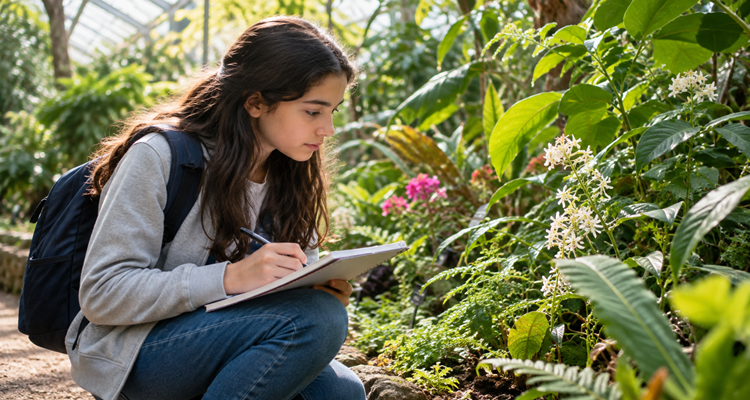
A lesson can begin long before a student opens a textbook. It might start while helping a parent calculate household expenses, watching a plant grow, repairing a broken object, visiting a museum, learning a new skill, or asking a question that nobody nearby can immediately answer.
These experiences may seem separate from formal education, but they can influence how students understand what they encounter in school. A mathematical formula becomes easier to relate to when a student has measured something in real life. A science lesson can feel more meaningful after observing nature firsthand. A history chapter may prompt deeper questions after visiting a historical site or hearing family stories about the past.
Learning outside the classroom does not replace formal education. It can give formal education something important to build on: experience, curiosity and context.
The relationship between the two matters because education is not simply about receiving information. It is also about connecting new ideas with what we already know, recognizing patterns and learning how to use knowledge in different situations.
Why learning extends beyond school
Formal education gives students a structured way to build knowledge. Teachers introduce concepts, textbooks organize information, and assessments help measure understanding. Outside school, however, students encounter situations that rarely follow a syllabus.
They learn by observing, experimenting, discussing, practising and sometimes making mistakes. These experiences are part of what researchers and education specialists describe as informal learning.
The National Academies’ research on informal learning examines how learning happens in settings such as museums, libraries, nature centres, after-school programmes and everyday conversations. The OECD’s 2026 report, Giving Informal Learning the Recognition it Deserves, also describes how experiences at home, in communities, through hobbies and during independent exploration can complement formal education.
This does not mean every activity automatically produces meaningful learning. The value depends on what a person notices, understands, practises and remembers. But everyday experiences can give students additional opportunities to explore ideas that might otherwise remain abstract.
How everyday experiences can change classroom learning

1. Science becomes something students can observe
A student who grows plants at home can observe how light, water and changing conditions affect growth. When a classroom lesson introduces photosynthesis or plant development, the student has real observations to connect with the scientific explanation.
Experience does not replace accurate scientific teaching, but it can give the student a starting point for asking better questions.

2. Mathematics becomes more practical
Comparing prices, calculating discounts, measuring ingredients or dividing a household budget introduces numbers in meaningful situations. Students may begin to recognize percentages, ratios, estimation and arithmetic as tools for making decisions.
Later, when these concepts appear in a textbook, their practical purpose may be easier to understand.

3. Hobbies create opportunities to experiment
Building a model, learning photography, coding a small project or repairing an object can involve testing ideas and correcting mistakes. Students discover that a first attempt does not always work and that changing one variable can produce a different result.
These experiences can provide useful context for lessons involving design, physics, technology and problem-solving.

4. Conversations can broaden understanding
Discussions with family members, friends, community members and people with different experiences can expose students to unfamiliar viewpoints. Reading beyond assigned material can introduce different arguments, writing styles and historical perspectives.
When students return to a classroom discussion, they may have more questions to ask and more connections to consider.
These examples illustrate possible connections rather than guaranteed academic outcomes. Their value lies in creating additional opportunities to practise, question and apply what students learn.
The power of connecting experience with knowledge
One of the most useful things outside learning can provide is context.
Consider a student who memorizes the definition of friction for an examination. The student may be able to repeat the definition accurately but still struggle to explain how friction affects movement.
Now imagine that the same student has tried to push a heavy box across different surfaces. The difference between moving it over a smooth floor and a rough surface offers a concrete observation to discuss. A teacher can then connect that observation to the scientific concepts involved.
The experience alone may not explain every detail. Scientific understanding still requires instruction, evidence and careful reasoning. Yet the student’s observation can make the explanation more relatable.
The OECD’s 2026 analysis of informal learning discusses how practical projects, hobbies, peer interaction and other experiences can reinforce and contextualize classroom knowledge.
The important connection is not simply between doing something and remembering it. It is between experience, reflection and explanation. Students benefit when they can examine what happened, connect it with a concept and use that understanding in another situation.
Learning outside school can build skills that textbooks cannot develop alone
Textbooks are valuable for explaining ideas and organizing knowledge. But some abilities require practice in social or practical settings.
Participating in a team, helping organize an event or explaining a hobby to someone else can teach students how to express ideas, listen carefully and respond to questions.
Everyday challenges rarely arrive with a list of steps. Students may need to identify the problem, consider alternatives, test a solution and adjust their approach.
Sports, group activities, volunteering and shared household tasks can give students opportunities to coordinate with others, fulfil responsibilities and learn from disagreements.
Following personal interests encourages students to decide what they want to understand, seek information and evaluate whether an explanation makes sense.
These abilities complement academic learning. They can also help students approach unfamiliar assignments, group projects and practical challenges with greater confidence. The degree of benefit varies with the activity, the support available and the student’s own participation.
Mistakes outside the classroom can become useful lessons
Not every valuable learning experience ends in success.
A student who attempts to bake something may misjudge the measurements. Someone learning to code may spend an hour trying to understand why a program fails. A team preparing for a competition may discover that its original plan does not work.
These moments can encourage students to examine their assumptions and try a different approach.
However, mistakes are not automatically educational. If students do not understand what went wrong, they may repeat the same error or become discouraged. Constructive feedback, time to reflect and access to reliable information help turn an unsuccessful attempt into a more useful experience.
Parents and teachers can encourage this process by asking questions such as:
-
What did you expect to happen?
-
What actually happened?
-
What might explain the difference?
-
What would you try differently next time?
-
Does this experience connect with anything you have learned before?
These questions help students move beyond simply completing an activity. They encourage them to think about how knowledge is developed and tested.
What parents and teachers can do to connect the two worlds
Learning outside school does not require expensive trips, specialized equipment or a tightly scheduled programme. Many opportunities are available through ordinary activities, provided students have the time, encouragement and resources to explore them.

Invite children to explain what they notice, investigate subjects that interest them and participate in age-appropriate household activities. Reading together, visiting a local library or discussing a news story can open useful paths to learning.

Use everyday examples, practical demonstrations and opportunities for students to share relevant observations. Ask them to explain how a classroom concept might apply to a situation outside school.

Libraries, school clubs, science activities, arts programmes and community projects can create opportunities for students with different interests and circumstances. Schools can also provide alternatives for children who lack access to equipment, travel or paid extracurricular activities.
The goal is not to turn every moment of a child’s free time into another lesson. Play, rest, friendships and unstructured time matter too. Instead, adults can help create an environment where curiosity is welcomed and everyday discoveries have room to develop.
Not every student has the same opportunities
The idea that learning happens everywhere is appealing, but access to learning opportunities is not equal.
Some students have access to books, museums, extracurricular classes, reliable internet connections and adults who can support their interests. Others face financial constraints, limited local facilities, caring responsibilities or restricted access to technology.
A student’s ability to learn outside school should not be judged by how many organized activities they can afford to attend.
Everyday experiences can be valuable without being expensive. Cooking with family, observing local plants, keeping a journal, discussing a story or borrowing books from a library can all offer opportunities to explore ideas. But these possibilities do not eliminate the structural barriers that some students face.
Schools and communities have an important role in providing accessible learning opportunities so that enrichment does not become an advantage reserved mainly for children with greater resources.
There is also a need for balance in the way informal learning is discussed. Research recognizes its potential, but that does not mean every extracurricular activity improves grades or that informal experiences can replace qualified teachers, structured instruction or access to a strong curriculum.
A more realistic approach recognizes the distinct contributions of each.
How students can make everyday learning more meaningful
Students do not need to wait for a school assignment to explore a subject. A few simple habits can help them connect personal interests with academic learning.
-
Follow a question. If something sparks your curiosity, look for a reliable explanation instead of accepting the first answer you encounter.
-
Try something practical. Build a small project, grow a plant, practise a language or explore a topic through a hands-on activity.
-
Keep track of what you discover. Write down observations, questions, mistakes and new ideas in a notebook.
-
Connect the experience to school. Ask whether it relates to a concept from mathematics, science, history, geography, literature or another subject.
-
Explain what you learned. Discuss it with a friend, family member or teacher. Explaining an idea can help reveal what you understand and what you still need to investigate.
-
Check your information. Online videos, social media posts and casual conversations can introduce interesting questions, but important factual claims should be checked against trustworthy sources.
These habits make learning more active without requiring students to follow a formal curriculum in their spare time.
A classroom lesson can be the beginning, not the end
The relationship between school and everyday experience works in both directions. A classroom lesson may inspire a student to investigate something at home, while that investigation may lead to new questions when the student returns to school.
A lesson about electricity might inspire a student to learn how household devices work. A history assignment might lead to questions about a family’s local history. A discussion about ecosystems might encourage someone to pay closer attention to the plants and animals in their neighbourhood.
In each case, learning moves between formal instruction and personal exploration.
The challenge for educators is to recognize these connections without assuming that every experience produces the same results. Students bring different backgrounds, interests and prior knowledge into the classroom. Good teaching can help them connect those experiences with accurate explanations and progressively deeper understanding.
Ultimately, education is more than the accumulation of facts for an examination. It involves developing the ability to understand information, ask thoughtful questions, evaluate evidence and apply knowledge when circumstances change.
The knowledge gained outside the classroom can change what happens inside it because students return with new observations, different questions and more ways to make sense of what they are taught. School provides structure and guidance; the wider world offers opportunities to explore, practise and test ideas.
When these forms of learning complement one another, education becomes more connected to the world students actually live in.
Sources & Further Reading
-
OECD — Giving Informal Learning the Recognition it Deserves (2026). Research on informal learning, its benefits and its relationship with formal education.
-
OECD — Benefits, Participation, Drivers, and Policy Approaches. Discussion of practical projects, hobbies, peer interaction and learning beyond formal instruction.
-
National Academies — Informal Learning Collection. Research resources on learning in museums, libraries, nature centres and other informal settings.
-
National Academies — The Future of Youth Development: Building Systems and Strengthening Programs (2025). A review of evidence concerning out-of-school-time programmes, including the variation in their academic and developmental outcomes.
The information presented in this article is based on publicly available sources, reports, and factual material available at the time of publication. While efforts are made to ensure accuracy, details may change as new information emerges. The content is provided for general informational purposes only, and readers are advised to verify facts independently where necessary.