









The Wedding Traditions That Began as Protection Against Dangers Nobody Fears Anymore
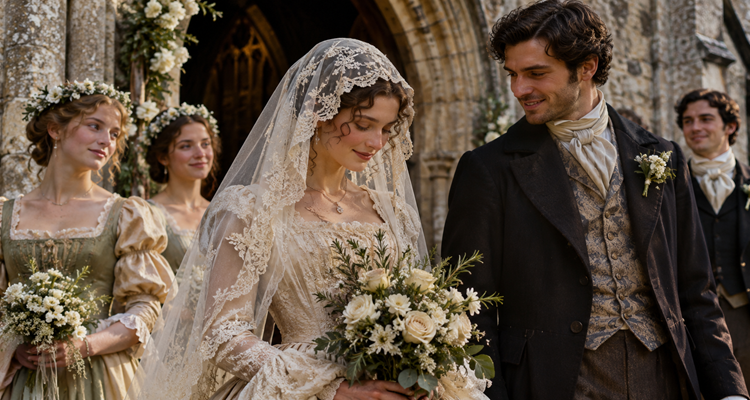
A bride carries flowers. A groom stands beside his closest friends. A veil covers the bride’s face, and guests shower the newlyweds with rice or confetti as they leave the ceremony.
Today, these familiar wedding traditions are associated with romance, celebration, and good fortune. Yet some have histories connected to concerns that modern couples rarely consider: evil spirits, supernatural interference, infertility, public disorder, and the possibility that a marriage might not proceed as planned.
Weddings have not always been understood simply as celebrations of two people in love. Across different periods and societies, marriage also involved family alliances, inheritance, religious obligations, and the future of entire households. A wedding marked a significant transition, and transitions were often considered moments of vulnerability.
That helps explain why protective rituals became part of marriage ceremonies. Some were intended to invite blessings. Others were believed to discourage misfortune or guard against unseen threats.
But wedding folklore is also full of attractive stories that are difficult to prove. Not every familiar custom began as a protective measure, and many traditions developed several meanings over centuries.
The more interesting history lies in understanding which fears shaped these rituals, what the evidence actually tells us, and why the customs survived after their original meanings faded.
Why Weddings Were Once Considered Dangerous Moments
In many traditional societies, major life changes were surrounded by ceremonies designed to manage uncertainty. Birth, marriage, and death could involve prescribed rituals, restrictions, blessings, and symbolic gestures.
Marriage was particularly important because it changed a person’s social and familial position.
A bride might leave her childhood household, enter another family, assume new responsibilities, and face expectations concerning childbirth. The marriage could also affect property, social standing, and relationships between families.
Anthropologists describe such changes through the concept of rites of passage. The French ethnographer Arnold van Gennep, whose influential 1909 work examined ceremonial transitions, identified patterns involving separation from an earlier status, an intermediate stage, and incorporation into a new one.
This framework helps explain why wedding ceremonies frequently contain actions that symbolically protect, guide, or bless the couple.
The details, however, vary enormously. A custom that expresses fertility in one culture might communicate prosperity, religious devotion, or family unity in another.
1. The Bridal Veil: Protection, Modesty, and the Power of Concealment
One popular account suggests that brides covered their faces to prevent evil spirits from recognizing them. According to this interpretation, concealment offered supernatural protection during a vulnerable transition.
That explanation belongs to wedding folklore, but it should not be treated as the established origin of all bridal veils.
Face coverings and bridal veils have appeared in different societies for different reasons, including modesty, status, religious symbolism, ceremonial separation, and expectations surrounding marriage.
In ancient Roman wedding practice, the bride’s distinctive veil, known as the flammeum, was an important part of her ceremonial appearance. Its precise symbolism remains a subject of historical interpretation.
Later European bridal veils developed meanings associated with modesty, fashion, and the solemnity of the ceremony.
The modern white bridal veil also became closely associated with changing wedding fashions, particularly during the nineteenth century.
What changed: A garment once embedded in social and religious expectations is now often chosen primarily for its appearance, personal significance, or family tradition.
The idea of hiding from spirits survives as an intriguing explanation, but it is only one part of a much more complicated history.
2. Bridesmaids: Companions Who Could Also Provide Protection
Modern bridesmaids help organize celebrations, offer emotional support, and accompany the bride through the ceremony.
Historically, wedding attendants could have practical and ceremonial responsibilities that extended beyond companionship.
In some societies, attendants participated in processions, helped prepare the bride, and contributed to the formal transfer between households. Their presence also reflected the importance of family and community participation in marriage.
A frequently repeated story claims that bridesmaids originally dressed like the bride to confuse evil spirits or potential kidnappers.
Although matching ceremonial clothing has existed in some wedding contexts, the claim that disguising the bride was the universal origin of bridesmaids is not securely established.
The explanation is appealing because it turns a familiar wedding photograph into a scene of ancient defensive strategy. Yet wedding attendants have existed in varied forms, and their functions cannot be reduced to a single protective purpose.
Still, the broader connection between attendants and security is understandable.
In periods when travel, public gatherings, and family disputes could create genuine difficulties, having trusted companions around the couple offered practical support.
What survives today: The protective function is largely social rather than supernatural. Bridesmaids remain people the bride trusts during an important and sometimes stressful transition.
3. Wedding Bells: When Sound Was Believed to Drive Away Evil
Church bells have long announced weddings to surrounding communities.
Their sound could communicate that a ceremony was taking place, invite communal recognition, and mark a religious occasion.
But bells also carried protective meanings in parts of European Christian tradition.
In some historical beliefs, the ringing of consecrated bells could repel demons, storms, or other harmful influences. Such ideas were not exclusive to weddings; they belonged to a wider religious and folkloric understanding of sound as a force capable of confronting danger.
That distinction matters. It would be inaccurate to say wedding bells were invented specifically to frighten evil spirits.
Instead, an existing religious practice could acquire several meanings at once: announcement, celebration, blessing, and protection.
Today, bells are generally understood as joyful ceremonial sounds. Their association with danger has largely disappeared from ordinary wedding celebrations, even where the religious significance remains important.
4. Throwing Rice: A Wish for Fertility and an Abundant Future
The tradition of showering newlyweds with rice or other grains has a different relationship with danger.
Rather than protecting the couple from an attacking spirit, the gesture expresses hopes for a prosperous future.
Grain has been associated with nourishment, agricultural abundance, and fertility in many societies. In wedding contexts, scattering grain could symbolically express wishes for children, food, and household prosperity.
The practice has taken different forms across time and place. Rice is not the original or universal material used at weddings, and the meanings of grain-throwing cannot be traced to one single beginning.
What makes the custom revealing is the kind of insecurity it addresses.
In agricultural societies, the success of a household depended heavily on food supplies, labor, inheritance, and the continuity of family life. Fertility and abundance were not merely romantic wishes; they could be central concerns about the future.
Today, couples may use petals, bubbles, or confetti instead.
The gesture remains celebratory, but the original emphasis on agricultural prosperity and reproduction is often less prominent.
5. Something Old, Something New, Something Borrowed, Something Blue: Dressing Against Bad Luck
This familiar bridal rhyme turns a wedding outfit into a collection of symbolic blessings.
Its precise origins are uncertain, but versions of the custom became prominent in Victorian Britain. Each object was understood to contribute something desirable to the marriage.
The Victoria and Albert Museum explains that the objects could symbolize continuity with the past, hope for the future, shared happiness, and faithfulness.
An old possession connected the bride to her family history. Something new represented the life ahead. Borrowing an item from a happily married person could express a wish to share in that person’s good fortune. Blue was associated with loyalty and fidelity.
Some versions of the rhyme also include a sixpence in the bride’s shoe, representing a wish for prosperity.
Unlike the dramatic stories about disguised brides and supernatural attackers, this tradition reveals a quieter kind of anxiety: the uncertainty of married life.
Could the couple remain happy? Would the household prosper? Would the marriage endure?
The objects could not guarantee those outcomes, but they gave families a tangible way to express their hopes.
Modern couples may follow the rhyme playfully, often without believing the absence of a blue ribbon or borrowed accessory could bring misfortune.
Yet the underlying gesture remains meaningful. A cherished object can connect the wedding day to the people and memories that shaped the couple’s lives.
6. Carrying the Bride Over the Threshold: A Dangerous Boundary
Its historical explanations are less straightforward.
One interpretation connects the practice with beliefs that thresholds were spiritually sensitive boundaries. In certain traditions, entrances were places where harmful forces might linger, and crossing them required caution.
Another explanation links carrying the bride to older marriage practices involving ritualized capture or the symbolic transfer of a woman into her husband’s household.
Ancient Roman marriage customs included ceremonial actions surrounding the bride’s entry into her new home. Later writers offered various explanations for such practices, including associations with legendary episodes of bride capture.
These interpretations should not be collapsed into a single origin story. The fact that a custom can be connected with ancient rituals does not prove that every later couple understood or practiced it for the same reason.
The threshold itself, however, is an especially revealing symbol.
A doorway separates two spaces. For a newly married person entering a different household, crossing it could represent a change in identity, obligations, and belonging.
Today, couples may recreate the gesture for a photograph or as an affectionate tradition. The boundary remains symbolic, even when the supernatural concerns associated with it have disappeared.
7. The Wedding Bouquet: More Than a Beautiful Arrangement
Plants could carry religious, medicinal, seasonal, and symbolic meanings.
Rosemary, for example, has long been associated with remembrance and fidelity in European cultural traditions. Myrtle became connected with love and marriage, while orange blossoms were associated with fertility and bridal virtue.
The Victoria and Albert Museum documents the importance of orange blossoms in nineteenth-century bridal fashion, including their prominent use in Queen Victoria’s wedding attire.
Some herbs and plants also had protective reputations in folk belief. Their presence could express a desire to safeguard the household or attract good fortune.
A popular modern explanation claims that brides carried flowers mainly to disguise unpleasant body odors because people rarely bathed.
That story is too simplistic to explain the long and varied history of wedding flowers. Bridal plants served symbolic, decorative, and ceremonial purposes across different periods and communities.
The modern bouquet is therefore better understood as a meeting point between several traditions rather than the invention of one practical necessity.
Today, a bride might choose flowers because of their colors, fragrance, family associations, or seasonal availability.
The bouquet continues to communicate meaning, even when the couple has no interest in its older protective associations.
8. The Wedding Ring: Protection Against a Different Kind of Uncertainty
Not every tradition associated with security was intended to defend against supernatural danger.
Wedding rings illustrate how marriage ceremonies could also address social and legal uncertainty.
Rings associated with betrothal were used in ancient Rome, where they could serve as pledges connected to a future marriage.
Over time, rings acquired additional religious and emotional significance.
The Gemological Institute of America traces the development of wedding rings through ancient Roman, medieval, and Renaissance practices, including rings featuring clasped hands and inscriptions expressing devotion.
In earlier societies, marriage involved obligations that extended beyond personal affection. Publicly recognizable signs of commitment could help communicate a relationship’s status.
A ring did not eliminate the possibility of a broken promise, but it could make a commitment visible and ceremonially significant.
This is different from the claim that rings were invented as magical protection.
Their historical meanings included pledges, fidelity, status, and religious symbolism. Protective interpretations may occur in particular traditions, but they should not replace the better-documented history.
The ring survives because its central symbolism remains relevant: a small, enduring object representing a commitment intended to last.
9. Wedding Noise: Celebration With an Older Protective Meaning
Wedding celebrations can be remarkably noisy.
Bells ring, guests cheer, music plays, and processions fill the air with sound.
In some European folk traditions, noise was believed to discourage harmful supernatural forces. Loud sounds were also used in communal rituals marking other important transitions.
But not all wedding noise was protective.
Historical practices such as charivari involved noisy gatherings that could publicly mock, pressure, or punish people whose marriages were considered socially irregular. Such events could be disruptive rather than joyful.
This reveals an important distinction.
Sound at weddings has served different purposes: announcing a marriage, celebrating a union, expressing communal approval, invoking blessings, or enforcing social expectations.
Modern cheering and music may resemble older customs without sharing their original intent.
The transformation is striking. Sounds once associated with spiritual defense or public social control can become ordinary expressions of happiness.
Why So Many Wedding Traditions Survived
The survival of these customs raises an interesting question.
If people no longer believe that evil spirits are waiting near the church door, why do they still follow rituals associated with supernatural protection?
One reason is that traditions can outlive their explanations.
A family may preserve a custom because grandparents practiced it, because it feels appropriate to the occasion, or because it creates a connection with earlier generations.
Another reason is that rituals help organize emotionally important experiences.
A wedding involves uncertainty even without supernatural threats. Couples may worry about the ceremony, their families, the future, or the responsibilities of married life.
Rituals offer familiar actions during a moment of change.
The meaning can evolve without the custom disappearing.
A veil becomes a fashion choice. A borrowed object becomes a family keepsake. Wedding bells become a soundtrack to celebration. Carrying a bride across a threshold becomes a romantic gesture.
The old explanations may fade, but the desire to mark an important transition remains.
The Problem With Perfectly Neat Origin Stories
Wedding history is especially vulnerable to attractive but oversimplified explanations.
A tradition may be described as ancient, Roman, medieval, or pagan without enough evidence to establish a continuous history.
A custom may also have developed independently in several places, making the search for one original inventor misleading.
Consider the claim that bridesmaids dressed identically to confuse kidnappers. It sounds plausible, and historical discussions do associate matching attendants with protection. But that does not establish it as the sole reason bridesmaids exist.
Similarly, the idea that every bridal veil was intended to deceive demons overlooks the many religious, social, and fashionable meanings of veiling.
A useful distinction is between three kinds of historical claims:
-
Documented practices: We have evidence that people performed the custom.
-
Recorded beliefs: Sources tell us what particular communities believed the custom accomplished.
-
Later explanations: Stories developed or circulated afterward to explain why the custom existed.
These categories sometimes overlap, but they are not interchangeable.
A belief recorded centuries after a practice began cannot automatically establish its original purpose.
Recognizing this uncertainty does not make wedding traditions less fascinating. It makes their history more human.
People repeatedly adapt inherited practices to fit new values, changing social arrangements, and different understandings of the world.
What These Traditions Reveal About Marriage
The older meanings of wedding customs offer a glimpse into the concerns of earlier communities.
Some feared supernatural interference. Others worried about fertility, food security, household stability, public recognition, or the uncertain future of a new marriage.
The rituals reflected those concerns in different ways.
Flowers and grain could symbolize abundance. Attendants offered companionship and support. Bells announced important events and sometimes carried protective religious associations. Rings made commitments visible.
These customs did not all begin in the same place or serve the same purpose.
What connects them is their relationship to uncertainty.
Marriage marked a significant change, and communities developed symbolic ways to make that change feel safer, more legitimate, and more hopeful.
Modern weddings still perform many of those functions, even when their language has changed.
Couples may no longer think about evil spirits when choosing a veil or arranging a procession. But they still seek reassurance, continuity, belonging, and the goodwill of the people around them.
Conclusion: The Fears Fade, but the Rituals Remain
The history of wedding traditions is not simply a collection of strange superstitions.
It is a record of how people tried to make an uncertain future feel more secure.
Some practices were associated with protection from supernatural forces. Others expressed hopes for fertility, prosperity, fidelity, or social acceptance. Many combined practical responsibilities with religious and symbolic meanings.
As societies changed, the rituals adapted.
A custom could lose its original explanation while gaining new emotional value. What once represented protection might become beauty, celebration, or remembrance.
That is perhaps the most remarkable thing about wedding traditions: they do not need to preserve their earliest meanings to remain important.
A couple exchanging rings or walking beneath falling petals may be participating in practices shaped by centuries of changing beliefs.
The dangers people imagined have changed. The human desire to begin an uncertain future with hope has not.
This content is published for informational or entertainment purposes. Facts, opinions, or references may evolve over time, and readers are encouraged to verify details from reliable sources.