


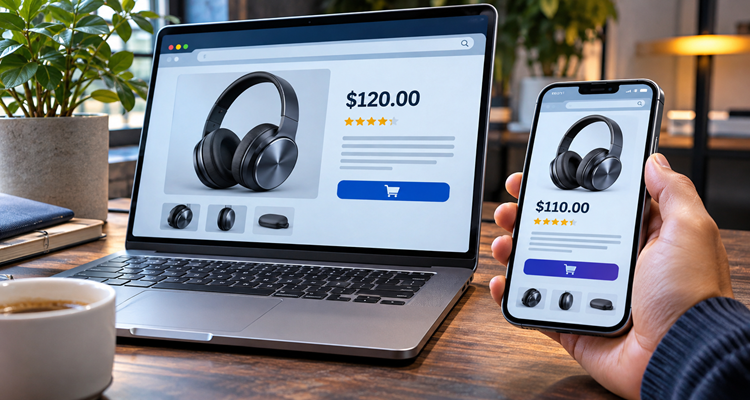






The Customers Who Keep Buying From a Brand They No Longer Trust

Why consumers continue spending money on companies they distrust—and what this reveals about loyalty, convenience, habit, and the hidden costs of switching.
A customer can lose confidence in a company, criticize its decisions, question its promises, and still purchase from it the following week.
At first glance, that behavior seems contradictory. If someone no longer trusts a brand, why continue giving it money?
The answer is that trust and purchasing behavior are not the same thing. People do not always buy from companies they admire. Sometimes they buy from companies that are familiar, affordable, convenient, difficult to replace, or deeply embedded in their daily routines.
A person may distrust a technology company but depend on its software for work. Someone may dislike a retailer’s business practices yet continue shopping there because alternatives are more expensive or less accessible. A customer may feel disappointed by a subscription service but hesitate to cancel because rebuilding their preferences elsewhere would take time.
These decisions reveal an important distinction: a company can retain a customer’s spending long after it has lost that customer’s confidence.
Understanding why this happens offers insight into consumer psychology, brand loyalty, and the difference between a business that customers genuinely value and one they simply find difficult to leave.
When Buying Becomes Something Other Than Loyalty
Businesses often interpret repeat purchases as evidence of customer satisfaction. A returning customer appears to be a successful relationship: the product was purchased, the customer came back, and revenue continued.
But a transaction reveals only what someone chose to do. It does not necessarily explain why.
Consider two customers who renew the same annual software subscription.
The first believes the product is excellent, trusts the provider, and looks forward to using its new features. The second dislikes recent price increases, worries about the company’s handling of personal information, and has considered leaving. However, switching would mean transferring files, learning another platform, and potentially disrupting work.
Both renew. Their behavior looks identical in the company’s sales records, but their relationships with the brand are fundamentally different.
The first customer demonstrates something close to genuine loyalty. The second demonstrates continued purchasing despite dissatisfaction.
Researchers studying consumer loyalty have long distinguished between repeat buying and the attitudes behind it. In his influential 1999 paper, Whence Consumer Loyalty?, marketing scholar Richard L. Oliver described loyalty as involving a commitment to repurchase, rather than merely observing that purchases recur.
That distinction matters because a customer who returns willingly may respond very differently to competition than one who returns reluctantly.
A business can therefore maintain strong retention figures while accumulating customers who are emotionally ready to leave.
The Invisible Costs of Walking Away
One of the strongest explanations for continued purchasing is the cost of switching.
These costs are not always financial. They can involve time, effort, uncertainty, emotional discomfort, or the loss of accumulated benefits.
Researchers Joseph Farrell and Paul Klemperer have examined how switching costs and network effects influence competition. Their work helps explain why customers may remain with an existing provider even when another option appears attractive.
Several forms of switching costs are especially relevant.
The effort of starting over
Changing a bank, mobile provider, software platform, or insurance company can require comparing alternatives, completing forms, transferring information, and learning new systems.
Even when switching is technically possible, the process may feel exhausting.
For someone managing a demanding schedule, the familiar option can win simply because it requires less attention.
The fear of choosing something worse
A dissatisfied customer knows the problems with their current provider. An alternative may promise better service, but its weaknesses remain unknown.
This creates an uncomfortable calculation: accept familiar shortcomings or risk discovering new ones.
Remaining with a brand does not necessarily mean believing it is good. It may mean believing that changing providers is risky.
The loss of accumulated value
Loyalty points, stored preferences, purchase histories, digital libraries, professional workflows, and compatible accessories can all make departure costly.
The more a customer has invested in a company’s ecosystem, the more difficult leaving may become.
This is particularly significant in digital markets, where products and services can become interconnected.
A consumer might dislike a platform’s policies while still relying on the applications, contacts, files, or devices associated with it.
In such cases, continued purchasing can reflect dependence rather than endorsement.
How Habit Keeps a Brand in the Shopping Basket
Not every purchase involves a deliberate comparison of values, prices, and alternatives.
Many everyday buying decisions are habitual.
People purchase familiar groceries, visit established websites, renew subscriptions, and select previously used products because these choices require relatively little mental effort.
Consumer research by Wendy Wood and David T. Neal has explored how habits are shaped by repeated behavior in stable contexts. Once an action becomes habitual, familiar environmental cues can help trigger it without requiring a fresh evaluation of every available option.
This provides a useful explanation for an otherwise puzzling pattern.
A customer might read criticism of a brand, agree with it, and intend to shop elsewhere. Days later, while completing a routine purchase, they select the familiar product almost automatically.
Their opinion may have changed, but their routine has not.
That gap between attitudes and actions is important. A change in trust does not automatically produce a change in behavior.
For a purchasing habit to break, the customer may need a reason to reconsider the decision at the moment of purchase, along with a practical alternative.
A negative news story can change someone’s perception. A competing product that is cheaper, easier to access, and equally familiar may be what finally changes their behavior.
Why Distrust Does Not Always Become a Boycott
Consumers can hold strong ethical objections to a company’s behavior without consistently acting on those objections.
This is sometimes discussed through the attitude–behavior gap: the difference between what people say they believe or intend to do and what they actually do.
Research on ethical consumption has explored this tension. For example, a 2010 study by Mary C. Carrington, Benjamin A. Neville, and Gregory J. Whitwell examined why consumers’ ethical purchasing intentions do not always translate into corresponding shopping behavior.
The broader lesson is that an ethical preference must compete with practical conditions.
A consumer might want to avoid a company because of concerns about labor practices, environmental impact, privacy, or misleading advertising. Yet purchasing decisions also involve affordability, availability, product performance, and household needs.
Someone with several nearby alternatives may find it relatively easy to stop buying from a particular retailer. Someone living in an area with limited shopping options may face a very different decision.
Likewise, a customer with a comfortable budget may be able to choose a more expensive alternative, while another cannot justify the additional cost.
This does not mean ethical concerns are meaningless. It means that consumer behavior operates within constraints.
The ability to act on distrust is not distributed equally.
A purchasing decision can reflect a person’s circumstances as much as their beliefs.
The Difference Between Trusting a Company and Trusting Its Product
Trust is not necessarily an all-or-nothing judgment.
A customer may distrust a company’s leadership while continuing to believe its products are reliable. They may dislike its advertising but appreciate its customer support. They may question its data practices while trusting the security or performance of a particular device.
Imagine a customer who believes a manufacturer exaggerates its sustainability claims but considers its appliances durable and reasonably priced.
The customer may continue buying its products because the specific attributes that matter most in the purchase remain satisfactory.
This suggests that brand trust has several practical dimensions, including confidence in product quality, honest communication, responsible behavior, and the company’s willingness to resolve problems.
A failure in one area can damage the broader relationship without immediately eliminating confidence in every other area.
The distinction also helps explain why scandals do not produce identical consumer responses.
A controversy involving executive conduct may influence purchasing differently from a product defect, a billing problem, or a serious privacy failure.
The consequences depend partly on whether the incident threatens the benefits customers expect from the product.
Distrust becomes especially consequential when it reaches the aspect of the relationship that the customer relies on most.
When a Brand Confuses Dependence With Affection
For companies, the distinction between voluntary loyalty and reluctant retention creates a strategic challenge.
A business may continue earning revenue from dissatisfied customers, making the underlying problem less visible.
Sales remain steady. Subscriptions renew. Customers continue using the service.
Management might interpret these outcomes as signs of a healthy customer relationship.
Yet the numbers may conceal a different reality.
Customers might be staying because competitors have not yet offered a practical alternative. Their continued spending provides financial stability without necessarily providing emotional support for the brand.
This is especially relevant in markets where switching costs and network effects are significant. As Farrell and Klemperer’s research explains, these conditions can strengthen an established company’s position and reduce customers’ ability to respond to better offers.
The danger for a company is assuming that customers who have not left are customers who do not want to leave.
A more accessible competitor, a change in pricing, or a serious service failure could alter that calculation.
The customer’s decision to leave may appear sudden, even though dissatisfaction developed over months or years.
What Finally Makes a Distrustful Customer Leave?
A loss of trust does not always trigger an immediate departure. It may instead change how a customer evaluates future experiences.
Someone who once overlooked small inconveniences may become less forgiving. A price increase that previously seemed acceptable may now feel unreasonable. A competitor’s advertisement that once attracted little attention may suddenly seem worth investigating.
This is a plausible progression rather than a universal psychological rule. Different customers respond differently, and distrust alone does not reliably predict when someone will switch.
Nevertheless, several conditions can make departure more practical.
A credible alternative becomes available. The financial or technical costs of changing providers decline. A major incident affects a product feature the customer considers essential. Or the accumulated disadvantages of remaining finally outweigh the inconvenience of leaving.
Sometimes the turning point is not another controversy. It is simply discovering that changing brands is easier than expected.
That possibility creates an important distinction between a company’s present revenue and the durability of its customer relationships.
A business can have customers today without having secured their preference for tomorrow.
How Consumers Can Recognize Reluctant Loyalty
For customers, recognizing the difference between preference and dependence can make purchasing decisions more intentional.
The first step is to identify the reason for staying.
Is the product genuinely the best available choice? Is its price competitive? Does it offer meaningful benefits that alternatives cannot match? Or does continuing simply require less effort than investigating other options?
These questions do not imply that every disappointed customer should immediately abandon a company.
Switching has real costs, and those costs deserve consideration. Remaining with a distrusted brand can be a rational decision when alternatives are unsuitable, unaffordable, or disruptive.
The goal is not to turn every purchase into an ethical test. It is to recognize when convenience has quietly become the deciding factor.
A practical approach is to separate three questions:
-
Trust: Do I believe this company behaves honestly, competently, and responsibly in the areas that matter to me?
-
Value: Does its product or service still meet my needs at an acceptable price?
-
Choice: Could I realistically obtain similar value elsewhere without unreasonable cost or disruption?
The answers may point in different directions.
Someone might distrust a company but still conclude that its product offers the best available value. Another person might discover that the perceived difficulty of switching is greater than the actual difficulty.
Neither decision needs to be automatic.
For recurring purchases, periodically comparing alternatives can help prevent old habits from becoming permanent assumptions.
What Businesses Should Measure Beyond Repeat Purchases
Companies seeking lasting customer relationships need to understand more than whether customers return.
Repeat purchasing remains a valuable business measure, but it becomes more informative when considered alongside customer sentiment and the circumstances surrounding retention.
A company could examine whether customers recommend its products, whether complaints are resolved satisfactorily, whether customers believe pricing is fair, and whether they would remain if comparable alternatives became available.
No single survey question can reveal the complete relationship. Customers may report intentions that differ from their eventual behavior, just as ethical-consumption research demonstrates.
However, combining purchasing data with customer feedback, complaint patterns, and switching behavior can provide a more complete picture.
Businesses should also distinguish between reducing unnecessary switching friction and deliberately making departure difficult.
Improving product quality, service, transparency, and convenience gives customers positive reasons to remain.
Creating unnecessary barriers to cancellation, data transfer, or comparison may preserve revenue temporarily, but it does not establish that customers trust the company.
The distinction matters because genuine loyalty is a relationship a business continually earns. Dependence is a condition it may merely benefit from.
The Broader Problem With Treating Every Purchase as Approval
Consumer spending is often interpreted as a direct expression of preference.
When people continue buying a product, observers may assume they approve of the company behind it. When they do not boycott a brand, their continued purchases may be described as indifference.
But this interpretation overlooks the conditions under which choices are made.
A purchase can express enthusiasm, habit, necessity, convenience, resignation, or some combination of these motivations.
The same transaction can carry very different meanings for different customers.
This complicates the idea that consumers can always communicate their values simply by choosing where to spend.
Markets provide opportunities for choice, but those opportunities vary according to competition, income, access, compatibility, and information.
When alternatives are limited, continued spending is particularly weak evidence of approval.
That does not make consumer decisions irrelevant. It makes their meaning more complex than sales figures alone can reveal.
The Real Meaning of Customer Loyalty
The most revealing question is not whether customers continue buying from a company they distrust.
It is what would happen if staying and leaving became equally easy.
Would they still choose the brand because its products, service, and conduct earned their preference? Or would they move elsewhere once the practical obstacles disappeared?
That hypothetical choice exposes the difference between being retained and being valued.
Research on loyalty, habits, switching costs, and ethical consumption points toward a consistent insight: purchasing behavior cannot be understood through attitudes alone. Decisions emerge from the interaction of preferences, routines, constraints, and available alternatives.
For consumers, that means continuing to buy from a distrusted company is not necessarily an endorsement or a contradiction. It may be a practical response to imperfect choices.
For businesses, it means strong sales are not proof of strong relationships.
The customers who keep buying may not be the customers who still believe.
And when a company mistakes their continued presence for lasting trust, it risks discovering the difference only after those customers finally find a way to leave.
The information presented in this article is based on publicly available sources, reports, and factual material available at the time of publication. While efforts are made to ensure accuracy, details may change as new information emerges. The content is provided for general informational purposes only, and readers are advised to verify facts independently where necessary.