







Why More Wildlife Is Becoming Nocturnal in a World That Never Sleeps
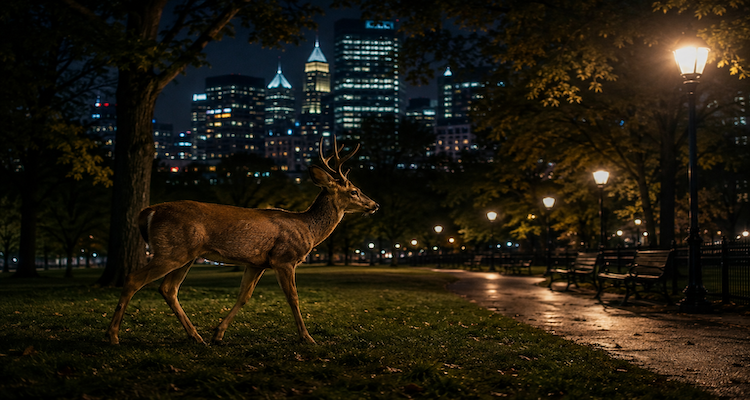
A growing number of animals are changing one of the most fundamental aspects of their behavior: when they are awake.
Across forests, grasslands, suburbs, and even protected areas, wildlife that once spent much of its time active during daylight hours is increasingly shifting its routines into the darkness. Deer appear more frequently at night. Coyotes move through cities after sunset. Birds adjust feeding schedules. Even species that historically relied on daylight for hunting or movement are showing signs of becoming more nocturnal.
This shift is not simply an interesting biological curiosity. It reflects a broader story about how human activity is reshaping ecosystems in ways that are often invisible to the people living within them. The rise of nocturnal wildlife reveals how animals are adapting to a world where human presence extends far beyond traditional boundaries.
A Quiet Transformation Happening Across Ecosystems
Wildlife has always adapted to changing conditions. Predators alter hunting strategies, migratory species adjust routes, and animals develop new feeding behaviors when environments change.
What makes the current trend remarkable is its scale and consistency across different regions and species.
Researchers and conservationists have observed that many animals appear to be avoiding periods when human activity is at its highest. Roads become quieter at night. Recreational spaces empty. Agricultural operations slow down. Urban noise decreases. For wildlife, darkness increasingly represents an opportunity to move, forage, and interact with less disturbance.
This does not necessarily mean animals prefer nighttime conditions. In many cases, it suggests they are making trade-offs to coexist with expanding human influence.
The result is an ecological adjustment that is changing the rhythms of entire landscapes.
Human Presence Has Become a Constant Environmental Force
When people think about environmental impact, they often focus on habitat loss, pollution, or climate change. Yet the simple presence of humans can influence animal behavior in powerful ways.
Hiking trails, vehicle traffic, urban development, outdoor recreation, and agricultural activities all create disturbances that animals must navigate.
For many species, daytime now coincides with increased risk or stress. Human movement can interrupt feeding patterns, force animals to expend additional energy, or alter interactions with predators and competitors.
Nighttime offers a practical solution.
By becoming more active after dark, animals can continue accessing food sources and territory while reducing encounters with humans. This behavioral flexibility helps some species survive in environments that might otherwise become increasingly difficult to inhabit.
In effect, wildlife is reorganizing its schedule around humanity’s schedule.
Cities Are Becoming Unexpected Wildlife Habitats
One of the most surprising aspects of this trend is how visible it has become in urban and suburban areas.
Cities were once viewed as biological deserts where wildlife struggled to survive. Today, many species have demonstrated remarkable adaptability.
Foxes, raccoons, wild boars, coyotes, and various bird species have learned to exploit urban resources while minimizing direct contact with people. Their success often depends on nocturnal behavior.
After sunset, streets become movement corridors. Parks transform into feeding grounds. Residential areas provide access to food and shelter.
This adaptation highlights an important reality: urban ecosystems are no longer separate from natural ecosystems. They are increasingly interconnected spaces where wildlife continuously adjusts to human behavior.
The animals thriving in these environments are often those capable of changing not only where they live but when they live.
The Hidden Costs of Living at Night
Becoming nocturnal is not always a perfect solution.
Many species evolved specific traits suited to daytime activity. Vision, hunting strategies, communication methods, and social behaviors often depend on particular environmental conditions.
Shifting activity into darkness can create new challenges.
Animals may encounter unfamiliar predators, compete with established nocturnal species, or struggle to locate food efficiently. Changes in timing can also affect reproduction, migration, and social interactions.
Artificial lighting adds another layer of complexity. Streetlights, illuminated buildings, and infrastructure can disrupt natural biological cycles and create confusing environmental signals.
As a result, nocturnal adaptation may help wildlife avoid human disturbance while simultaneously exposing animals to a different set of pressures.
The adjustment is often a sign of resilience, but it can also indicate increasing ecological stress.
What This Trend Reveals About Modern Landscapes
The rise of nocturnal wildlife offers an important insight into how ecosystems respond to human expansion.
Conservation discussions often focus on physical space how much habitat remains available for wildlife. Yet timing may be just as important as geography.
Animals are not only losing access to certain places; they are losing access to certain times.
When daytime becomes dominated by human activity, wildlife effectively experiences a shrinking window of opportunity for essential behaviors. Night becomes one of the few remaining periods where natural activities can occur with reduced interference.
This perspective changes how we think about coexistence.
Protecting wildlife may involve more than preserving land. It may also require understanding how human schedules influence ecological patterns and recognizing that behavioral disruption can be as significant as habitat disruption.
Climate Change May Accelerate the Shift
While human disturbance plays a major role, climate conditions may also contribute to changing activity patterns.
As temperatures rise in some regions, daytime conditions can become increasingly challenging for certain species. Seeking cooler nighttime hours may help reduce heat stress and conserve energy.
This means multiple environmental pressures can push wildlife toward similar behavioral outcomes.
An animal may avoid daytime because of human presence, extreme temperatures, or a combination of both.
The overlap of these pressures illustrates how modern ecosystems are being shaped by interconnected forces rather than isolated environmental changes.
Understanding these interactions will become increasingly important for conservation planning in the years ahead.
What People Can Learn From Wildlife’s Schedule Change
Perhaps the most fascinating aspect of this trend is what it reveals about adaptation itself.
Wildlife is not responding to a single event or crisis. Instead, animals are making countless small adjustments to accommodate a rapidly changing world.
These behavioral shifts demonstrate that adaptation often happens quietly. Long before species disappear from a landscape, they may alter movement patterns, feeding schedules, and daily routines in ways that remain largely unnoticed.
For observers, the growing presence of wildlife at night serves as a reminder that ecosystems are constantly evolving in response to human activity.
The deer crossing roads after dark, the fox moving through a suburban neighborhood at midnight, or the birds feeding at unexpected hours are not isolated occurrences. They are signs of a broader transformation unfolding across the natural world.
As human populations continue to grow and landscapes become increasingly interconnected, the ability of wildlife to adapt will remain essential. Yet the rise of nocturnal behavior also raises a deeper question: if animals are changing their lives to avoid us, what does that say about the environments we have created?
The answer may shape the future of conservation, urban planning, and humanity’s relationship with the natural world.
This content is published for informational or entertainment purposes. Facts, opinions, or references may evolve over time, and readers are encouraged to verify details from reliable sources.