








Passport to New Adventures: How Travel Is Becoming More Intentional
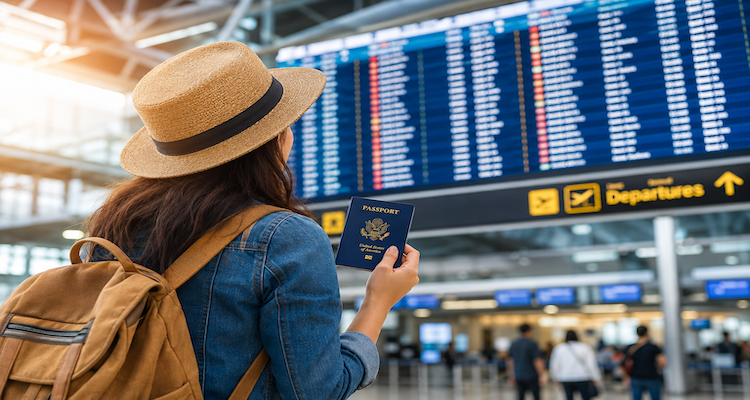
A passport is a small document, but its significance extends far beyond immigration counters and airport gates. It represents legal identity across borders, yet for millions of travelers it also marks the beginning of something more personal: the possibility of encountering unfamiliar places, cultures and ways of life.
Travel is changing, however. The modern journey is no longer defined only by how far someone goes or how many destinations they can collect. Digital booking tools have made travel easier to organize, while social media has made destinations more visible and sometimes more crowded. At the same time, concerns about overtourism, environmental pressure and the economic impact of travel are forcing a more thoughtful question: what makes a journey genuinely worthwhile?
This article explores why the value of a passport increasingly lies not simply in the number of stamps it helps collect, but in the choices travelers make once they arrive.
Key Takeaways
- A passport enables international mobility, but meaningful travel depends on how travelers engage with destinations and communities.
- Digital platforms have made trip planning easier while also contributing to the concentration of visitors around highly visible locations.
- Tourism can support jobs and local economies, but unmanaged visitor growth can also create pressure on housing, infrastructure and heritage.
- Intentional travel can include longer stays, local spending, respect for cultural norms and consideration of less-crowded destinations.
- The most valuable travel experiences are often shaped by context, preparation and human connection rather than the number of places visited.
Why Travel Growth Makes Intentional Travel More Important
The scale of global travel makes this question more than philosophical. International tourism has rebounded strongly since the pandemic. UN Tourism reported that international tourism had effectively recovered to pre-pandemic levels in 2024, with roughly 1.4 billion international tourist arrivals recorded that year in its January 2025 assessment.
That recovery is economically significant. The United Nations describes tourism as one of the world’s most important economic sectors, supporting employment and livelihoods across many countries. Yet growth alone does not determine whether tourism benefits a destination. UN Trade and Development and UN Tourism have warned that poorly planned tourism growth can place pressure on ecosystems, increase emissions and deepen social inequalities.
This creates an important shift in the way travelers might think about adventure. The question is no longer simply, Where can I go next? It can also be, What kind of impact does my visit have once I get there?
A meaningful journey does not require perfection. It requires awareness.
The Difference Between Seeing a Place and Understanding It
Modern travel culture often rewards visibility. A destination can become famous because a photograph, video or recommendation spreads rapidly online. That visibility can be useful: it introduces travelers to places they might never otherwise discover.
But visibility can also narrow the travel experience.
When thousands of visitors follow the same itinerary, visit the same viewpoint and leave with the same photograph, the destination can become a backdrop rather than a place with its own residents, history and daily life.
Understanding a place requires more than checking landmarks off a list. It may involve learning basic local customs, understanding why a site matters, spending time beyond the most photographed streets, and recognizing that residents are not simply part of the visitor experience.
UNESCO’s sustainable tourism guidance places significant emphasis on local communities and businesses. Its World Heritage programme argues that tourism planning should focus on local context and community participation, while its guidance notes that destinations should create meaningful opportunities for local people to benefit from tourism.
For travelers, that principle can translate into relatively simple choices.
Small Decisions Can Change the Shape of a Trip
Responsible travel is sometimes presented as an expensive or complicated lifestyle. In practice, many of its principles are practical rather than perfect.
A more intentional trip might involve:
- Learning about local rules and cultural expectations before arrival.
- Choosing locally owned services where practical and appropriate.
- Avoiding activities that damage natural or cultural sites.
- Following visitor-management rules at protected or heritage locations.
- Spending enough time to understand a destination rather than rushing through an unrealistic itinerary.
- Looking beyond the most heavily promoted attractions when doing so is safe and suitable.
These choices do not guarantee that a trip has no negative impact. Travel always involves trade-offs, particularly when transport, infrastructure and resource use are considered. The more realistic goal is to make better decisions with the information available.
That distinction matters. Sustainable tourism is not achieved because an individual traveler makes one “green” choice. It depends heavily on governments, destination managers, transport systems and tourism businesses. But visitor behavior is still part of the larger system.
Travel Is Also About the Communities That Receive Visitors
A successful tourism destination cannot be judged solely by visitor numbers.
UNESCO’s guidance warns against approaches that focus entirely on the visitor experience while overlooking the “liveability” of destinations for the people who call them home. It emphasizes dialogue with communities and the need to consider both the positive and negative effects of tourism on local people and businesses.
This is one of the most useful ways to rethink the idea of adventure.
For a traveler, an uncrowded beach, historic neighborhood or mountain village may feel like a discovery. For residents, however, it is home, workplace or shared cultural space. Those perspectives can coexist, but tourism works best when visitors are not treated as the only stakeholders who matter.
The broader direction of international tourism policy reflects this concern. In March 2026, UNESCO and UN Tourism announced a new cooperation agreement focused on sustainable, inclusive and resilient tourism, including stronger connections between tourism, heritage conservation, communities and local economic opportunities.
The significance of such initiatives is not that every destination will suddenly become sustainable. Rather, they reflect a growing recognition that tourism policy must consider what happens after visitors arrive not simply how many arrive.
A Passport Opens Borders, Not Understanding
There is another overlooked aspect of travel: access is uneven.
A passport can dramatically affect where a person can travel and how easily they can cross borders. Visa rules, financial resources, time, language, physical accessibility and political conditions all influence who gets to experience international travel.
That means the phrase “travel the world” is not equally available to everyone.
Recognizing this can make travel more thoughtful. Adventure does not have to mean constant international movement or an ever-growing list of destinations. A carefully planned journey within one’s own country can be as revealing as an overseas trip. The value of travel often comes from attention, curiosity and context rather than distance alone.
This is also why the obsession with counting countries can miss something important. Numbers are easy to display; understanding is harder to measure.
Technology Has Made Travel Easier and More Concentrated
Technology has transformed how people travel. Maps, translation tools, digital payments, online reviews and booking platforms can reduce friction at nearly every stage of a journey.
These tools are genuinely useful. They can help travelers navigate unfamiliar cities, compare accommodation, communicate across language barriers and discover local businesses.
Yet convenience can produce a subtle paradox: when millions of people rely on the same platforms and recommendations, travel choices can become concentrated around the same highly ranked and heavily promoted places.
The challenge for travelers is not to abandon technology. It is to use it without allowing algorithms to design the entire journey.
A useful approach is to combine digital planning with broader research:
- Read official destination and heritage guidance.
- Check local transport and visitor rules.
- Look beyond the first page of recommendations.
- Build flexibility into the itinerary.
- Leave room for museums, neighborhoods, food and experiences that are not optimized for social-media visibility.
Technology can help people travel independently. It should not eliminate curiosity.
The Best Adventure May Be a Slower One
There is no universal formula for meaningful travel. A family holiday, business trip, solo expedition or cultural tour can all have different purposes.
Still, one idea deserves more attention: more destinations do not automatically create a better journey.
A tightly packed itinerary may maximize the number of places seen, but it can minimize the time available to understand any of them. Slower travel, where practical, can create room for observation and adaptation. It may also reduce the pressure to treat every experience as content that must be documented immediately.
This is not an argument against ambitious travel. There is nothing inherently wrong with visiting multiple countries or famous attractions. The more useful distinction is between collecting destinations and engaging with them.
A passport can support either approach.
Conclusion
A passport remains one of the most powerful symbols of possibility. It can take its holder across borders and into landscapes, cities and cultures that once existed only in books, films or imagination.
But the next chapter of travel may depend less on how many people can move and more on how thoughtfully that movement takes place. As international tourism continues to grow, the relationship between visitors, communities, heritage and the environment becomes increasingly important.
The best passport to new adventures, then, is not simply the document in a traveler’s hand. It is curiosity backed by preparation, respect and a willingness to see a destination as more than a place to consume.
A memorable journey does not have to begin with the question, “How many places can I visit?” A better question may be: “What will I understand because I went?”
This content is published for informational or entertainment purposes. Facts, opinions, or references may evolve over time, and readers are encouraged to verify details from reliable sources.