




Beyond the Map: Discovering a World of Possibilities
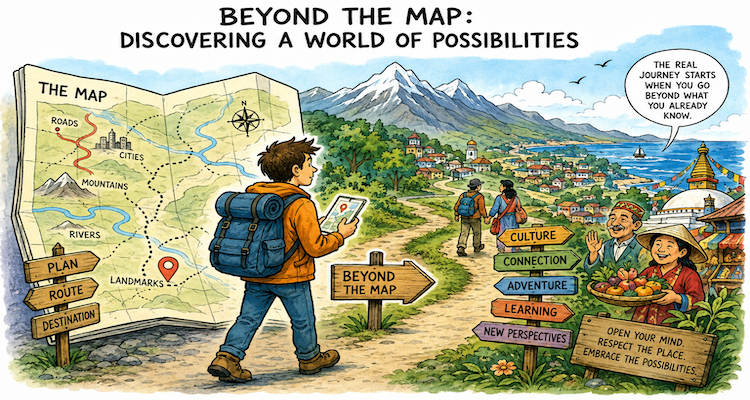
A map can tell us where a place is, but it cannot fully explain what that place can become in our imagination. It marks borders, roads, cities, mountains and oceans, turning a complex world into something we can navigate. Yet some of the most meaningful discoveries begin where simple geography ends: in the decision to explore an unfamiliar culture, learn from a different community, question an assumption or see a familiar place from a new perspective.
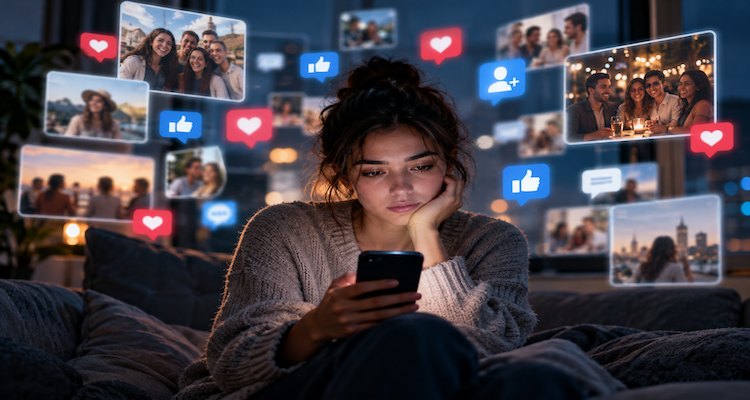
The modern world has made exploration more accessible in some ways while also making it easier to experience destinations through screens before ever arriving. Satellite imagery, digital maps, social platforms and travel platforms can reduce uncertainty, but they can also create the illusion that seeing a place is the same as understanding it. The deeper opportunity lies beyond the map: using movement, curiosity and technology not merely to reach new locations, but to discover new possibilities.
Key Takeaways
- Maps help people navigate places, but meaningful discovery often requires cultural context, curiosity and direct engagement.
- Digital tools have expanded access to the world while creating new risks of superficial or overly standardized exploration.
- Travel can support cultural understanding when visitors move beyond consumption and engage responsibly with local communities.
- Technology increasingly helps people explore before, during and after journeys, but it cannot replace human perspective.
- The most valuable discoveries may change how people understand their own lives as much as the places they visit.
When Navigation Becomes Exploration
For most of history, maps were instruments of orientation. They helped travelers understand distance, direction and physical boundaries. Today’s digital maps do much more. They can layer satellite imagery, reviews, transit information, weather, traffic and three-dimensional views onto the same journey.
Google Maps, for example, has continued to develop immersive and AI-supported ways of previewing locations and routes. Its Immersive View can combine aerial and Street View imagery into three-dimensional representations designed to help users understand a location before visiting, while newer navigation features aim to provide more contextual information about the road ahead.
This changes an important part of travel planning: the unknown is no longer as inaccessible as it once was.
But there is a paradox. The more completely technology allows us to preview a destination, the easier it becomes to mistake preparation for discovery.
A traveler can study a neighbourhood, save restaurants, inspect streets and plan every hour before arriving. That preparation can be useful. Yet a map cannot tell someone which conversation will change their perspective, which local tradition will challenge an assumption or which unexpected detour will become the most memorable part of a journey.
The distinction matters. Navigation reduces uncertainty; exploration remains open to surprise.
The Limits of Seeing a Place Through a Screen
Digital exploration has genuine advantages. It can help people assess accessibility, understand unfamiliar streets, compare routes and make better-informed decisions before spending time and money on a journey.
For many travelers, these tools also reduce barriers. A person unfamiliar with a language or city can arrive with more confidence than would have been possible a generation ago.
Still, digital representations are selective.
A map can show where a market is located. Reviews may identify popular dishes. Street-level imagery can reveal the appearance of a neighbourhood. None of these, however, fully captures the social relationships, routines, history and tensions that shape everyday life there.
That gap between information and understanding is where a richer form of exploration begins.
The purpose of going somewhere unfamiliar should not necessarily be to prove that every prediction made before departure was correct. Sometimes the value lies in discovering where the prediction was incomplete.
A Destination Is More Than Its Attractions
Modern tourism often organizes places around a list: landmarks, restaurants, museums, viewpoints and experiences. Lists are useful, but they can flatten a living destination into a collection of things to consume.
UNESCO’s approach to sustainable tourism places greater emphasis on the relationship between heritage, visitors and local communities. Its World Heritage and Sustainable Tourism Programme promotes destination planning that includes broad stakeholder engagement and focuses on empowering local communities. UNESCO also stresses that local communities should not be treated as an afterthought in tourism development.
That idea offers a useful way to rethink the meaning of discovery.
A meaningful journey is not simply about reaching more places. It can involve asking better questions:
- Who lives here, and how does tourism affect daily life?
- What history is visible, and what history is less visible?
- Which local businesses and traditions benefit from visitors?
- What should a visitor understand before photographing, sharing or consuming a cultural experience?
- How can curiosity become more respectful rather than more extractive?
These questions do not make travel less enjoyable. They can make it more substantial.
Technology Can Expand Possibility If It Does Not Replace Curiosity
The relationship between technology and exploration is not inherently negative. In many cases, technology expands access.
Digital maps can help travelers find walking routes and public transport. Translation tools can reduce language barriers. Accessibility information can make destinations easier to navigate. AI-supported search and mapping tools can help people identify places and plan journeys that might otherwise feel intimidating.
The challenge is not the technology itself. It is how heavily people allow it to determine the experience.
A useful approach is to treat digital tools as a starting point rather than a script.
Use technology to understand the basics:
- How to get there.
- What practical constraints exist.
- Which locations require advance planning.
- How weather, transport or accessibility may affect the journey.
Then leave room for what cannot be efficiently optimized.
That might mean walking without immediately searching for the highest-rated attraction. It might mean choosing a locally owned business after learning about the area, spending more time in one neighbourhood rather than racing through five, or allowing an unexpected recommendation to alter the day’s plan.
The goal is not to reject planning. It is to avoid confusing a perfectly optimized itinerary with a meaningful experience.
The Larger Possibility Beyond Travel
The idea of going beyond the map also applies outside tourism.
Maps, algorithms and digital platforms increasingly shape how people encounter the world. Search engines influence what information is discovered first. Recommendation systems influence what people watch and read. Social platforms can make unfamiliar places, cultures and ideas appear familiar before people have engaged with them directly.
These systems are useful, but they also create a subtle risk: people may begin to explore primarily within paths that have already been organized for them.
The broader lesson is that possibility often begins where recommendation ends.
This does not mean ignoring expertise or reliable information. It means maintaining enough curiosity to look beyond the first answer, the most popular route or the most visible result.
A student exploring an unfamiliar field, an entrepreneur examining a new market or a traveler entering a new city faces a similar challenge: available information can show where to begin, but it cannot complete the act of understanding.
Discovery Should Also Consider Consequences
Exploration is often described as a personal benefit, but it also has consequences for the places being explored.
The United Nations has emphasized tourism’s economic and social potential while also recognizing the need for sustainability, resilience and social equity in tourism development. In 2026, UNESCO and UN Tourism announced a new cooperation agreement focused on sustainable, inclusive and resilient tourism, including efforts connected to communities, heritage and local resilience.
That context is important because the future of exploration cannot be separated from the future of destinations themselves.
If every discovery produces pressure on fragile ecosystems, displaces local communities or turns cultural traditions into commodities, then the idea of “possibility” becomes narrower for the people who live there.
Responsible exploration therefore involves a shift in perspective: a destination is not simply a backdrop for someone else’s experience. It is a place with residents, economies, ecosystems and cultural realities that continue after the visitor leaves.
Beyond the Map
The map remains one of humanity’s most useful inventions. Digital technology is making it more detailed, interactive and intelligent than ever before. AI and immersive tools can help people prepare for unfamiliar journeys and lower some of the barriers to exploration.
But the deeper value of exploration cannot be fully mapped.
A route can tell us how to arrive. A recommendation can suggest what to see. An algorithm can predict what we may enjoy. None of them can guarantee understanding.
That still depends on attention, humility and a willingness to encounter something that was not already part of the plan.
Beyond the map lies the part of discovery that cannot be reduced to coordinates: the possibility of seeing a place, another culture or even one’s own assumptions differently. Technology can take us closer to the world. Curiosity determines what we do once we get there.
Conclusion
The world is becoming easier to preview but not necessarily easier to understand. As maps become more intelligent and travel planning more automated, the value of genuine discovery may lie increasingly in what cannot be preselected.
The best use of technology is not to eliminate every uncertainty. It is to make exploration more accessible while leaving space for observation, human connection and unexpected learning. A map can show the route. The possibilities begin when we look beyond it.
This content is published for informational or entertainment purposes. Facts, opinions, or references may evolve over time, and readers are encouraged to verify details from reliable sources.