









The Countries Where Crossing a Street Can Mean Travelling Into Tomorrow
In a few extraordinary corners of the world, travelling a short distance can change not only your location but also the date on your calendar. From Pacific islands separated by the International Date Line to neighbouring countries with surprisingly different clocks, geography reveals just how unusual human timekeeping can be.
Imagine standing on one side of an international border on Monday, then crossing into another country where the calendar already reads Tuesday.
You have not travelled through time in the science-fiction sense. You have simply entered a place that follows a different civil time zone.
The most dramatic examples occur around the International Date Line, the imaginary boundary across the Pacific Ocean where consecutive calendar dates meet. In some places, neighbouring islands experience a difference of nearly an entire day, despite being geographically close.
But there is an important distinction: not every famous example involves a road, a street or even two different countries. Some require a boat journey, while others involve crossing a border where the clocks change dramatically without the date necessarily changing.
Understanding these differences makes the real geography of time even more fascinating than the popular myth.
Why Tomorrow Can Exist Just Across a Border
The Earth completes one rotation approximately every 24 hours. To coordinate daily life, countries and territories use time zones based on their relationship to Coordinated Universal Time (UTC).
For example, a location operating at UTC+12 is twelve hours ahead of UTC, while one at UTC−11 is eleven hours behind.
That creates a remarkable possibility: two places can be separated by only a short geographical distance but have clocks showing dates almost 24 hours apart.
The International Date Line helps keep the global calendar consistent. It generally follows the 180th meridian in the Pacific, although it bends around countries and island groups to accommodate political boundaries and practical needs.
Crossing the line westward generally advances the calendar by one day. Crossing eastward generally moves it back one day.
However, the line is not a physical barrier, and its route is not governed by a single international treaty fixing every section. Countries determine their own civil time arrangements.
That flexibility explains why some of the world’s most surprising time differences exist.
1. Russia and the United States: The Islands of Yesterday and Tomorrow
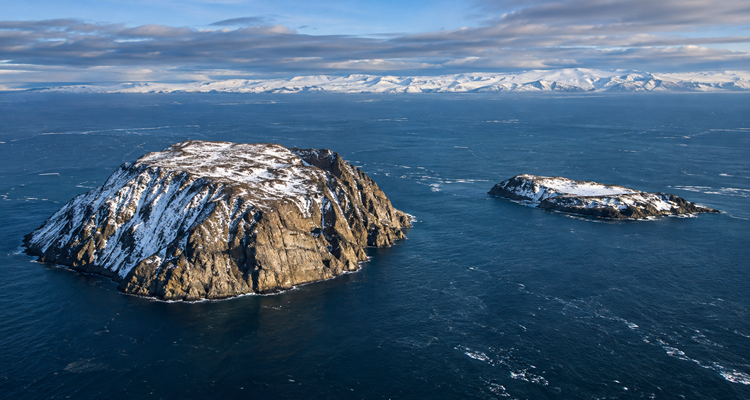
Here, two rocky islands sit just a few kilometres apart. Big Diomede belongs to Russia, while Little Diomede belongs to the United States.
The International Date Line passes between them.
According to NASA’s description of the Diomede Islands, the islands are separated by approximately three kilometres at their closest points. Their unusual location allows someone on the American island to look towards Russian territory where the calendar is already a day ahead.
The islands have consequently acquired memorable nicknames:
-
Big Diomede: Tomorrow Island.
-
Little Diomede: Yesterday Island.
The actual clock difference is 21 hours during Alaska’s standard time and 20 hours during daylight saving time.
For example, when it is 9 a.m. Monday on Little Diomede during winter, it is already 6 a.m. Tuesday on Big Diomede.
That is almost an entire day of difference across a narrow stretch of sea.
Yet the popular image of casually walking from yesterday into tomorrow is misleading. There is no ordinary public border crossing between the islands. Big Diomede is a restricted Russian border area, and the surrounding waters and ice can be dangerous.
The extraordinary feature is not a convenient tourist crossing. It is the fact that two pieces of land within sight of each other can belong to different calendar days.
2. Samoa and American Samoa: The Neighbours Living 24 Hours Apart
Samoa follows UTC+13, while American Samoa follows UTC−11.
That creates an exact 24-hour difference.
Illustrative example the same instant
Apia, Samoa
9:00 AM
Tuesday
Pago Pago, American Samoa
9:00 AM
Monday
This means that someone travelling from American Samoa to Samoa can arrive on the following calendar day, even though the journey takes far less than 24 hours.
Travelling in the opposite direction can bring a person back to an earlier date.
The country that deliberately skipped a Friday
This arrangement was not simply an accident of geography.
In December 2011, Samoa made an extraordinary decision: it changed sides of the International Date Line.
The country moved directly from Thursday, December 29, to Saturday, December 31. Friday, December 30, 2011, was omitted from its civil calendar.
The decision was intended to improve commercial coordination with major trading partners, particularly Australia and New Zealand.
Samoa’s International Date Line Act 2011 established the new standard time and formally addressed the line’s position in relation to Samoa.
American Samoa did not make the same change.
As a result, these neighbouring island communities now operate exactly one day apart, despite their geographical and cultural connections.
This example reveals something fundamental: a calendar date is not determined by longitude alone. Governments can make decisions that reshape how their populations experience the working week.
3. Kiribati: The Country That Reorganised Its Calendar
Before 1995, its eastern and western island groups used dates that were nearly a full day apart.
That arrangement created an administrative problem: different parts of the same country could be operating on different weekdays.
Kiribati changed its time-zone arrangements at the beginning of 1995, placing its island groups on the same side of the calendar divide.
Today, it uses three time zones:
| Island group | UTC offset |
|---|---|
| Gilbert Islands | UTC+12 |
| Phoenix Islands | UTC+13 |
| Line Islands | UTC+14 |
The Line Islands, including Kiritimati (Christmas Island), are among the first inhabited places in the world to begin each new calendar day.
Kiribati’s unusual arrangement also helps explain why the International Date Line has a substantial eastward bend in the central Pacific.
Unlike the Diomede Islands, this is not an example of neighbouring countries separated by a few kilometres. The islands extend across vast ocean distances.
Its importance lies elsewhere: Kiribati demonstrates how a country can adjust the global geography of dates to make its own administration more practical.
4. Why These Places Are Not Really Travelling Through Time
The phrase travelling into tomorrow is captivating, but the scientific reality is more precise.
When someone crosses the International Date Line, the passage of physical time does not change.
A traveller’s watch continues measuring seconds normally. Their body does not suddenly age an additional day or become younger.
What changes is the local system used to label the moment.
Consider two places with a 24-hour time difference. At the same instant, one may display 10 a.m. Wednesday while the other displays 10 a.m. Tuesday.
Neither place is physically ahead in the flow of time. Both exist in the same present.
The difference is entirely in the calendar convention.
This distinction matters because the International Date Line is sometimes described as though it were a gateway into the future. In reality, it is a practical solution to a mathematical problem created by Earth’s rotation and the need for a worldwide calendar.
5. Why the International Date Line Is Not Straight
A straight date line following the 180th meridian might seem logical.
But it would create complications for countries, communities and territories that extend across that longitude.
Imagine a single nation where government offices on one island were routinely operating on Monday while offices on another island were operating on Tuesday.
Administrative deadlines, school schedules, business transactions and public holidays would become unnecessarily difficult to coordinate.
The International Date Line therefore bends around several populated regions.
Its shape reflects practical decisions rather than a perfectly geometric division of the planet.
The cases of Samoa and Kiribati demonstrate that these arrangements can change when a country’s economic or administrative priorities change.
6. Can You Actually Cross a Street Into Tomorrow?
This is where the headline needs an important qualification.
There is no well-established, ordinary public street crossing between two countries where stepping across the border produces the dramatic 20-to-24-hour calendar change seen in the Pacific examples.
The most famous locations are separated by water, restricted borders or substantial travel distances.
Nevertheless, land borders can produce surprising changes in local time.
Countries are free to choose civil time zones that differ from those of their neighbours. This means a short overland journey can produce a clock change that is much larger than the geographical distance would suggest.
Such crossings can sometimes move a traveller into a different calendar date, especially around midnight. But that is not the same as crossing the International Date Line.
The distinction is worth preserving: dramatic clock changes occur at some land borders, while the most extraordinary near-24-hour date differences are associated with Pacific islands.
7. What Travellers Should Know About Crossing the Date Line
For travellers, the calendar change has practical consequences.
Flight itineraries can display arrival dates that appear surprising. A journey across the Pacific may arrive on the same local date it departed, or even on the previous date, depending on the route and schedule.
Hotel reservations, connecting flights and travel insurance dates also need to be interpreted according to local time.
A useful rule is to check the destination’s local date rather than calculating arrival time solely from the number of hours spent travelling.
Digital booking systems generally account for time zones, but travellers should still verify the full date, time and location of each connection.
The calendar change does not alter the actual duration of the journey. A five-hour flight remains five hours long regardless of how the departure and arrival dates appear on the itinerary.
The Deeper Lesson: Time Is Natural, but Calendars Are Human
The Sun rises and sets because Earth rotates. That physical process is independent of national borders.
But the hour displayed on a clock and the date printed on a calendar are part of a system people have developed to coordinate life across the planet.
The Diomede Islands show how two neighbouring territories can experience nearly a day’s difference. Samoa shows that a government can deliberately change its place in the global calendar. Kiribati shows how an entire nation can reorganise its time zones to bring distant communities onto the same date.
None of these places provides a genuine shortcut into the future.
They reveal something arguably more interesting: the world shares one continuous present, yet different societies can give that same moment different dates.
And in a few extraordinary corners of the planet, tomorrow really is just across the water.
This content is published for informational or entertainment purposes. Facts, opinions, or references may evolve over time, and readers are encouraged to verify details from reliable sources.