








Your Brain’s Secret Sensors: Detecting Environmental Signals You Miss
Science and Environment
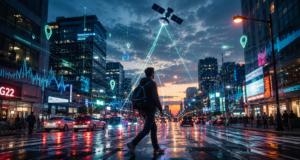
Imagine stepping into a room and instantly feeling uneasy or uplifted, often without knowing why. These gut reactions aren’t magic; they’re your brain at work, reading subtle signals all around you. Nearly all the sights, sounds, scents, and textures in our environment flood your senses, but only a tiny fraction reaches conscious awareness. The rest is quietly processed by hidden neural circuits to keep you safe and informed. In effect, your brain runs a continuous “neuro-radar,” scanning for cues before you even notice them.
Key Takeaways
- Your brain processes vast sensory data subconsciously: only about 0.0004% reaches conscious awareness.
- Unseen cues like ambient light, sound, or smell feed directly into emotion and memory centers. A faint sound or whiff of scent can immediately shift your mood.
- Deep brain pathways (e.g., the amygdala circuit) trigger fight-or-flight reflexes faster than conscious thought. These “threat sensors” keep you alert to danger without any thought.
- We instinctively respond to design cues: for example, people unconsciously prefer high-backed booths or corner seats (feeling safer) over exposed tables.
- Even signals you can’t consciously perceive matter- studies show inaudible infrasound raises stress hormones and irritability, acting like an unseen environmental irritant.
How Your Brain Tunes In to the Unseen
Our brains are wired to scan the environment relentlessly. In psychology, this subconscious sweep is known as “neuroception”. Coined by neuroscientist Stephen Porges, neuroception describes the nervous system’s automatic check for safety or threat cues (body language, tone of voice, even weather) outside conscious awareness. Remarkably, almost all sensory input is handled this way. One estimate suggests only 0.0004% of sensory impressions is processed consciously; the rest is evaluated beneath awareness. In other words, your subconscious mind is quietly filtering and analyzing everything around you.
This hidden processing matters because it sets the stage for how you feel and act. Before your conscious mind “sees” a stimulus, neural signals have already raced to brain regions that control emotion and memory. For example, when odor molecules hit your nose, the neural signal goes straight to the olfactory bulb, then on to the amygdala and hippocampus- the core emotion and memory hubs- without first going through the brain’s sensory gateway (thalamus). This is why a familiar scent or a subtle sound can instantly alter your mood. As Harvard researchers note, smell is “deeply tied” to our emotional and memory centers. A whiff of fresh pine might calm you, while a faint trace of smoke could jolt your alertness, all before you consciously name the scent.
Beyond smell, nearly every sense sends information on fast, unconscious tracks. Tiny changes in light or color get picked up by photoreceptors and influence mood (bright natural light can uplift, while flickering or colored lights can subtly shift energy). Distant or low-volume sounds (like faint music, wind chimes, or a creaking board) travel along auditory pathways and can affect anxiety or focus. Even air movement or room temperature sends somatic signals that are registered by the brain’s vigilance circuits. In short, your brain continually reads the room before you do, using specialized shortcuts to keep you safe and oriented.
Everyday Environmental Cues and Brain Reactions
These subconscious signals show up in myriad everyday situations:
- Threat Detection: A classic example is the split-second decision to flee a dark alley. Neuroscientists found that when a person encounters a potentially dangerous environment, the hippocampus (which stores contextual memories) instantly relays signals to deep brain areas like the amygdala and hypothalamus. These subcortical “threat circuits” can prompt you to accelerate or run even before you consciously process what’s happening. Essentially, evolution built a shortcut: “Nature has given us a high-speed pathway for alarming visual information to reach the part of the brain that is always on guard for deadly threats”. The conscious mind is simply too slow when danger is afoot. This is why sometimes your heart races with fear before you even realize why.
- Subtle Sounds & Vibrations: Even when you think you’re not paying attention, the brain logs background sounds. One study found that inaudible infrasound (ultra-low-frequency vibrations below 20 Hz) raised participants’ cortisol (stress hormone) and irritability without their awareness. Infrasound can come from distant thunder, heavy machinery, or even old ventilation systems. Though we can’t hear it consciously, our brain senses the low rumble and interprets it as unsettling. In effect, these inaudible vibrations act as hidden irritants, making us feel uneasy or tired without knowing the cause.
- Architectural Layout & Design: Research in environmental psychology shows our surroundings are carefully read by the brain. For instance, people naturally feel more secure near room edges or high walls. Interior design studies reveal that textured materials like wood or concrete subconsciously evoke “heaviness, strength, tradition,” whereas smooth surfaces like glass and metal convey “calmness, modernity, cleanliness”. Such instinctive associations shape our comfort. A simple example: most diners will choose a booth against a wall (with high backs) over a table in the center of an open floor. Why? Because that booth provides a sense of enclosure and protection from unseen threats. Architects and designers even leverage these cues: well-lit, open lobbies with greenery signal safety and relaxation, while dim, cluttered spaces can subtly raise anxiety.

- Visual Attention: What we look at itself is influenced by subconscious scanning. Eye-tracking studies show that people instinctively fixate on human figures or vivid imagery in a scene. Blank, uniform walls and floors tend to be ignored. In other words, our brains are wired to notice liveliness and faces first. Designers exploit this: store displays often feature images of people or dynamic shapes to immediately capture shoppers’ attention. Even landscape architects plan sightlines (like placing a fountain or sculpture) to draw your eye along a path, capitalizing on these innate visual preferences.
- Olfactory & Taste Cues: As noted, smells send direct messages to emotion centers. Walking past a bakery wafts yeasty bread smells that signal “food” and pleasure even before your stomach grumbles. Similarly, colors and packaging textures in food packaging can trigger taste expectations unconsciously. (For example, a beverage bottle’s bright label might make you perceive the drink as fruitier than it is.) These cues are subtle; you might just find yourself craving certain foods or feeling a bit off in a room without spotting the cause.
In each case, your conscious mind lags behind your brain’s internal processing. By the time you label an experience (“Huh, I like this room” or “I feel nervous here”), your subconscious sensors have already been at work for seconds or minutes. That’s why these environmental signals can feel mysterious or even supernatural at first glance.
Why These Signals Matter Now
In our fast-paced modern life, these hidden cues shape well-being and behavior more than ever. Being aware of them has practical perks. For individuals, it explains why certain places boost creativity or calm you down (think a cozy study vs. a noisy cafe). For workplaces and schools, it means layout, lighting and even background music can be tuned to improve focus or reduce stress. (Growing fields like neuroarchitecture and environmental psychology are applying this knowledge to build healthier spaces.)
For businesses and marketers, these signals are powerful tools. Retailers know that ambient scent, color and sound in a store can unconsciously sway shoppers’ moods and decisions. One marketing resource notes that “subtle cues- colours, ambient sounds, smells, background images, priming words- can influence behavior unconsciously” and are used in neuromarketing. (Think soft music to encourage slower browsing or warm lighting to make a store feel cozy.) Even the arrangement of products on a shelf exploits these effects, guiding your attention and purchases without you realizing it.
These insights are also timely for personal well-being. In an age of remote work and open offices, paying attention to your environment can improve comfort and productivity. Noticing that a draft from the window or harsh fluorescent light makes you uneasy could prompt small changes (wearing a jacket, adding a desk lamp) that silently improve your mood. Urban planners and public health experts are increasingly interested in “biophilic” design (incorporating nature) because natural settings provide the calming signals (like greenery and fresh air) our brains crave.
A Less Obvious Perspective
Stepping back, the most striking lesson is that culture and technology manipulate these hidden senses in ways we rarely notice. For example, in social spaces, we unconsciously clock body language and clothing signals even before a conversation starts. An office painted in earthy tones and filled with plants might make employees feel more grounded and collaborative, whereas a sterile concrete room might stifle creativity. In fact, neuroscience research shows that merely changing textures and colors in a space changes people’s blood pressure and mood.
Even at a global scale, these signals play out. Advertisers and social media algorithms curate images, sounds and colors aimed directly at subconscious preferences (warm tones to induce trust, smiling faces to suggest friendliness). Political campaigns stage rallies under certain lighting and backdrops to evoke specific emotions. We often assume our choices are fully rational, yet “emotional responses triggered by colour, texture, sound, imagery strongly influence preference, memory, and purchase intent” more than our conscious reasoning.
Perhaps most intriguingly, understanding these cues gives you a secret advantage. By tuning in, you can recognize when an environment is nudging you. For instance, if you suddenly feel uneasy in a fancy restaurant, it might be the eerie quiet or weirdly placed mirrors (the brain tries to check all exits). Knowing these tricks lets you question your own reactions: maybe the “haunted” feeling was really just an unnoticed draft. It can also help in design or parenting: small changes (like adding soft pillows, warm lights or an open window) can subtly shift an atmosphere. In essence, we are constantly communicating with our surroundings on a subconscious level.
In the coming years, expect this interplay to become even more sophisticated. Smart homes already adjust lighting to our circadian rhythms, and virtual reality setups manipulate every environmental cue to craft experiences. As this technology advances, being aware of how your brain’s secret sensors work could be key to navigating a world where the line between physical and digital cues blurs.
Every day, your brain is taking notes from everything around you- from the way sunlight shifts to how a stranger’s passing whisper sounds. By paying attention to these silent signals, you’ll better understand your own gut feelings, design choices that truly comfort, and spot when someone is deliberately trying to tap into your subconscious. In short, the environment is talking to you long before you choose to listen, and it’s worth learning its language.
The views and opinions expressed in this article are those of the author and are intended for informational and educational purposes only. While every effort is made to ensure accuracy, Wiobs does not guarantee the completeness, reliability, or timeliness of the information presented. Readers are encouraged to verify facts independently and use their own judgment before making decisions based on this content.
Stay Connected with Wiobs
Explore more insights on technology, artificial intelligence, science, business, and innovation. Follow Wiobs and never miss an update.