








What the Earth Knows About You Before You Notice
Science and Environment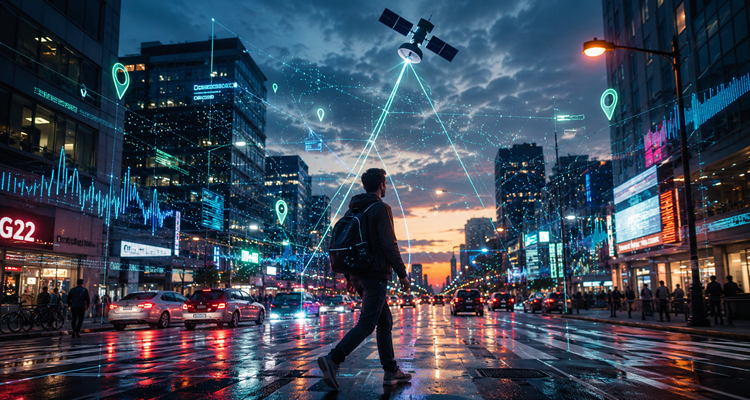
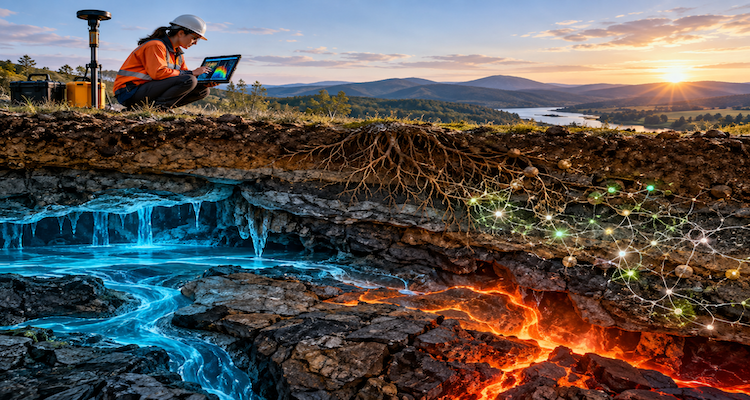
You may think your daily routine is private, but an invisible web of satellites and sensors sees far more than you realize. By the time you’ve glanced at the weather app or taken your morning coffee, Earth’s network of eyes has quietly assembled data about your location, habits, and even your mood. From orbiting satellites to streetlights and smart meters, sensors around the planet are constantly collecting signals that reveal personal details before you consciously notice them. In effect, the Earth already knows your footprints, your schedules, and sometimes even your emotions thanks to a flood of environmental data.
Key Takeaways
- Satellites and ground sensors now map our movements and routines continuously, even through clouds and darkness.
- Data from fitness apps, smart devices, and utilities can reveal highly personal patterns like home occupancy or exercise routes.
- Urban IoT networks (smart lights, cameras, air-quality monitors) gather real-time information on residents, creating a living portrait of city life.
- Legal frameworks are catching up: for instance, EU privacy law treats satellite images and location data that identify you as personal data.
- Knowing how and why this data is collected empowers you to make privacy-wise choices (e.g., managing device permissions, using analog habits, or advocating policy changes).
Satellites and Ground Sensors: Earth’s Digital Eyes
Thanks to an explosion of satellite launches and smart technologies, observing Earth is no longer just a government spycraft. In 2024, there were nearly 500 Earth-observation satellites in orbit (about 270 operated by private companies). These satellites can image any spot multiple times a day, even through clouds and at night with radar at ever-finer resolution (some commercially down to 10–16 cm detail in 2023–25). That means satellites can pick up small objects on the ground. In fact, human rights researchers warn that satellites are capable of monitoring an individual’s movements and schedule, such as seeing “when a person’s car is in their driveway” and even recognizing faces from space. Combined with other data, this imagery can profile our habits and associations in surprising detail.
Satellite data is not just passive: clever analysts and apps often fuse it with personal device data. A famous example is the Strava heatmap incident. Strava, a fitness app, published a worldwide “heatmap” of user exercise routes (using GPS and satellite data). In 2018, a tech student noticed that clusters of bright lines and dots on the map coincided with U.S. military bases and patrol routes. In other words, millions of soldiers’ jogs, recorded by satellites and phones, inadvertently revealed secret base locations. This incident highlights how Earth’s digital maps (built on GPS signals and satellite imagery) can disclose private information about groups or individuals.
On the ground, a proliferation of sensors means your environment is quietly tracking many everyday details. “Smart city” initiatives deploy networks of connected devices from streetlight motion sensors to public Wi-Fi and traffic cameras to collect real-time data about people’s movements and city conditions. For example, Barcelona’s smart lights dim and brighten according to pedestrian movement, and sensors in public bins report fill levels to the waste trucks. Environmental sensors in cities measure air quality, noise, and water levels across neighborhoods. These networks yield a constant stream of granular information: traffic sensors optimize signal timing, pollution monitors issue alerts when air gets unhealthy, and even sidewalk cameras can recognize patterns of foot traffic. While these data improve services (cleaner air alerts, safer streets), they also mean the city literally “knows” how and when people move, essentially building a data-driven profile of residents’ daily lives.
Meanwhile, our own devices feed this system. Smart home gadgets, phones, and wearables act as environmental sensors that talk back to Earth’s data collectors. A smart thermostat learns your schedule by detecting when rooms are in use; voice assistants respond based on your tone; fitness trackers record not only distance but also your biometrics during workouts. Over time, these devices “learn” your routines: wake-up time, commute route, even stress levels. And all that data often syncs with cloud services or city databases. For instance, an AI-powered home energy system might notice a spike in your morning power use and infer you’re up for breakfast, knowledge that comes from Earthbound meters recording your activity.
Real-World Tracking in Everyday Life
All this might sound abstract, but the real-world implications are concrete. Consider utilities and smart meters: power, gas, and water meters that send minute-by-minute usage data. A major study analyzed electricity use from 5,000 homes and found that fine-grained smart meter data has “high predictive power” in determining whether a house is occupied now or even in the future. In practice, this means that simply by looking at your home’s power draw patterns, an algorithm can guess when you get up, when you leave for work, or if you’re on vacation. The researchers noted that this could be useful for energy efficiency, but it also poses privacy risks: those same patterns reveal “working, dining, and holidaying habits” that could be misused if compromised. In short, the humble electricity meter is effectively watching your household’s life.
Consider your smartphone and connected home devices. A smartphone constantly chats with cell towers, Wi-Fi routers, and GPS satellites, so it knows where you are almost instantly. If you’ve enabled smart lighting or a Nest thermostat, your house knows whether you’re home and can adjust settings accordingly, again leaving a data trail. Many people consent to apps that use location, often without realizing that this grants third parties a continuous record of their moves. As with Strava, even innocuous data (like running routes or Instagram geotags) can be combined to map out someone’s patterns.
Another example: facial recognition and emotion sensing are creeping into our environment. It’s estimated that images of about half of all Americans are already in law enforcement facial-recognition databases. Some modern offices are piloting systems that “read” workers’ expressions to gauge mood (happy, stressed, bored) and then adjust lighting or layout for comfort. One London firm even tested cameras in their office that scanned micro-expressions to inform office design changes. (The technology only decoded emotions correctly about half the time, but the point is clear: in theory, the environment could adapt to your feelings.) In this way, even your emotional state can become “known” to surrounding smart systems, not just your physical actions.
Looking toward the horizon, the trend is clear: artificial intelligence is fusing these data streams for even deeper insights. New AI models trained on Earth observation data promise to estimate everything from your carbon footprint to land use changes at unprecedented speed. That means in the near future, satellite and ground sensors could automatically infer personal metrics (like how much you drive or heat your home) without manual analysis.
A Less Obvious Perspective
We often think of data collection as a top-down surveillance issue, but there are subtler human and cultural angles. For one, this data-rich environment is already shifting behavior. For example, the knowledge of being constantly observed (by cameras or smart devices) can make people alter their actions – walking on sidewalks they know are camera-covered, or disabling devices when performing sensitive tasks. In turn, businesses and cities adapt: insurers might start offering discounts to customers who share energy data (rewarding “transparent” homes) or higher premiums if your smart patterns flag risky behaviors. Advertisers can tailor billboards to the crowd on the street as your smartphone location is known. This leads to a feedback loop where our environment shapes us even as we shape it.
Psychologically, ambient awareness can be both comforting and creepy. Some people find it reassuring that smart systems can anticipate their needs (a thermostat turning on before you wake). Others feel uneasy about an “invisible audience.” This dynamic can fuel new demands for anonymity and digital detox: tiny communities off the smart grid, or start-ups that promise “camera-free zones” on social apps. In culture, we might see more depictions of the sensitive relationship with our environment in media and art, reflecting both our reliance on and wariness of these systems.
Another hidden implication: environmental change itself can “know” us. For instance, climate scientists now analyze pollen levels, ice cores, and coral rings to deduce human activity and health trends. Surprising signals, like a sudden increase in methane emissions detected by satellites, can indicate changes in how we live or travel before we even notice the impact. In a sense, the Earth “tells on us” through rising carbon or biodiversity loss. This biological feedback suggests a poetic twist: the planet’s response to human patterns provides a global mirror on our lifestyle choices, alerting us to consequences (wildfires, storms) we might try to ignore. While not “personal data” in the privacy sense, it is a powerful environmental dose of reality about how even our smallest actions ripple out.
Taken together, these perspectives hint at a future where privacy, personal agency, and technology co-evolve. If the Earth’s sensors know you well, then maybe you also can learn to use that awareness. For instance, knowing how data can be collected motivates small actions: turning off nonessential location sharing, using wired or battery-powered devices occasionally, or supporting regulations that limit data retention. It also means we become more selective in what we share, even unconsciously (e.g., sporadically changing routes to confuse trackers or creating “data-free” zones). In the business realm, companies might compete to be more privacy-friendly, earning trust by pledging not to tap into environmental data unnecessarily.
Why It Matters Now
This might all feel futuristic, but the reality is happening today. The integration of AI with Earth observation and IoT means data is not just being collected; it’s being interpreted and used in real time. Google and phone makers offer precise location history; smart cities deploy more sensors; satellite imagery is cheaper and faster than ever. With drones and small satellites on the rise, “Earth knows” updates daily. As readers, you should care because these trends touch everyday life, and only by understanding them can you navigate safely.
For example, consider digital assistants. They already use context (time of day, your patterns) to answer queries before you fully ask them. Your car or navigation app might reroute you before you think to check traffic, because traffic patterns are predicted from anonymous location data. These conveniences are rooted in Earth-scale sensing. The flip side is awareness: every convenience may come at the cost of revealing another facet of you to someone else’s database.
In essence, Earth’s pervasive awareness means privacy is no longer just a personal issue but a societal one. We must collectively decide how much of ourselves we want mirrored in this global data machine. Are there things we want to keep as mysteries between us and our planet? As this article shows, the signals are already out there. The opportunity now is to be informed, to weigh the benefits (safer cities, tailored services, environmental insights) against the costs (surveillance, loss of anonymity), and to shape the rules of this new reality.
Keep Your Footing
By the end of the day, you should come away with a clearer understanding that there’s nothing inherently mystical about Earth “knowing” you; it’s simply the result of technology and nature intertwining. The takeaway is not to panic, but to become savvy about it. Stay curious: learn which devices and apps you use are part of these networks. Use built-in privacy features (location toggles, data controls). Support transparency: demand to know when and how your data is used. And remember, sometimes the most effective strategy is making small, mindful changes: wearing a hat (to foil facial recognition), using masks or headphones (to limit voice capture), or simply occasionally going off-grid. These actions reclaim a bit of mystery for ourselves.
Ultimately, recognizing that “the Earth knows” can be empowering. It means our actions have real, measurable impact, and the planet is literally responding. That’s a big part of how the Earth communicates: through patterns of data. By tuning into what those patterns mean, we become wiser stewards of our own information and more thoughtful citizens of a world where even the soil, air, and satellites carry whispers about us.
The views and opinions expressed in this article are those of the author and are intended for informational and educational purposes only. While every effort is made to ensure accuracy, Wiobs does not guarantee the completeness, reliability, or timeliness of the information presented. Readers are encouraged to verify facts independently and use their own judgment before making decisions based on this content.
Stay Connected with Wiobs
Explore more insights on technology, artificial intelligence, science, business, and innovation. Follow Wiobs and never miss an update.