






Why Some Places Seem to Remember the People We’ve Lost
Eeriness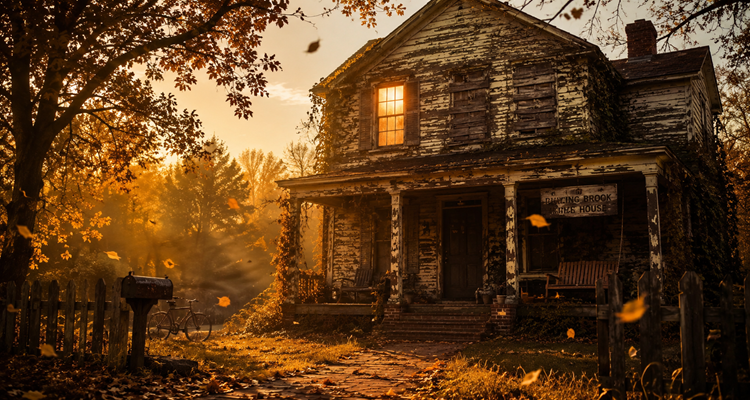
We all have had the eerie experience of returning to a familiar spot, a childhood home, an old café, a childhood playground, and feeling as if the walls themselves remember someone we once knew. Maybe you stand where your grandmother used to rock in a porch chair and feel her smile, or visit a bookstore and suddenly smell her perfume in the air. These moments can feel like a kind of magic or ghostly presence, but there is science and history behind them. Psychologists and neuroscientists explain that familiar places trigger memories and emotions, binding people and locations in our minds. At the same time, communities around the world have long built memorials and rituals to keep loved ones alive in special places.
This blog dives deep into why some places seem to carry the echo of people who have left us. We’ll explore the psychology and neuroscience of place-based memory, real examples of memorial spaces, and surprising trends from local tradition to cutting-edge digital memorials. By the end, you’ll see why the next time you revisit an old haunt and feel a flood of memories, the place really is holding on to a part of that person.
Key Takeaways
- Places act as memory triggers. Walking through a childhood home or an old neighborhood can instantly reconstruct vivid scenes from your past, because your brain encodes not just events but their surroundings.
- Nostalgia has real benefits. Recalling people and places from our past often boosts mood, social connection, and meaning in life.
- Communities preserve memories in place. Memorial benches, gardens, and even street names ensure that those who have gone on are not forgotten, keeping their stories alive in the physical world.
- Loss of place erodes identity. When historic buildings or ancestral lands are replaced and memories erased, people can feel a deep, disorienting homesickness and rootlessness.
- Our brains are wired for place-memory. Scientists have found distinct brain networks that light up when we recall real-world locations, linking perception with memory in novel ways.
These insights explain why revisiting special places can be so emotionally powerful. They also underline a bigger idea: our sense of belonging and identity is deeply entwined with where we have lived, loved, and even lost.
How Places Anchor Memory
Imagine walking down the street of your childhood neighborhood. Suddenly, you catch the faint scent of baking bread and instantly remember your mother making dinner after school. Or you step into an old school gym, and your mind flashes to the high school game scores displayed on the wall. This is context-dependent memory at work: familiar sights, sounds, and smells in a place can unlock vivid scenes from the past. Neuroscience shows that our brains don’t just store abstract events – they also store the context around them. Re-entering a scene triggers the hippocampus to “pattern complete” a memory, making you feel like you’re right back in that moment.
In fact, brain imaging has revealed special “place-memory” networks in the cortex. When people imagine or recall real-world locations they know (like their childhood home), these areas light up more strongly than when viewing similar unfamiliar scenes. The researchers who discovered this were surprised to find that the brain’s visual-scene regions have dedicated partners for memory. In other words, different neural circuits process seeing a place and remembering it. This suggests our minds truly form mental maps tied to people and events. A generic clock tower becomes our high school’s tower in Dartmouth’s map, unlocking a flood of personal memories.
It turns out nostalgia itself has been shown to be a mostly positive emotion. Studies cited by the Greater Good Science Center find that recalling comforting past moments tends to make us happier and more resilient, improving mood and giving us a feeling of continuity in life. Instead of being mere wistful daydreaming, nostalgia often includes memories of people we loved and moments we felt supported. This can counteract loneliness and reinforce social bonds: people recall meaningful times when they felt “connected, loved and supported,” which in turn buffers stress and fosters optimism about future relationships. So when you walk into your old café and feel an unexpected warmth thinking of a friend who’s moved away, that pleasant buzz is partly the brain doing some well-being work.
Moreover, researchers note that familiar places are especially potent memory triggers because they encode multiple cues together – not just sight, but smells, sounds, and even routes or lighting. Turning onto your childhood street might bring back the crunch of fallen leaves or the sound of a distant train whistle before you even consciously recognize the scene. Unique sensory cues like a particular smell or song heard there can amplify the effect, much like Proust’s famous madeleine erases the barrier between past and present. In short, places serve as a container for memory. A forgotten bench in a park can hold someone’s laughter or a family dinner in its ambience until we come back and it all rushes out.
Everyday places often store personal history. In neuroscience terms, familiar streets and buildings act like triggers to “complete the pattern” of an event, letting us relive scenes with striking clarity.
Places of Personal Memory and Identity
Not only does our brain tie us to places, but culturally we treat location as a cornerstone of identity. For many, revisiting a childhood home or neighborhood feels like meeting an old self. In an Atlantic feature, writer Faith Hill describes how returning to her family’s New Jersey house “feels akin to the homesickness I felt as a kid at summer camp, except that now I ache for my future self.” She quotes psychologist Jerry Burger, noting that losing one’s childhood home is “like a dancer losing a leg. It’s a really important part of you. And now it’s gone.” This “anticipatory grief” over a future without one’s old home stems from realizing that part of their personal history is tied up in that place.
Importantly, this drive to reconcile past and present selves is a basic human impulse. People often travel miles to stand in a place that shaped them, even if their experiences there were mixed. Northwestern psychologist Dan McAdams calls this a search for “narrative identity.” We weave a coherent life story and need to make sure the chapters line up. If you imagine your life as a book, places are like settings that tie chapters together. As the Atlantic article notes, making the past “real to us” might mean flipping through photo albums or literally returning to old homes.
This connection extends beyond individual memories to collective memory. Towns and cultures often anchor shared identity in place. Historian Pierre Nora famously described lieux de mémoire (sites of memory) as symbolic places- monuments, archives, squares that societies keep alive to remember the past. On a very local scale, the houses, barns, schools, and parks where communities grew up become repositories of multiple personal stories. When you see your city’s war memorial or hometown museum, you’re accessing the “collective memory” of generations..
Poet Donald Hall captured this by saying, “I live on land that is thick with the known dead… a real place is layered with memory.” Literally thousands of people lie buried in old cemeteries, and their descendants might share memories or stories. But beyond graves, the very buildings we loved become, in a sense, part of who we are. An old school or church might outlast us, carrying the memories of all who passed through, from baptisms to graduations.
When these memory-laden places vanish, the loss can be devastating. Imagine your family farmhouse, where four generations lived and labored, being torn down for a parking lot. Holly Stockley writes about her ancestral homestead turned suburban tract, and how losing “the Sprik homestead” meant losing continuity. Without that sense of roots, people living there felt adrift: “home becomes nothing more than the house we leave behind”. In contrast, in that same region a nearby family preserved their farmstead; neighbors still tell its story. Stockley notes, “This place knows itself. And the people who live there know their place within that story.”. Such places “remember themselves,” creating a comfort and identity that modern, interchangeable developments cannot provide.
Memorials and Rituals That Keep Memories Alive
Communities and individuals often intentionally shape places to remember people. Think of the countless movie and book scenes where someone stands by a gravestone or old oak tree, remembering a loved one. In real life, families and towns do this too, and modern trends are expanding those traditions in creative ways.
One simple example is the memorial bench or tree. People customize benches in parks with plaques engraved with a person’s name and a quote. Each time someone sits and reads the bench, the memory quietly lives on. Similarly, planting a tree or flower garden as a tribute anchors a person’s spirit in living nature. As one memorial blog puts it, “Outdoor memorials offer a unique opportunity to create lasting tributes that reflect the personality and passions of your loved one and serve as beautiful reminders of the love you shared.” For instance, a family might plant an apple tree in their backyard, knowing it will bloom every spring just as their loved one used to. Over time, the garden itself becomes a touchstone for memories.
Even the design of public memorials relies on place-based symbolism. War memorials, for example, are often placed in city squares or parks so they become woven into daily life. Visiting those spots can trigger reflection on people who are gone. In New Orleans, the floating “Above All Else” WWII aircraft memorial is placed by a creek, so old-timers’ stories of the war can circulate with the breeze. In parks, engraved stones, lantern gardens, or walking paths dedicated to individuals ensure that each glance reminds visitors of a life. Some communities hold annual events at these sites (like releasing lanterns into a lake) to collectively remember and celebrate those people one more time.
Even businesses and brands tap this trend. Historical tours and nostalgia-driven marketing prove that places “remember” in the cultural imagination. Travel agencies promote ancestral tourism, where people visit the villages of their grandparents. Ghost tours take visitors to supposedly haunted houses, explicitly selling the idea that the walls remember old tragedies. In a way, we commodify place-memory because we long to feel connected.
Technology is adding a new twist: digital memorials. While not a “place” in the traditional sense, virtual spaces are becoming memory-holders too. There are now VR memorial rooms where avatars of friends and family can gather virtually and look at digital photos or videos in a shared environment. Some companies even offer services to create an AI chatbot or voice model from old recordings of a deceased loved one, so family members can “talk” to them again in a virtual home setting. These innovations recognize the same human desire: to anchor someone’s presence in a space, even if that space is online or in the metaverse.
In short, memorials, whether a park bench, a plaque on a wall, or a website, are ways we make places remember us. They transform abstract grief into a concrete location people can visit. Each time a neighbor adds flowers to a small roadside shrine, or a grandchild lights a candle in a chapel where a parent was remembered, the act stitches that person’s story into the place. Over the years, that spot accrues layers of emotion, conversation, and meaning, becoming a living memory itself.
A Less Obvious Perspective: The Power (and Price) of Place Memory
Beyond the warm comfort of happy nostalgia and memorials, there’s a subtler truth: our attachment to places can also complicate how we move forward. If some places help us remember those we’ve lost, others quietly hold us back. We often forget that our minds are projecting onto places. The house you lived in as a kid isn’t literally the same person you were, yet standing in its hallway can blur the line between then and now. Sometimes that felt presence is just our brain filling in the blanks. Psychologists note that going back to an old home when your relationship to it is deeply emotional is not just sentimental; it’s a way of making your past and future real to each other.
On a social level, there’s also the phenomenon of “nostalgia exploitation.” Developers and marketers have learned that invoking local history or rural imagery can sell products and places. That new suburban neighborhood might advertise itself as “Maple Grove” with a fake red barn and all, trading on the illusion of genuine memory. But such pastiche architecture often rings hollow, a point made by critics of modern sprawl. We must ask: when we create new places, are we truly building memory or just slapping on folklore?
Another overlooked angle is how place-memory differs across cultures. In some traditions, spirits are believed to linger in landscapes or ancestral homes, making the sense of a place “remembering” very literal. In Japan, for example, family altars (butsudan) keep the presence of ancestors in the household. In African and Caribbean diasporas, visiting rivers or forests can be a way of feeling the ancestor spirits. Although our focus is on secular memory here, these practices show that the idea of place holding onto people is universal, woven into many cultures in ways we might not immediately recognize.
Interestingly, scientists are even exploring whether our deep bond with home areas has evolutionary roots. The very brain mechanisms that encode place memories likely developed for survival- remembering water sources, shelter locations, or familiar allies in a territory. Some researchers speculate that this spatial memory extends to social bonds because, for much of human history, people and places evolved together (our family farm, our tribal hunting ground, etc.). In that sense, it’s less mystical and more fundamental: our brains are just trying to keep important information attached to the physical world around us.
Ultimately, the less obvious perspective is that places don’t literally have souls, but people give them meaning. Each schoolyard game, each bedside lullaby, each shared sunset anchors a person to a location. And when we’re gone, those anchors remain until others lift them. Perhaps that’s why so many of us feel drawn to one final visit, one last touch of an old table or doorframe. To say goodbye to the place that carried our story.
This also points to a modern challenge: in a fast-moving world, how do we keep those anchors intact? As cities grow and people move more frequently, there are fewer generations living in one place. We risk forgetting the stories that turned land into home. Planners and communities are beginning to realize this. Techniques like memory mapping and community storytelling are being used to document what locals feel about their town. Even digital history projects map out who lived where decades ago, so the old stories stay on record.
Why It Matters Now
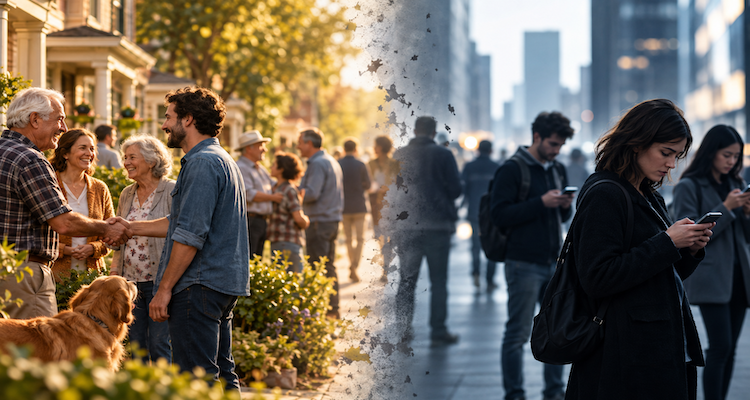
You might wonder: in the age of smartphones and streaming, why should we care about old houses and parks? The answer is that as technology shrinks distance, our emotional worlds risk shrinking, too. Places are the anchors that give life a sense of continuity and belonging. When we honor the places that remember those who’ve left, we honor our own need to connect with meaning and love that transcends time.
Moreover, understanding this phenomenon has real practical relevance. For mental health, recognizing that visiting meaningful places can comfort grief or boost morale is valuable: therapists sometimes encourage people to go to “memory places” safely after loss. In city planning and architecture, valuing emotional infrastructure- the buildings and public spaces people attach to can make communities stronger. Businesses in tourism capitalize on authenticity by preserving historic districts or telling local stories. Even on a personal level, knowing that it’s natural to feel a tug at certain sites can help us navigate our emotions when someone moves away or passes on.
In the end, the places that remember us are the ones where we leave a piece of ourselves. They may be an old cabin, a favorite bench, or the corner of a bookstore where you once hugged a friend goodbye. When those places prompt the memory of a person who’s gone, it’s both comforting and bittersweet: comforting because it shows how deeply we were connected, and bittersweet because it reminds us of what’s changed. By cherishing those places and the stories they hold, we keep alive the human tapestry of memory and love.
Just as many of us feel drawn to a place that “knows us,” let’s ask: are we doing enough to let our places know each other? By listening to local lore, tending to simple memorials, or just taking a moment to recall why a place matters, we write ourselves into a place’s ongoing story. Because some places remember themselves and, if we are careful, they may remember us too.
The views and opinions expressed in this article are those of the author and are intended for informational and educational purposes only. While every effort is made to ensure accuracy, Wiobs does not guarantee the completeness, reliability, or timeliness of the information presented. Readers are encouraged to verify facts independently and use their own judgment before making decisions based on this content.