










The Real Horror Behind Unclaimed Luggage and Its Strangest Discoveries
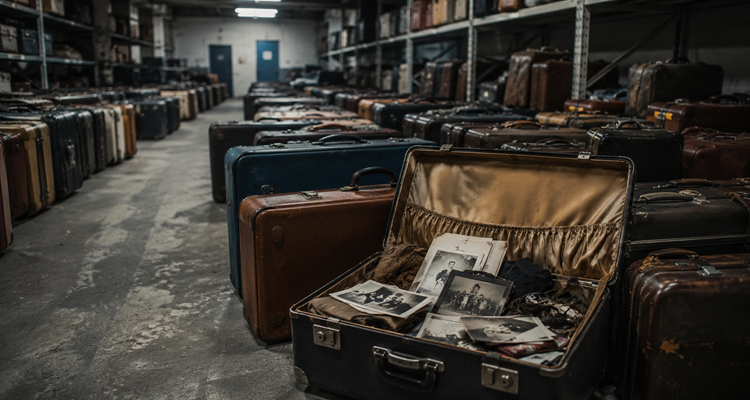
Every day, thousands of suitcases move through airports, train stations, bus terminals, and shipping hubs around the world. Most eventually find their owners. Some do not.
When travelers imagine lost luggage, they often picture a temporary inconvenience, a delayed suitcase, a misplaced bag, or an airline mix-up. Yet beyond the customer service counters and baggage claim belts lies a lesser-known world where abandoned possessions accumulate, stories disappear, and occasionally, deeply unsettling discoveries emerge.
The fascination with unclaimed luggage is not really about the bags themselves. It is about the mystery they represent. Each forgotten suitcase carries fragments of a person’s life, and when those fragments are left behind permanently, they create questions that may never be answered.
That curiosity has turned unclaimed luggage into a subject of documentaries, news features, online communities, and even businesses dedicated to reselling lost items. But beneath the intrigue lies a darker reality about modern travel, human behavior, and the secrets people leave behind.
When a Suitcase Becomes a Mystery
Most lost luggage cases have ordinary explanations. Travelers accidentally leave bags behind, labels become damaged, or transportation systems fail to reconnect possessions with their owners.
Airlines and transport operators typically spend weeks or months attempting to locate owners before classifying baggage as unclaimed. By the time a suitcase reaches that stage, it has effectively become an orphaned object.
What makes these bags so compelling is that they often contain highly personal belongings. Clothing, photographs, handwritten notes, souvenirs, family keepsakes, and unfinished plans can all be found inside.
Unlike objects displayed in museums, these items were never intended for public view. They offer accidental glimpses into private lives, frozen at a specific moment in time.
That emotional dimension is one reason stories about unclaimed luggage continue to attract attention. Readers are not simply interested in what was found; they are fascinated by the unknown story behind it.
The Strangest Discoveries Ever Found
Over the years, reports from airports, auction houses, and lost-property organizations have revealed an astonishing range of discoveries.
Among the unusual finds have been rare collectibles, valuable jewelry, historical artifacts, large sums of cash, unusual taxidermy items, musical instruments, and entire collections of personal memorabilia.
Some cases have involved luxury goods worth thousands of dollars. Others have contained items with little financial value but enormous emotional significance, such as letters, diaries, or family photographs.
Occasionally, authorities have uncovered items that required criminal investigation. While such cases are rare, they contribute to the eerie reputation surrounding abandoned baggage. The possibility that a suitcase may contain evidence of a larger story fuels public fascination.
Yet the most unsettling discoveries are not necessarily the most expensive or shocking. Often, they are the ordinary belongings that suggest a life interrupted unexpectedly.
A carefully packed suitcase prepared for a vacation that never happened. Children’s toys that were never reclaimed. Wedding attire that remained untouched. These objects raise questions that rarely receive answers.
What Unclaimed Luggage Reveals About Modern Life
The popularity of lost-luggage stories reflects something deeper than curiosity.
Modern society generates an enormous volume of possessions. People travel more frequently, relocate more often, and accumulate more belongings than previous generations. As mobility increases, so does the likelihood of objects becoming disconnected from their owners.
Unclaimed luggage represents a unique intersection between movement and permanence. Travelers are constantly in transit, but the items they leave behind become unexpectedly fixed in place.
There is also a psychological element at work.
People naturally seek narratives. When they encounter an abandoned suitcase, they instinctively try to reconstruct the owner’s story. A few possessions become clues. A ticket stub suggests a destination. A photograph hints at relationships. A souvenir points toward a memory.
The human brain is wired to complete unfinished stories, which explains why lost-luggage mysteries remain so compelling.
The Business Built on Forgotten Belongings
What happens to luggage that nobody claims?
In many cases, transport operators eventually transfer ownership through legal processes. Depending on local regulations, items may be auctioned, donated, recycled, destroyed, or sold through specialized organizations.
Entire businesses have emerged around the resale of unclaimed goods.
These operations sort, inspect, clean, and evaluate items before offering them to new owners. Electronics, clothing, accessories, books, and collectibles often find a second life through resale channels.
What began as a logistical necessity has evolved into a niche industry driven partly by sustainability and partly by curiosity.
Consumers are increasingly interested in secondhand goods, and unclaimed luggage fits naturally into that trend. Buyers are attracted not only by potential bargains but also by the mystery surrounding each item.
In many ways, purchasing something from unclaimed luggage resembles modern treasure hunting.
The Hidden Horror Is Not What You Think
Popular culture often portrays abandoned luggage as a source of danger, crime, or supernatural mystery.
The reality is more complex.
The true horror behind unclaimed luggage may be the reminder of how easily personal histories can disappear.
Most people assume their possessions reflect who they are. Photographs preserve memories. Letters preserve relationships. Souvenirs preserve experiences. Yet a lost suitcase demonstrates how fragile those connections can be.
A single logistical failure can separate meaningful objects from the people who value them.
In an age where digital content dominates daily life, this idea feels increasingly relevant. Physical belongings often serve as anchors to identity, memory, and personal history. When those objects vanish, part of the story risks disappearing with them.
This perspective transforms unclaimed luggage from a travel oddity into something far more human.
Why Interest Continues to Grow
Social media, online auctions, and documentary storytelling have amplified public interest in forgotten belongings.
Audiences are drawn to authentic mysteries, stories without scripted endings or guaranteed explanations. Unclaimed luggage provides exactly that.
Unlike fictional suspense, these cases involve real people and real lives. Every suitcase represents a narrative that may never be fully understood.
At the same time, growing interest in vintage goods, sustainability, and personal storytelling has given abandoned possessions new cultural relevance. Items once considered discarded are increasingly viewed as artifacts of individual experience.
This shift reflects a broader cultural change. People are becoming more interested in the stories attached to objects rather than the objects alone.
The Mystery That Never Truly Ends
Most unclaimed suitcases will never reveal their complete stories.
Their owners may have moved on, forgotten them, or been unable to recover them. Some may have intended to return but never had the opportunity. Others may remain mysteries forever.
That uncertainty is precisely what keeps public fascination alive.
The strange discoveries found inside abandoned luggage capture attention, but the deeper mystery lies elsewhere. Every suitcase represents a life in motion, interrupted at a single moment and preserved in unexpected ways.
Long after the baggage carousel stops turning, those unanswered questions continue to travel.
And perhaps that is the real reason unclaimed luggage feels so haunting. It reminds us that behind every lost object is a story, and not every story finds its way home.
This content is published for informational or entertainment purposes. Facts, opinions, or references may evolve over time, and readers are encouraged to verify details from reliable sources.