









From Hidden Gems to Iconic Destinations: How Travel Fame Changes the Places We Discover
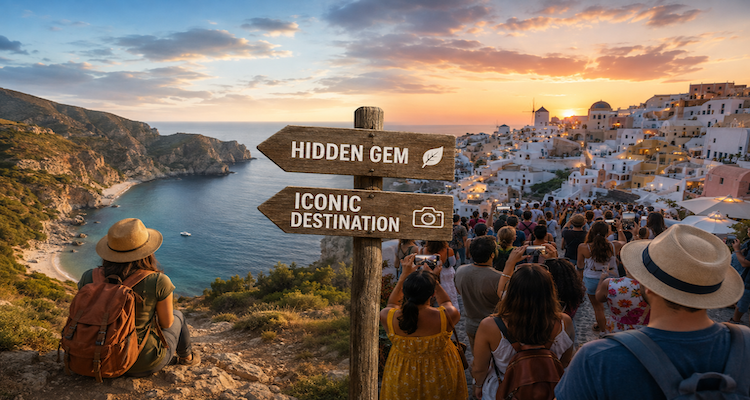
A destination can spend decades known mainly to local residents, regional travelers, or a small circle of enthusiasts. Then a film is shot nearby, a striking photograph spreads across social media, a UNESCO designation raises its profile, or travel creators begin posting from the same viewpoint. Suddenly, the “hidden gem” is no longer hidden.
That transformation can bring jobs, investment and international recognition. It can also bring overcrowding, rising pressure on infrastructure and a difficult question for the people who live there: what happens when the world discovers a place faster than the place can prepare for the world?
The journey from obscurity to iconic status is therefore more than a tourism success story. It is increasingly a story about visibility, algorithms, cultural preservation and the challenge of managing popularity. UNESCO’s work on sustainable tourism reflects this tension, emphasizing that tourism can benefit communities while also creating environmental and social pressure when visitor growth is poorly managed.
Key Takeaways
- A hidden destination can become globally recognizable through media, heritage recognition, infrastructure and digital platforms.
- Popularity can create economic opportunities, but visitor growth does not automatically benefit local communities equally.
- Social media can accelerate tourism demand faster than traditional destination planning can respond.
- Iconic status can change the character of a place, not merely increase its visitor numbers.
- Sustainable tourism increasingly depends on managing where, when and how visitors travel.
How a Place Becomes an Icon
There is no single formula for turning a little-known destination into a global attraction. Some places gain attention because of extraordinary landscapes or cultural heritage. Others benefit from improved transport connections, successful tourism campaigns, films, books or major events.
Digital platforms have added another powerful force: rapid visual discovery.
A photograph or short video can introduce millions of people to a location that previously depended on guidebooks or word-of-mouth recommendations. This has shortened the distance between discovery and mass attention. A place does not necessarily need decades of tourism promotion before attracting global visitors.
The important distinction is that visibility and readiness are not the same thing. A destination can become famous before it has developed the infrastructure, visitor-management systems or community protections needed to handle its new popularity.
That gap is one of the defining challenges of modern tourism.
The Hidden Cost of Becoming Famous
Tourism can generate income for hotels, restaurants, guides, transport providers and local businesses. It can also support the preservation of cultural and natural attractions. But higher visitor numbers alone do not guarantee sustainable development.
UNESCO has highlighted problems associated with excessive tourism, including pressure on residents, infrastructure and ecosystems. In heritage destinations, unmanaged tourism can also affect the integrity and authenticity of the places visitors have come to experience.
The transformation can happen gradually.
A quiet historic district may see more short-term rentals and tourism-oriented businesses. A natural attraction may require additional roads, parking and waste-management systems. Popular public spaces may become increasingly shaped around visitor demand rather than everyday local life.
The irony is that the qualities that made a destination attractive can become vulnerable because of its success.
UNESCO’s World Heritage work repeatedly emphasizes the importance of visitor-management strategies, including spreading visitors across locations and seasons, encouraging longer and more meaningful visits, and reducing pressure on sensitive areas.
Social Media Has Changed the Speed of Discovery
Traditional tourism promotion was often deliberate. Tourism boards developed campaigns, airlines opened routes and guidebooks gradually introduced destinations to new audiences.
Social platforms operate differently.
Travel trends can emerge quickly, particularly when an image, restaurant, viewpoint or landscape becomes visually recognizable. Recent reporting has also highlighted how influencer-driven attention can rapidly redirect visitors toward specific locations, sometimes creating unexpected pressure on places that were not designed for large crowds.
This does not mean social media is inherently harmful. It can help smaller destinations gain visibility and allow local businesses to reach travelers directly. It can also encourage visitors to explore beyond established tourism hubs.
The challenge is how that attention is managed.
A useful shift would be to think less about simply attracting more visitors and more about distributing tourism more intelligently. If travelers can be encouraged to visit alternative neighborhoods, lesser-known heritage sites, different seasons or surrounding communities, popularity may create a wider economic benefit while reducing pressure on a single landmark.
UNESCO has supported approaches designed to encourage visitors to look beyond the most heavily visited attractions, including initiatives promoting lesser-known heritage destinations and strategies that encourage longer stays and broader exploration.
From Visitor Numbers to Visitor Value
One of the most important changes in tourism thinking is the growing recognition that success should not be measured only by arrivals.
A destination receiving more visitors may not necessarily become more prosperous, more livable or better preserved.
Large volumes of short-stay visitors can place significant demands on transport, public spaces and local services. At the same time, a smaller number of visitors who stay longer, use local businesses and explore beyond the main attraction may distribute economic benefits differently.
This is why visitor management increasingly involves questions such as:
- Can tourism be spread across different seasons?
- Can visitors be encouraged to explore beyond one famous landmark?
- Are local communities involved in tourism planning?
- Does infrastructure match visitor demand?
- Are sensitive cultural and environmental areas adequately protected?
- Who actually benefits from tourism growth?
These questions move the discussion beyond the simple goal of turning every hidden gem into the next global hotspot.
The Risk of Losing What Made a Place Special
When destinations become iconic, tourism can reshape the visitor experience itself.
Restaurants may adjust menus for international demand. Historic districts may become increasingly dominated by visitor-oriented businesses. Quiet landscapes may become associated with queues, traffic and the search for a specific photograph.
UNESCO notes that poorly managed tourism can place pressure on local communities and heritage, while over-commercialization can also affect cultural practices and authenticity.
This does not mean destinations should remain isolated from tourism. Nor does it mean that visitors are inherently a threat.
The issue is management.
Tourism works best when the needs of visitors are considered alongside those of residents, local businesses, cultural custodians and environmental managers. A destination should not have to choose between remaining unknown and becoming overwhelmed.
There is a wide space between those extremes.
The New Opportunity for Lesser-Known Destinations
The rise of overtourism in famous destinations has also created an opportunity for places outside the traditional tourism circuit.
Travelers are increasingly encouraged to look beyond the best-known cities and landmarks. UNESCO itself has supported efforts to promote lesser-known heritage destinations as part of broader strategies for more sustainable travel.
For emerging destinations, however, visibility should not be treated as the only objective.
A more durable strategy begins with questions about capacity, local participation and long-term identity. What kind of tourism fits the destination? Which areas should remain protected? How can revenue reach local communities? How can visitors understand the cultural or environmental significance of the place rather than simply consume it as a backdrop?
The best outcome is not necessarily to become the most photographed destination.
It may be to become a place where tourism supports the community without overwhelming the qualities that made the destination worth visiting.
A Different Meaning of “Hidden Gem”
The phrase “hidden gem” often suggests that a destination is waiting to be discovered by the wider world. But discovery is not always an uncomplicated good.
Once attention arrives, the destination enters a new relationship with tourism. Its image may spread globally, visitor expectations may change, and local authorities may face decisions that previously seemed unnecessary.
That is why the future of travel may depend less on finding the next hidden gem and more on learning how to manage discovery responsibly.
The places that navigate this transition successfully may be the ones that resist measuring success purely through popularity. Iconic status can bring recognition and opportunity, but preserving a destination’s character requires planning before crowds arrive not only after the consequences become visible.
The real achievement is not turning every hidden gem into an icon. It is ensuring that a place can be discovered, enjoyed and economically supported without losing the character that made it special in the first place.
This content is published for informational or entertainment purposes. Facts, opinions, or references may evolve over time, and readers are encouraged to verify details from reliable sources.