










Fermented Foods Explained: Why Ancient Preservation Methods Are Returning to Modern Kitchens
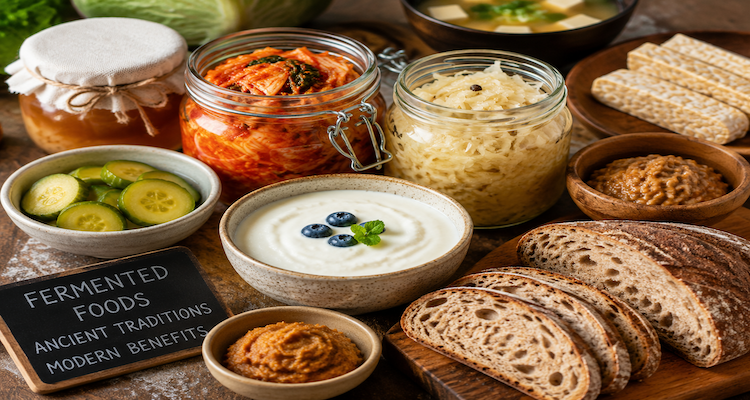
For thousands of years, humans preserved food through biological processes long before refrigeration, industrial packaging, or chemical preservatives existed. Milk became yogurt, cabbage transformed into kimchi and sauerkraut, soybeans became miso and tempeh, and grains were converted into sourdough through the invisible work of microorganisms.
Today, those same methods are finding new relevance. Fermented foods have moved from traditional kitchens and regional cuisines into supermarkets, restaurants, wellness communities, and scientific research discussions. The renewed interest is not simply nostalgia for old food traditions. It reflects a broader shift toward understanding food as a living system influenced by microbes, culture, sustainability, and human health.
However, fermentation’s popularity has also created confusion. Some products are promoted with exaggerated health claims, while the science behind fermented foods is more nuanced. Research suggests fermentation can improve food preservation, flavor, digestibility, and in some cases influence the gut microbiome, but it is not a universal solution for health problems.
The real story of fermented foods is not that an ancient technique has suddenly become new. It is that modern consumers are rediscovering a biological technology that has quietly shaped human diets for centuries.
Key Takeaways
- Fermentation is an ancient preservation technology powered by microorganisms such as bacteria and yeasts.
- Modern interest in fermented foods connects traditional cuisine with microbiome research and sustainable eating.
- Fermentation can improve flavor, shelf life, and certain nutritional properties of foods.
- Scientific evidence on health benefits is promising but varies widely by food type and individual response.
- Traditional fermented foods remain culturally important across regions worldwide.
Fermentation: Humanity’s Original Food Technology
Before refrigerators and freezers, controlling microbial activity was one of humanity’s most important survival skills.
Fermentation works by allowing beneficial microorganisms to convert components of food—often sugars and starches into compounds such as acids, gases, or alcohol. These changes can slow the growth of harmful organisms while creating new flavors, textures, and nutritional characteristics.
Examples include:
| Food | Region of origin or association | Main fermentation process |
|---|---|---|
| Yogurt | Central Asia, Middle East, South Asia and other regions | Lactic acid bacteria ferment milk sugars |
| Kimchi | Korea | Lactic acid fermentation of vegetables |
| Sauerkraut | Central and Eastern Europe | Lactic acid fermentation of cabbage |
| Miso | Japan | Fermentation of soybeans with koji culture |
| Tempeh | Indonesia | Fermentation of soybeans using fungi |
| Sourdough bread | Multiple cultures | Wild yeasts and bacteria ferment dough |
Although these foods developed independently across different societies, they share a common principle: humans learned to work with microorganisms rather than simply trying to eliminate them.
Modern food science has expanded understanding of these processes, allowing researchers to identify specific microbes, fermentation conditions, and chemical changes involved.
Why Fermented Foods Are Trending Again
The renewed interest in fermentation comes from several overlapping cultural and scientific trends.
1. Growing Interest in the Gut Microbiome
Research into the human microbiome the community of microorganisms living in and on the body has changed how scientists view the relationship between diet and health.
Some studies suggest fermented foods may influence microbial diversity in the gut. A 2021 clinical study published in the journal Cell found that a diet high in fermented foods was associated with increased microbiome diversity and reduced markers of inflammation among participants. However, researchers also emphasized that more studies are needed to understand long-term effects and individual differences.
The emerging lesson is not that every fermented food produces the same effect, but that food-related microbes may play a meaningful role in human biology.
2. Consumers Are Searching for Less Processed Foods
Many consumers are increasingly interested in foods with recognizable ingredients, traditional preparation methods, and fewer artificial additives.
Fermented foods fit this movement because their production often depends on time, natural cultures, and traditional techniques rather than rapid industrial processing.
This does not mean every fermented product is automatically healthier. A fermented snack can still contain high levels of salt, sugar, or calories depending on how it is prepared.
3. Cultural Traditions Are Gaining Global Attention
Foods once considered regional specialties have become international products.
Kimchi, kombucha, kefir, miso, and other fermented foods have moved beyond their original cultural contexts. Restaurants, food companies, and home cooks increasingly explore traditional fermentation methods as part of a broader interest in culinary heritage.
The popularity of fermentation also reflects a growing appreciation for food knowledge passed through generations.
The Science Behind Fermentation: More Than Preservation
Preservation was historically the primary purpose of fermentation, but scientists now study several additional effects.
Improved Flavor and Texture
Microorganisms produce compounds that create complex flavors. The acidity of yogurt, the tang of sourdough, and the depth of miso all come from biochemical changes during fermentation.
These processes can transform simple ingredients into foods with distinctive sensory qualities.
Changes in Nutritional Availability
Fermentation can alter certain nutrients and compounds in food.
For example, fermentation may reduce some antinutritional compounds in certain foods, potentially improving nutrient availability. In dairy products, fermentation can also reduce lactose content, which may make some fermented dairy foods easier to digest for people with lactose intolerance.
The effect depends heavily on the specific food, microorganisms involved, and fermentation method.
Food Safety Benefits
Traditional fermentation methods often created conditions unfavorable to many harmful microorganisms by increasing acidity or producing antimicrobial compounds.
However, fermentation is not a replacement for modern food safety practices. Poorly controlled fermentation can allow contamination, which is why commercial producers follow strict safety standards.
The Health Claims: What Science Supports and What Remains Uncertain
Fermented foods are frequently marketed as “probiotic” products, but the terminology requires care.
Probiotics are defined by the International Scientific Association for Probiotics and Prebiotics as live microorganisms that, when administered in adequate amounts, provide a health benefit to the host.
Not every fermented food qualifies as a probiotic food. Some fermented products contain live microorganisms but have not been shown to provide specific health benefits.
Scientific understanding is also evolving. Evidence suggests certain fermented foods may support aspects of digestive health, but researchers continue investigating:
- Which microorganisms provide benefits
- How long these microbes survive in the digestive system
- Whether benefits differ between individuals
- Which fermented foods have the strongest evidence
The most responsible view is that fermented foods can be part of a balanced diet, but they should not be treated as medical treatments.
Fermentation and Sustainability: An Overlooked Connection
Beyond health discussions, fermentation has environmental relevance.
Traditional fermentation can help reduce food waste by extending the usable life of vegetables, dairy products, and other ingredients. Pickling and fermentation have historically allowed communities to preserve seasonal harvests for later use.
In modern food systems, researchers and food companies are exploring fermentation technologies for broader sustainability goals, including alternative proteins and improved food production methods.
Industrial fermentation is already used in biotechnology to produce ingredients such as enzymes, vitamins, and other compounds. However, these applications are distinct from traditional household fermentation.
The shared principle is the same: using microorganisms as biological tools.
From Home Kitchens to Scientific Laboratories
Fermentation represents an unusual meeting point between ancient knowledge and modern science.
A person making yogurt at home and a researcher studying microbial communities are working with the same fundamental biological process, although at very different levels of complexity.
Advances in DNA sequencing and microbiology have allowed scientists to identify microbial communities with far greater precision than previous generations could imagine. This has helped researchers understand why two fermented foods made from similar ingredients can develop very different characteristics.
For consumers, this scientific progress offers a more balanced perspective: fermentation is neither an outdated tradition nor a miracle solution. It is a sophisticated interaction between food, microbes, and human culture.
How to Add Fermented Foods to a Diet Responsibly
For most healthy adults, fermented foods can be introduced as part of a varied eating pattern.
Practical considerations include:
- Choose products appropriate for your dietary needs.
- Check labels for added sugars or excessive sodium.
- Introduce unfamiliar fermented foods gradually if your digestive system is sensitive.
- Understand that traditionally fermented foods differ widely in microbial content and nutritional composition.
- Treat fermented foods as one component of a balanced diet rather than a replacement for medical care.
People with specific medical conditions or weakened immune systems should seek professional dietary guidance before consuming certain unpasteurized fermented products.
Conclusion
Fermented foods are returning to attention because they represent more than a culinary trend. They demonstrate how ancient human practices can gain new meaning when examined through modern science.
The renewed interest in fermentation reflects a broader shift in how people think about food not simply as fuel, but as a relationship between biology, culture, environment, and human creativity.
The most important lesson is not that fermentation is a cure-all. It is that one of humanity’s oldest preservation methods still has relevance because it solves practical problems while connecting modern consumers with centuries of accumulated knowledge.
Fermentation’s future may not be about replacing modern food systems. It may be about combining traditional wisdom with scientific understanding to create a more thoughtful relationship with what we eat.
This content is published for informational or entertainment purposes. Facts, opinions, or references may evolve over time, and readers are encouraged to verify details from reliable sources.