










What Smart Devices Learn About Your Daily Routine—and Why It Matters
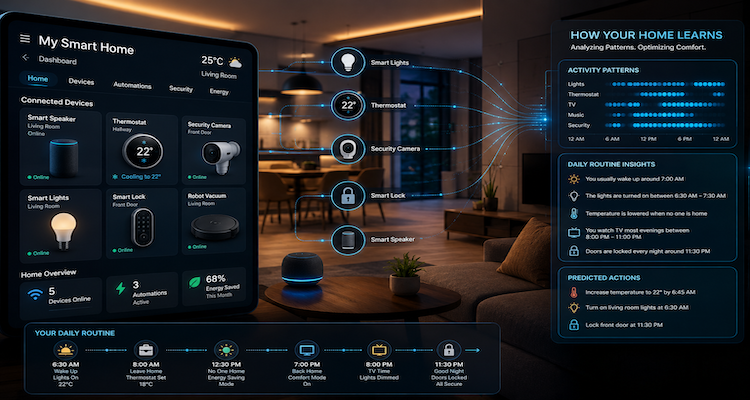
The average home no longer needs a person to switch on lights, adjust the thermostat, queue a playlist, or check the weather. Smart speakers answer questions, connected doorbells watch entrances, fitness trackers monitor movement, and smart TVs learn viewing preferences. Convenience has become one of the defining features of modern life.
Yet behind every automated action lies something less visible: a growing portrait of daily behavior. Many smart devices are not simply responding to commands. They are observing patterns. Over time, they can learn when people wake up, leave for work, exercise, relax, watch television, cook dinner, and go to sleep. The convenience consumers enjoy is often powered by a constant flow of behavioral data.
This shift has created a new reality. The value of smart technology is no longer based solely on what devices do. Increasingly, it comes from what they know.
The Rise of the Behavioral Home
Smart devices are often marketed as tools that save time and reduce friction. A thermostat that automatically adjusts temperature can lower energy use. A voice assistant can manage reminders and answer questions. A smartwatch can encourage healthier habits through activity tracking.
What makes these products effective is their ability to recognize routines.
A connected thermostat may learn when a household is typically empty. A smart lighting system may detect regular sleeping hours. A voice assistant may recognize frequently asked questions, preferred music genres, and common shopping requests.
Individually, these data points may seem insignificant. Together, they create a surprisingly detailed picture of everyday life.
This is one of the most important changes in consumer technology over the past decade. Devices are evolving from tools that react to commands into systems that anticipate behavior.
Convenience Is Built on Observation
Many consumers think of privacy primarily in terms of sensitive information such as passwords, financial details, or personal messages. However, behavioral information can be equally revealing.
Consider a smart speaker that notices when a family is typically at home. A fitness tracker may identify exercise habits, sleep patterns, and daily movement. A smart refrigerator might track shopping preferences through connected applications. Even a connected television can reveal viewing habits, interests, and household schedules.
The individual pieces of information may appear harmless. The combined picture can be remarkably detailed.
This is often referred to as behavioral profiling, the process of understanding people based on actions rather than direct personal disclosures.
In many cases, consumers willingly exchange this information for convenience. The challenge is that the tradeoff is rarely visible in real time. People experience the benefit immediately, while the long-term implications remain largely unseen.
The Hidden Shift From Data Collection to Prediction
The conversation around smart devices often focuses on what information is collected. A more significant development may be what companies can do with that information.
Modern digital systems are increasingly designed to predict behavior.
Streaming platforms recommend content before users search for it. Shopping applications suggest products based on browsing history. Smart home systems automate actions based on previous routines.
The transition from observation to prediction marks an important turning point.
Instead of simply recording habits, connected technologies are beginning to anticipate them. In some cases, devices may know what a user is likely to do next before the user actively makes a decision.
This predictive capability is one reason behavioral data has become so valuable across industries.
Why Consumers Are Paying More Attention
Interest in digital privacy has grown as smart devices have become more common.
Consumers today often manage dozens of connected services across phones, homes, vehicles, workplaces, and wearable devices. As awareness increases, many people are asking a simple question: How much information am I actually sharing?
Part of the concern stems from scale.
A single device may reveal very little. An ecosystem of devices can reveal much more. When information from multiple platforms is combined, patterns become easier to identify and analyze.
At the same time, public discussions around cybersecurity, data breaches, and artificial intelligence have encouraged consumers to look more closely at how personal information is handled.
The result is not necessarily a rejection of smart technology. Instead, many users are seeking greater transparency and control.
The Unexpected Cultural Impact
One of the least discussed consequences of smart technology is how it may subtly influence human behavior.
People tend to adapt to systems that monitor and respond to them. When devices optimize routines, users may gradually change routines to match the technology.
A person may rely on reminders instead of memory. Families may become accustomed to voice commands rather than manual tasks. Streaming recommendations may shape entertainment choices before viewers actively explore alternatives.
The influence is often small and incremental. Yet over time, these adjustments can reshape habits.
The broader trend reveals a fascinating shift: convenience is no longer just changing what people do. It is changing how decisions are made.
This may become one of the defining social effects of connected technology in the years ahead.
Businesses See Patterns, Not Just Customers
For companies, behavioral information represents an opportunity to better understand customer needs.
Organizations increasingly seek insights into how products are used rather than simply whether they are purchased. Understanding habits can help improve services, personalize experiences, and identify emerging trends.
A fitness platform may learn which features users engage with most frequently. A smart home company may identify common automation preferences. A streaming service may discover changing viewing patterns.
These insights can create more useful products.
However, they also raise important questions about transparency, consent, and data governance. As consumers become more informed, trust is becoming a competitive advantage.
Companies that clearly explain how information is collected and used may find themselves better positioned than those that treat privacy as an afterthought.
What Makes This Moment Different
Data collection is not new. Websites, apps, and online services have been gathering information for years.
What makes the current moment unique is the growing integration of connected technology into physical environments.
Smart devices are no longer limited to screens. They exist in kitchens, bedrooms, vehicles, offices, and wearable accessories. They accompany people throughout much of their day.
As a result, technology is moving closer to daily routines than ever before.
The shift is transforming data from a record of online activity into a reflection of real-world behavior.
That distinction may define the next chapter of the digital economy.
Looking Ahead
Smart technology is unlikely to disappear from everyday life. If anything, connected devices will become more capable, more integrated, and more personalized.
The key challenge is not whether consumers should embrace convenience. Most already have.
The larger question is how much visibility people should have into the systems that power that convenience.
Understanding what smart devices know, and how that knowledge is used, may become an essential digital skill. As homes, workplaces, and personal devices become increasingly interconnected, informed choices will matter as much as technological innovation itself.
Convenience has always carried a price. In the age of smart devices, that price is often paid not with money, but with information. The real challenge is ensuring that consumers understand the exchange before it becomes invisible.
The information presented in this article is based on publicly available sources, reports, and factual material available at the time of publication. While efforts are made to ensure accuracy, details may change as new information emerges. The content is provided for general informational purposes only, and readers are advised to verify facts independently where necessary.