







Life in the Wild: How Nature’s Endless Story Shapes Our Future
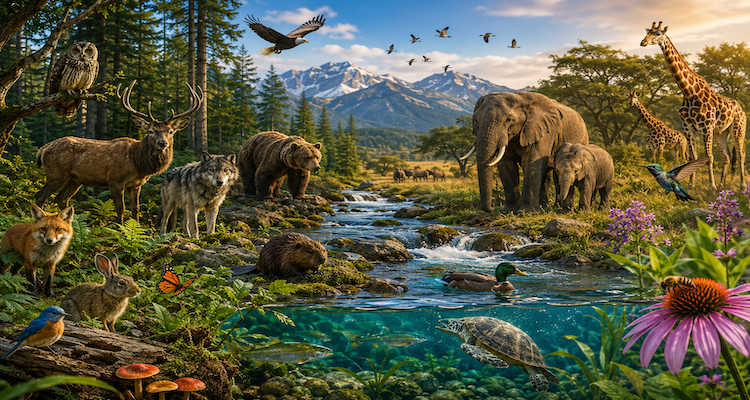
A forest at dawn can look deceptively quiet. Beneath the canopy, insects are pollinating plants, fungi are breaking down organic matter, birds are dispersing seeds, predators are influencing prey populations, and roots are interacting with soil and water. None of these processes needs an audience, yet together they help keep an ecosystem functioning.
That is what makes life in the wild more than a collection of spectacular animals and landscapes. Nature is a living network of relationships, and human societies are deeply connected to it. Food production, freshwater, pollination, climate regulation, healthy soils and many other benefits depend on functioning ecosystems. UNEP describes these benefits as nature’s contributions to people, while the broader ecosystem-assessment tradition has examined how changes in ecosystems affect human well-being.
The story of wildlife, therefore, is also a story about resilience, adaptation and the conditions humans create for life around us.
Key Takeaways
- Wildlife survives through complex relationships among species, habitats, climate, soil and water.
- Biodiversity supports essential benefits such as pollination, freshwater, food production and climate regulation.
- Habitat loss, overexploitation, pollution and climate change are placing growing pressure on wild species.
- The IUCN Red List recorded 48,646 threatened species in its October 2025 update, showing the scale of documented extinction risk.
- Conservation can produce recoveries when habitats, species and human activity are managed together.
The Wild Is a Network, Not a Collection of Species
It is easy to think of wildlife as individual species: a tiger in a forest, an eagle above a mountain, a whale in the ocean or a bee visiting a flower.
Ecologically, however, species do not exist in isolation.
An ecosystem includes living organisms and their interactions with non-living elements such as soil, water, climate and sunlight. Each organism occupies a particular role within that system.
A predator can influence prey populations. Herbivores can affect vegetation. Pollinators help plants reproduce. Fungi and microorganisms contribute to decomposition and nutrient cycling. Plants capture energy from sunlight and form the foundation of many food webs.
This interconnectedness explains why losing one species does not necessarily have a simple, isolated consequence. The significance depends on the species, its ecological role and the wider system around it.
Nature’s resilience often comes from this complexity. But complexity can also make ecosystems difficult to replace once they have been heavily damaged.
Why Biodiversity Matters to Human Life
Biodiversity is sometimes presented as a conservation issue separate from everyday human concerns. The evidence suggests otherwise.
Healthy ecosystems provide what UNEP calls nature’s contributions to people, including food, freshwater, pollination, natural medicines, climate regulation and protection from environmental hazards.
These services can be easy to overlook precisely because they usually operate without an invoice.
A functioning wetland, for example, is more than a landscape filled with plants and birds. Wetlands can contribute to water regulation and provide habitat for numerous species. Healthy soils support agriculture while containing an enormous diversity of organisms. Forests influence water cycles, store carbon and provide habitat.
UNEP also notes that ecosystem health is tied to economic stability because societies and economies depend on natural systems.
The practical lesson is important: protecting biodiversity is not simply about preserving beautiful places. It is also about maintaining the ecological foundations on which communities depend.
The Pressures Changing the Wild
Wildlife has always faced natural pressures. Species compete, habitats change and populations rise and fall.
The modern challenge is the scale and speed at which human activities can alter those conditions.
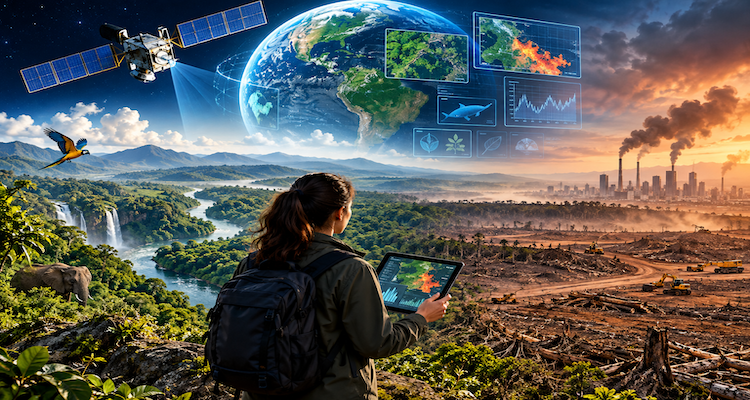
Habitat loss, overexploitation, pollution and climate change are among the major pressures associated with biodiversity decline.
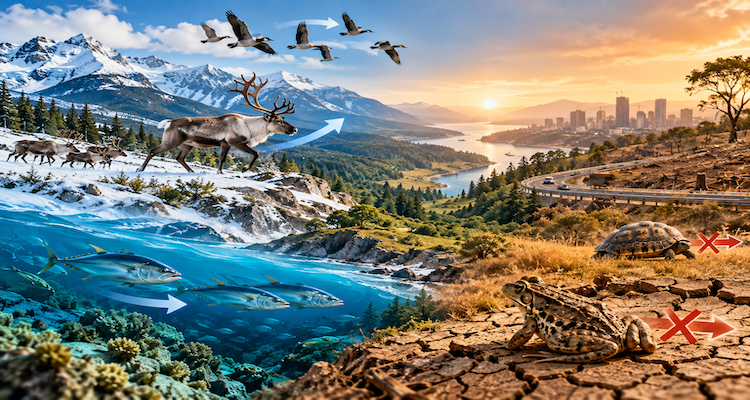
Climate change can add another layer of difficulty because many species depend on particular temperature ranges, seasonal cycles, food sources or habitats. IUCN reported in December 2025 that climate change was already affecting at least 15,801 species on its Red List, while emphasizing that rapidly changing conditions can make adaptation more difficult for some species.
Freshwater ecosystems illustrate the problem particularly clearly. A global assessment published in Nature and reported by IUCN in January 2025 found that 24% of assessed freshwater animal species in the groups examined were at high risk of extinction.
These figures do not mean that every threatened species is destined to disappear. They indicate assessed levels of risk and the need for conservation action.
What the Red List Can and Cannot Tell Us
The IUCN Red List is one of the world’s most important systems for assessing extinction risk. It records information about species, including population trends, habitats, threats and conservation measures.
In October 2025, IUCN reported that its Red List contained 172,620 species, including 48,646 threatened with extinction.
Those numbers are significant, but they require context.
The Red List does not represent every species on Earth. Assessments take time, and species differ greatly in how much scientific information is available. An increase in the number of assessed species can therefore reflect improved knowledge as well as changes in conservation status.
That distinction matters. Biodiversity measurement is partly a story about nature and partly a story about how much humanity has been able to document.
The Red List is best understood as a warning system and decision-making tool rather than a simple countdown of species disappearances.
Nature Can Recover When Conditions Change
The story of wildlife is not exclusively a story of decline.
Conservation can work.
The IUCN’s October 2025 update, for example, reported that the global green sea turtle population was rebounding as a result of conservation efforts, even as other species faced increasing threats.
This contrast is important because it demonstrates that ecological outcomes are not predetermined.
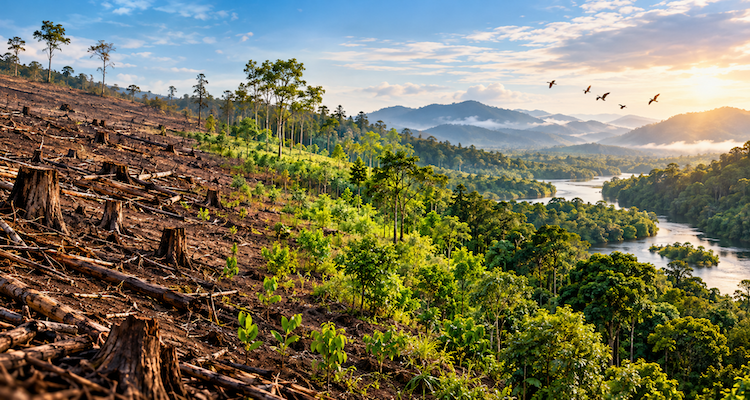
Protection of habitat, responsible management of natural resources, restoration of degraded ecosystems and reduction of specific threats can create conditions in which populations recover.
UNEP’s work on nature-based solutions similarly emphasizes protecting, conserving, restoring and sustainably managing ecosystems while addressing social, economic and environmental challenges.
The strongest conservation strategies therefore do not necessarily attempt to separate people from nature. They look for ways in which human activity can operate without destroying the ecological systems on which both wildlife and communities depend.
The Next Chapter Is Being Written Now
The wild does not follow a script written for humans.
Species adapt, migrate, compete, reproduce and sometimes disappear. Landscapes change through natural processes as well as human activity. Some populations decline while others recover.
What makes the present period different is the extent to which human decisions can influence these processes across enormous geographic areas.
That gives conservation a practical dimension. Protecting a forest is also protecting habitat. Maintaining a healthy river can support freshwater species and human communities. Preserving pollinator populations can help sustain ecological processes important to food systems. Restoring degraded land can simultaneously improve biodiversity and resilience.
UNEP’s nature-based-solutions framework reflects this interconnected approach, linking ecosystem restoration with biodiversity, resilience and human well-being.
The challenge is not to freeze nature in a perfect historical state. Ecosystems have always changed. The challenge is to ensure that change does not become so rapid, extensive or destructive that species and ecological systems lose the ability to recover.
Conclusion
Life in the wild is an endless story because nature is constantly responding to changing conditions. Every forest, river, grassland, desert and ocean contains relationships that have developed over immense spans of time.
The most important lesson is that wildlife conservation is not simply about saving individual animals from disappearing. It is about maintaining the relationships, habitats and ecological processes that allow life to continue.
There are reasons for concern, and the documented extinction risks are substantial. But there is also evidence that targeted conservation can reverse particular declines.
Nature’s story is still being written. Human choices are now part of that story and the quality of the next chapter will depend heavily on how carefully those choices are made.
This content is published for informational or entertainment purposes. Facts, opinions, or references may evolve over time, and readers are encouraged to verify details from reliable sources.