









AI Is Changing What Expertise Means at Work
For decades, expertise in the workplace followed a familiar pattern. The people who knew the most, remembered the most, and could perform specialized tasks the fastest were often viewed as the most valuable professionals in the room. Knowledge itself was a competitive advantage.
Artificial intelligence is beginning to change that equation.
As AI tools become capable of generating reports, writing code, analyzing data, creating presentations, and answering complex questions in seconds, the value of simply possessing information is starting to decline. What matters increasingly is not how much a person knows, but how effectively they can apply judgment, ask the right questions, and make decisions when technology provides multiple possible answers.
This shift is quietly redefining what expertise looks like across industries. Rather than replacing experts, AI is changing the skills that distinguish them.
From Knowledge Ownership to Knowledge Navigation
Traditional expertise was often measured by accumulated knowledge. Lawyers spent years mastering legal precedents. Financial analysts memorized market frameworks. Engineers developed deep technical understanding through experience.
Those foundations remain important, but AI is altering how knowledge is accessed.
Today, many professionals can retrieve information almost instantly through AI-powered systems. The challenge is no longer finding answers. The challenge is determining which answers are relevant, accurate, and useful.
In this environment, expertise becomes less about storing information and more about navigating it. Professionals who can evaluate competing recommendations, recognize flawed assumptions, and connect insights across disciplines are becoming increasingly valuable.
The workplace is moving from a model where experts were primarily knowledge repositories to one where they function as interpreters, strategists, and decision-makers.
Why AI Makes Human Judgment More Important
One of the biggest misconceptions surrounding AI is that greater automation automatically reduces the need for human expertise.
In many cases, the opposite is happening.
AI systems can generate impressive outputs, but they can also produce incomplete analyses, overlook context, or confidently present inaccurate information. The more organizations rely on AI, the more important it becomes to have people capable of evaluating its recommendations.
Consider fields such as healthcare, finance, law, or cybersecurity. AI can help professionals process large amounts of information faster than ever before. However, critical decisions still require human judgment because those decisions involve ethics, risk assessment, contextual understanding, and accountability.
The professional who blindly accepts AI-generated answers may become less effective. The professional who understands both the strengths and limitations of AI gains a significant advantage.
This creates a new form of expertise centered on discernment rather than memorization.
The Rise of the AI-Augmented Expert
A growing distinction is emerging between professionals who use AI as a productivity tool and those who integrate it into their thinking process.
The most effective workers are increasingly becoming AI-augmented experts.
These individuals understand when AI can accelerate tasks and when human insight is necessary. They know how to frame questions, refine outputs, identify weaknesses, and combine machine-generated suggestions with real-world experience.
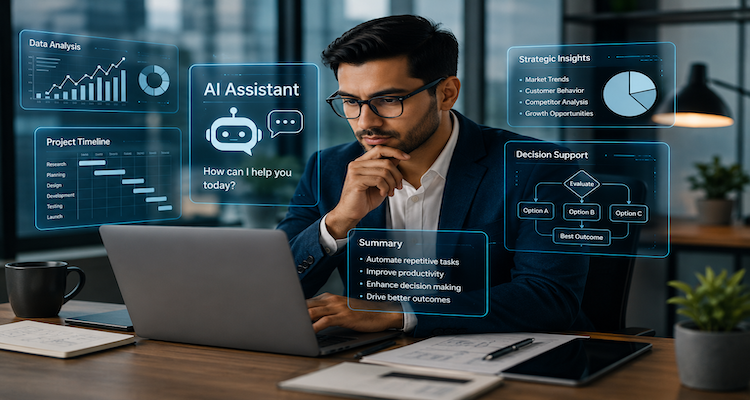
Software development offers a clear example. AI coding assistants can generate substantial amounts of code quickly. Yet organizations still depend on experienced developers to evaluate architecture, security implications, maintainability, and business requirements.
The expertise has not disappeared. Instead, it has shifted toward higher-order thinking.
The same pattern is appearing in marketing, research, consulting, education, design, and management.
A Hidden Workplace Shift Few People Notice
One of the most significant changes is happening beneath the surface.
Historically, expertise often developed through repetition. Employees performed tasks repeatedly, gradually building deep understanding through practice and problem-solving.
AI can shortcut many of those learning experiences.
When an AI system drafts reports, summarizes documents, writes code, or creates content, workers may complete tasks more efficiently. However, they may also spend less time developing the foundational skills that traditionally produced expertise.
This creates an interesting paradox.
Organizations benefit from immediate productivity gains, but they may face challenges developing future experts if employees increasingly rely on automation before fully understanding the underlying work.
Some companies are already exploring how to balance AI adoption with skill development. The goal is not to avoid automation but to ensure employees continue building critical thinking, analytical reasoning, and domain expertise alongside technological efficiency.
Expertise Is Becoming More Contextual
Another major shift is that expertise is becoming less tied to specific technical tasks and more connected to context.
AI can often perform narrow tasks exceptionally well. What it struggles with is understanding the broader environment in which decisions are made.
Human professionals bring context that machines cannot easily replicate.
They understand organizational culture, customer relationships, industry dynamics, regulatory considerations, and social factors that influence outcomes.
For example, an AI system might recommend an efficient business strategy based on available data. An experienced manager may recognize that implementing the recommendation could damage team morale, create customer dissatisfaction, or generate unforeseen risks.
This ability to combine technical information with contextual understanding is becoming a defining characteristic of modern expertise.
Leadership Is Being Redefined Too
The impact extends beyond individual contributors.
Management and leadership roles are evolving as AI changes how information flows through organizations.
In the past, managers often held authority because they possessed more information than their teams. Today, employees may have access to the same AI-powered insights and analytical tools as their supervisors.
As information becomes more accessible, leadership increasingly depends on interpretation, communication, and decision-making rather than information control.
Effective leaders must now help teams navigate uncertainty, evaluate AI-generated recommendations, and align technological capabilities with business objectives.
The ability to create clarity may become more valuable than the ability to provide answers.
The New Competitive Advantage
A meaningful insight emerging from the AI era is that expertise is not disappearing—it is moving higher up the value chain.
Tasks that rely primarily on information retrieval and routine execution are becoming easier to automate. Skills that involve creativity, judgment, adaptability, collaboration, and strategic thinking are becoming more important.
The competitive advantage of the future may belong not to those who know the most facts, but to those who can combine human insight with machine intelligence most effectively.
This distinction matters because many professionals still view AI primarily as a threat to existing jobs. In reality, AI may be reshaping the definition of professional value itself.
The workplace is entering a period where success depends less on competing against machines and more on learning how to work alongside them.
What Happens Next?
The transformation is still unfolding, and its ultimate impact remains uncertain. Different industries will adopt AI at different speeds, and new forms of expertise will continue to emerge.
What seems increasingly clear, however, is that the workplace is moving toward a model where knowledge alone is no longer enough.
Expertise is becoming a combination of technical understanding, critical thinking, contextual awareness, ethical judgment, and the ability to collaborate effectively with intelligent systems.
Those who embrace this shift may discover that AI does not diminish human expertise. Instead, it challenges people to develop deeper forms of it.
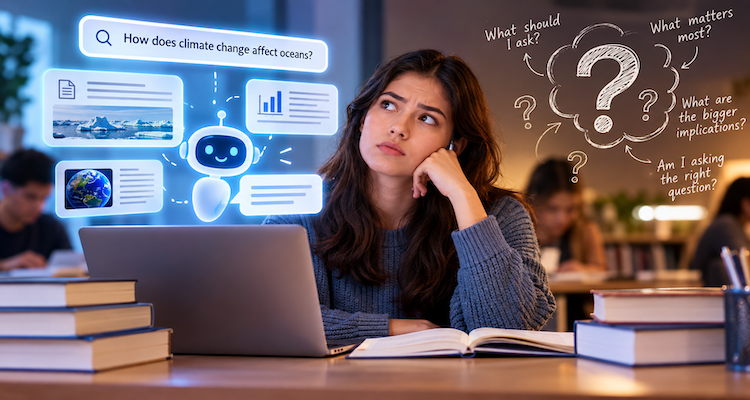
As organizations continue integrating AI into daily operations, the most valuable professionals may not be those who have all the answers. They may be the ones who know which questions matter most.
This content is published for informational or entertainment purposes. Facts, opinions, or references may evolve over time, and readers are encouraged to verify details from reliable sources.