




Why Time Feels Strange Inside Places Designed to Make You Forget It
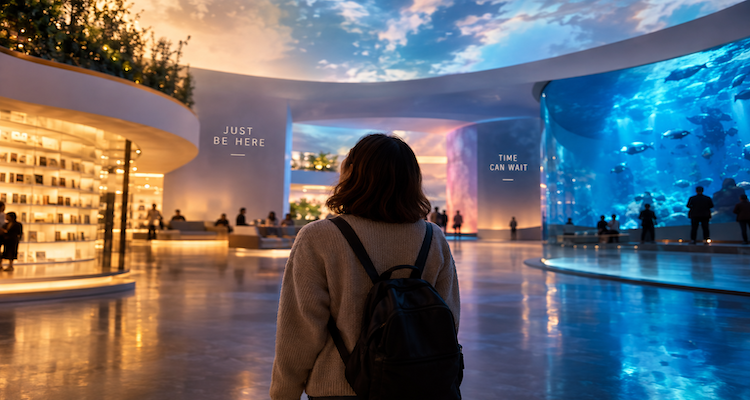
Walk into a casino, a windowless shopping complex, a basement entertainment venue, or another carefully controlled interior and something subtle can happen: your ordinary sense of time becomes less reliable.
You may think you have been inside for 30 minutes and discover that two hours have passed. Or you may feel as though an afternoon has dragged on, only to find that far less time has elapsed than expected.
The clock on your phone has not changed its definition of an hour. What changes is the information available to your brain for constructing an experience of time.
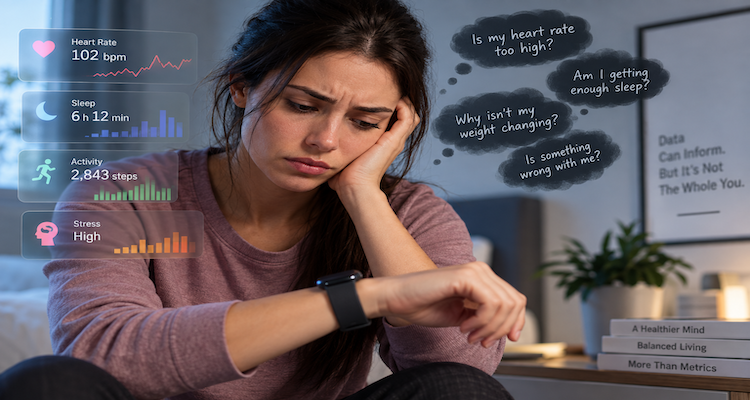
Human time perception is flexible rather than perfectly precise. Research has shown that attention, arousal, sensory information, cognitive load, emotion and environmental context can all influence judgments about duration.
That makes certain interiors particularly interesting. When windows, natural light, clocks and other predictable markers are reduced or controlled, the outside world becomes less useful as a temporal reference. What remains is an environment built around artificial light, sound, activity and repetition.
Key Takeaways
- Time perception depends partly on environmental and cognitive cues, not only on the passage measured by a clock.
- Natural light provides important timing information for the body’s circadian system.
- Repetitive, highly stimulating environments can make elapsed time harder to reconstruct accurately.
- Casino research provides a useful example of how sound and surroundings can alter estimates of playing time.
- Feeling that time passed quickly does not mean the brain stopped registering events or that biological time stopped.
- Good interior design can use the same principles to support orientation, comfort and healthy daily rhythms.
Your Brain Does Not Experience Time Like a Clock
A clock measures duration externally. Human beings experience duration internally.
Psychologists distinguish between several aspects of temporal processing, including estimating how long an interval lasted, judging the order of events and sensing the passage of time. These processes are influenced by attention and the information being processed. Reviews of time-perception research describe subjective timing as highly dependent on context and task rather than as a single fixed mechanism.
This helps explain an apparently contradictory experience: an hour can feel short while it is happening but seem surprisingly long when remembered later.
When attention is absorbed by an activity, people may devote less attention to monitoring time itself. When many distinctive events are encoded into memory, however, the same period can later seem longer because it contains more remembered information.
In other words, “How long did that feel?” and “How long was it?” are different questions.
The difference is important when considering environments deliberately designed around continuous engagement.
What Happens When the Usual Time Cues Disappear?
For most of human history, the environment provided obvious signals about time.
Sunlight changed direction and intensity. Shadows moved. Temperatures shifted. People ate, worked and rested according to recurring social routines. Outdoor environments constantly supplied information about the progression of the day.
Modern buildings can remove much of this information.
A room may have no visible sky, no changing daylight and no obvious clock. Artificial illumination can remain relatively consistent for hours. Air conditioning can keep temperature stable. A large interior may contain few visual references that indicate how long a person has been there.
This matters because light is not merely something we use to see.
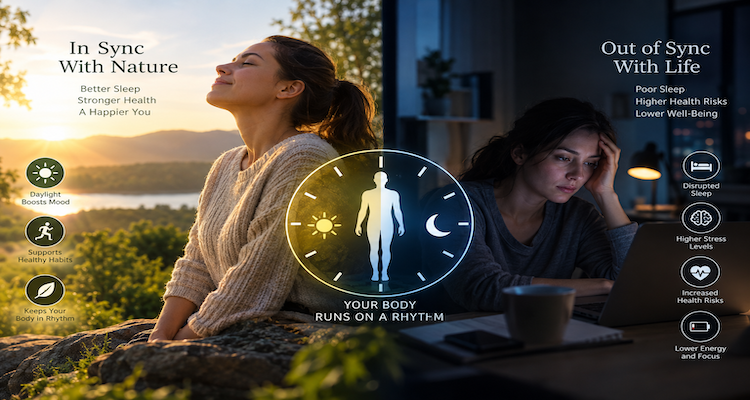
The human circadian system uses the light-dark cycle as a major environmental timing signal. Research on circadian biology describes light as a principal “zeitgeber” an external cue that helps synchronize the body’s internal clock with the roughly 24-hour day.
A systematic review of building windows and circadian health likewise found that daylight entering buildings has important non-visual effects relevant to circadian regulation.
This does not mean that sitting in a room without windows automatically destroys a person’s sense of time. Human temporal perception is much more complicated than that.
It means that one major class of environmental information has been reduced.
Why Casinos Are Such a Useful Example
Casinos provide one of the clearest real-world examples of environments in which ordinary temporal orientation can become difficult.
Research on casino environments has examined how architecture, sensory stimulation and surrounding conditions affect gambling-related behavior. An NCBI review describes casino interiors as environments involving lighting, sound, large gaming areas and numerous simultaneous stimuli, creating a high level of sensory and cognitive activity.
Research has also directly examined time estimation during slot-machine play.
In one study involving 160 participants, researchers varied the auditory environment while people played slot machines. Participants exposed to typical ambient casino sounds tended to underestimate how much time had elapsed, while music provided a stronger temporal cue that improved estimates of elapsed duration.
That finding is especially revealing.
The environment did not need to remove every possible clock. It could influence temporal estimation simply by changing the sensory information available to people while they were engaged in an activity.
This is one reason the familiar idea that “casinos have no clocks” is less interesting than the underlying science. The important question is not whether a clock is physically present. It is how much useful temporal information the entire environment provides.
Repetition Can Make Time Harder to Reconstruct
Imagine spending two hours in a room where almost every minute looks and sounds similar.
Later, what specific events will you remember?
Compare that with two hours spent hiking through an unfamiliar landscape, visiting several places, meeting people and encountering changing weather.
The two periods are objectively identical in duration. But they may leave very different memory traces.
Research on time perception has repeatedly shown that subjective duration is influenced by attention, arousal, contextual information and the characteristics of events occurring during an interval. A review of experimental studies on psychological time dilation found that multiple experimentally manipulated factors can change subjective duration judgments.
This creates an important distinction between prospective and retrospective time judgments.
If you are told to pay attention to time while an interval is happening, your judgment may depend heavily on how much attention you devote to temporal information.
If you are asked afterward how long something lasted, your estimate can be influenced by how much happened during that period and how richly the period is represented in memory.
That is why the same environment can produce different experiences for different people.
The Strange Role of Light
Light connects the psychological experience of time with the body’s biological timing system, but the two should not be confused.
Your circadian clock helps organize physiological processes around the day-night cycle. Subjective time perception is the conscious experience of duration and temporal passage.
They interact with the environment in different ways.
Studies of indoor environments show that daylight exposure can affect circadian timing. In one crossover field study of 20 residents, increasing access to circadian-effective daylight was associated with differences in melatonin timing, sleep onset and sleep regularity.
The implication for architecture is broader than simply “add windows.”
Window size, orientation, glazing, shading, room depth and surrounding buildings can all influence how daylight reaches an interior. Research reviewing building windows and circadian health emphasizes that the relationship between architecture and circadian-effective light is complex.
A building therefore does more than shelter people from weather. Its design determines how much of the outside world’s changing temporal information reaches them.
Designed Environments Can Also Change How Time Feels
This phenomenon is not limited to gambling.
Airports, underground shopping areas, large retail complexes, entertainment venues, offices, hospitals and immersive digital environments can all reduce or reorganize the cues people normally use to orient themselves.
Virtual reality provides an especially useful comparison because designers can manipulate the environment without changing the user’s physical location.
Research in VR has found that perceived duration can be affected by factors including cognitive load, fatigue and unpleasant simulator symptoms. At the same time, one study attempting to manipulate environmental timing cues in VR did not replicate an earlier reported effect involving the simulated movement of the sun.
That failed replication is valuable because it illustrates a broader point: environmental effects on time perception are real areas of scientific investigation, but individual cues do not necessarily have simple or universal effects.
There is no single architectural trick that reliably makes everyone lose track of time.
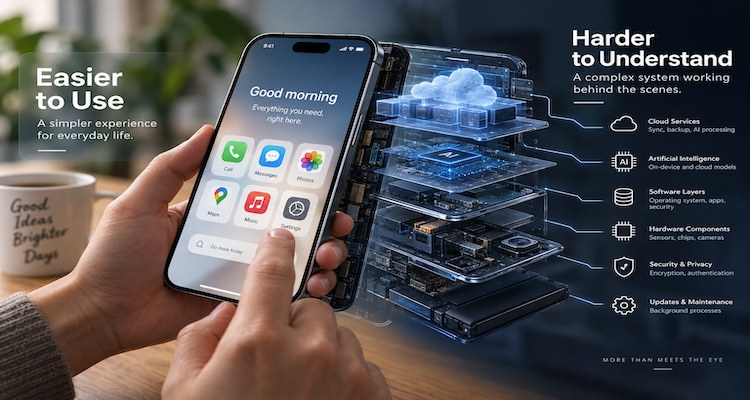
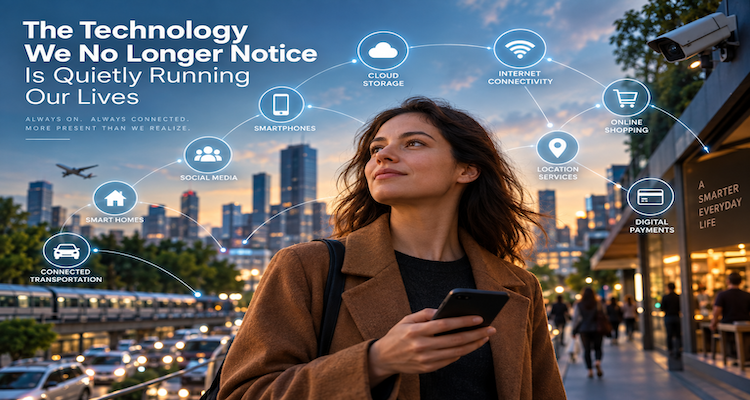
The Technology Behind the Feeling Is More Subtle Than It Looks
The modern built environment increasingly allows designers to control variables that were once difficult to control.
LED lighting can maintain consistent illumination. Digital displays can replace changing physical information. Climate-control systems can keep temperature remarkably stable. Immersive screens can create artificial landscapes. Virtual and augmented reality can generate entire environments without conventional geographic cues.
This creates a new design question:
How much of our sense of time depends on the changing world around us?
Researchers continue to debate exactly how the brain constructs subjective time. Contemporary work includes models involving internal timing mechanisms, attention, sensory processing and dynamic representations of events rather than a single literal internal stopwatch.
A 2026 review of the so-called complication or Libet clock also highlights an important methodological problem: measuring subjective timing is itself complicated because researchers often have to translate psychological time into spatial responses on a clock face.
That is a useful reminder that even scientists studying time perception must distinguish between physical time, measured time and experienced time.
The Same Principle Can Be Used for Better Buildings
The science has a constructive side.
If environments can remove temporal cues, they can also restore them.
Access to daylight, views outside, changing illumination across the day, visible clocks where appropriate, recognizable spatial landmarks and variation in activity can help people maintain a stronger connection with their surroundings.
This is particularly relevant in workplaces and other buildings where occupants may spend many hours indoors.
The goal does not have to be making people constantly aware of the clock. Excessive time monitoring can itself become distracting.
A better principle is temporal orientation: giving people enough environmental information to understand where they are within the day without forcing them to check a clock constantly.
That could mean morning daylight entering a workspace, a visible connection to outdoor conditions, gradual changes in lighting, or simply architectural features that help people understand the passage from one part of the day to another.
Why Some Places Make an Hour Feel Like Ten Minutes
The mystery becomes less mysterious when the pieces are put together.
Time is not experienced in isolation. The brain estimates duration while processing sensory information, directing attention, responding to stimulation and constructing memories.
Remove some of the ordinary signals changing daylight, outdoor views, clocks and predictable routines and temporal orientation can become less straightforward.
Add intense engagement, repetitive activity, music, artificial lighting and a highly controlled environment, and the subjective experience can diverge even further from the objective clock.
But the evidence does not support the stronger claim that buildings can simply “turn off” our sense of time.
They can influence the information from which that sense is constructed.
That distinction matters.
The next time an afternoon disappears inside a casino, an airport terminal or a windowless entertainment space, the feeling is not necessarily mysterious. The clock kept moving. What changed was your relationship with the cues that normally tell you that it was.
Conclusion
The strangest thing about time inside highly controlled environments is that nothing supernatural has to happen.
An hour remains an hour.
What changes is the evidence surrounding that hour.
Natural light moves. Shadows shift. Outdoor activity changes. Human routines create rhythms. Clocks provide explicit information. When many of these signals disappear, the brain has fewer obvious landmarks against which to organize its experience.
Research on time perception shows that subjective duration is flexible, while research on circadian biology demonstrates how strongly the human body responds to environmental timing cues. Studies of casino environments provide a practical example of how sensory conditions can alter estimates of elapsed time.
That makes architecture part of the story of time not because buildings control time itself, but because they control how much of the changing world we are allowed to see, hear and feel.
The most useful question for future building design may therefore be not simply how efficiently a space uses energy or technology, but whether it keeps people meaningfully connected to the rhythms of the day.
This content is published for informational or entertainment purposes. Facts, opinions, or references may evolve over time, and readers are encouraged to verify details from reliable sources.